10 Ways to Increase Social Media Engagement

More posting isn't the same as more meaningful engagement. A crowded feed can make an entrepreneur look active while giving followers no reason to comment, save, share, or start a private conversation. The better question isn't, “How often can I publish?” It's, “What useful idea, experience, or invitation can I give people today?”
Richard Maize offers a practical reference point for that approach. Real estate decisions, business ventures, philanthropy, press, and events can all become useful conversations when each post gives people something to learn, question, apply, or discuss. A property decision can reveal an investment principle. A food truck can illustrate operational discipline. A foundation update can show how business and community responsibility connect.
The following ways to increase social media engagement move from trust-building content to distribution, community participation, cadence, measurement, and experimentation. Some tactics improve the quality of interaction. Others help you deliver the right format at the right time. Together, they turn social media from a publishing schedule into a trust-building system.
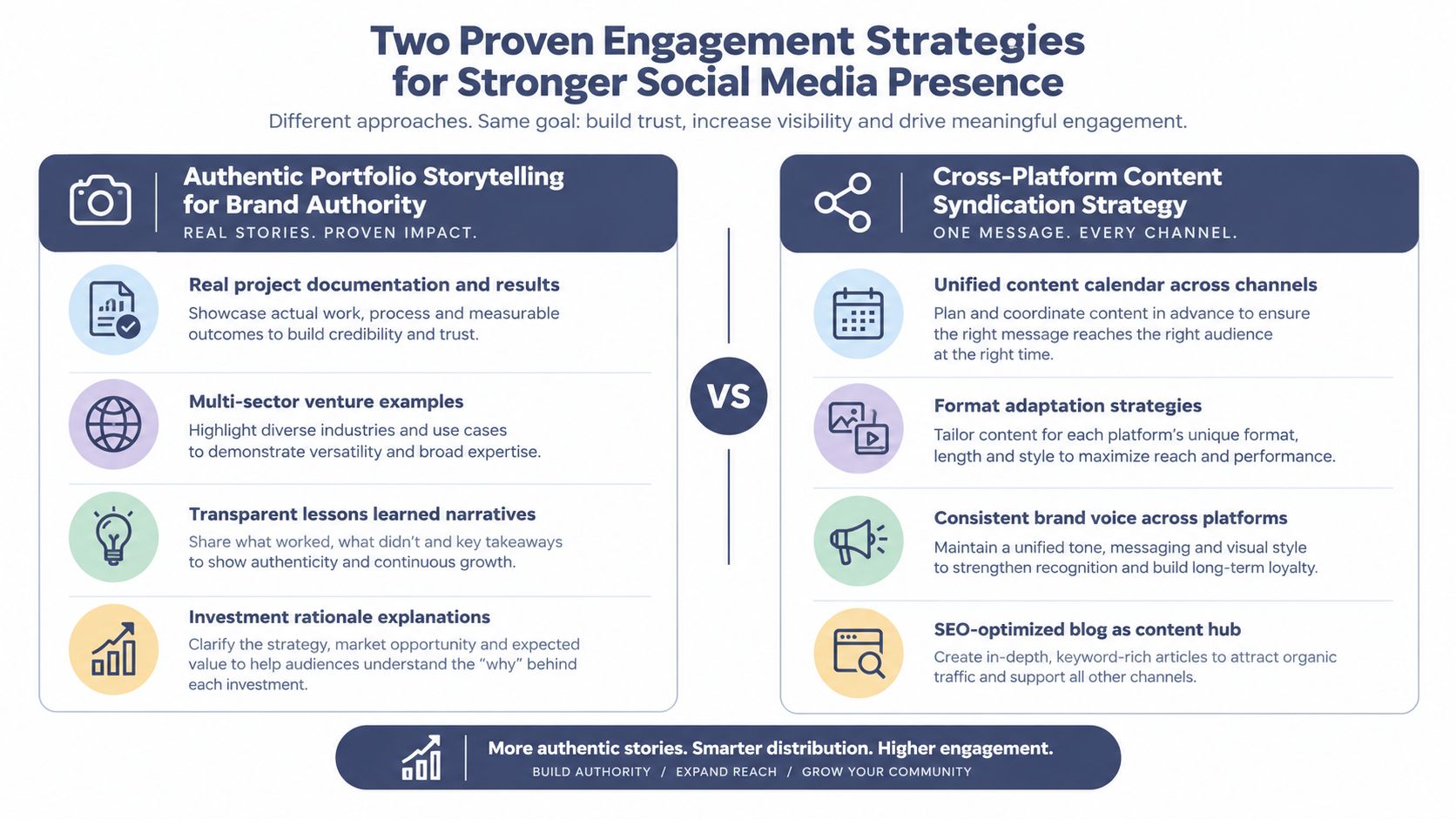
1. Authentic Portfolio Storytelling for Brand Authority
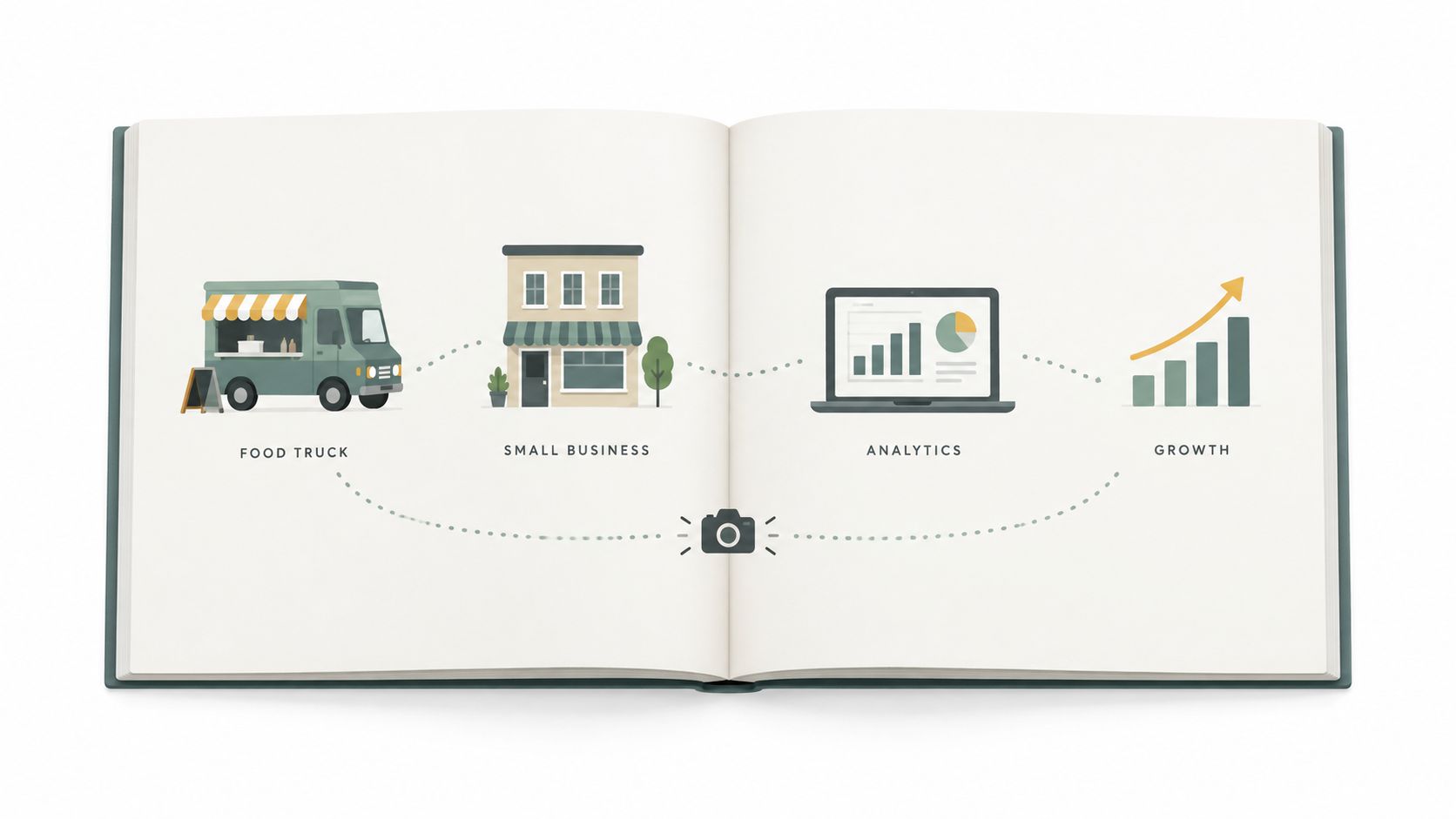
A portfolio becomes more engaging when people can understand the decisions behind it. Richard Maize's real estate work, consumer ventures, and entrepreneurial activities provide material for stories about judgment, risk, execution, and adaptation. The point isn't to display a list of achievements. It's to explain how a decision was made and what another business owner or investor can learn from it.
A real estate post might examine a market question through the lens of an actual holding. A Richeeze Melts Food Truck update could explore staffing, customer experience, location, or day-to-day operating discipline. A multimedia post about an investment decision could explain the assumptions considered, the uncertainty that remained, and the lesson that applies beyond that single venture.
Practical rule: Show the decision process, not only the finished result.
Use a repeatable story structure so the content stays useful rather than promotional:
Starting point: Explain the opportunity, problem, or market condition.
Decision: Describe the choice made and the reasoning behind it.
Execution: Show the work, trade-offs, and constraints.
Lesson: Connect the experience to a broader business principle.
Invitation: Ask readers what they would have considered or done differently.
A polished success story may earn approval, but an honest account of a lesson learned often creates a stronger opening for discussion. Update portfolio highlights with fresh observations, pair written analysis with photographs or video, and connect each venture to a question your audience already cares about.
2. Cross-Platform Content Syndication Strategy
One strong idea can serve several audiences, but copy-pasting the same post everywhere usually weakens it. A real estate market observation might become a detailed blog article, a LinkedIn framework, an email discussion, an Instagram carousel, and a short video. The insight stays consistent. The delivery changes according to how people use each platform.
Richard Maize's combination of blog content, press features, multimedia, business ventures, and philanthropic activity creates a natural content system. A press feature can become a short commentary post. A foundation update can become a visual story. An event lesson can become a founder-focused video or a question for investors.
The trade-off is efficiency versus relevance. Repurposing saves production time, but indiscriminate duplication makes a brand feel automated. Adapt the opening, pacing, visual treatment, and response prompt for every network.
Build one idea into a content sequence
For a post about real estate trends, a practical sequence might look like this:
Long-form article: Explain the market context and decision framework.
LinkedIn post: Isolate one business implication and ask for professional perspectives.
Email note: Add a personal observation and link to the full analysis.
Instagram carousel: Turn the framework into concise, visual steps.
Short video: Explain one common mistake and its alternative.
Maintain a central calendar with platform requirements, audience intent, and the desired action for each version. Schedule thoughtfully so followers aren't exposed to the same message repeatedly in a short period. Then compare comments, saves, shares, profile actions, and clicks by platform, not just total impressions.
The objective isn't to be everywhere at maximum volume. It's to let one valuable idea travel in forms that feel native to each audience.
3. Community-Driven Engagement Through Philanthropy Transparency
Philanthropy earns engagement when people can see what their participation makes possible. For an entrepreneur and personal brand, the Rochelle and Richard Maize Foundation should appear as part of the operating values behind real estate, investing, media, events, and venture work, not as an occasional announcement added after business content. That consistency gives followers a reason to trust the message before they respond to it.
Start every foundation update with a specific community need. Explain what work is underway, who is involved, and how readers can learn more or contribute. A photograph or video can show the setting and process, but the story should protect dignity and keep attention on the community rather than the donor. Business audiences may also want to understand how responsible investment, local development, and community resilience relate in practice.
Trust depends on restraint. Share outcomes only when they can be verified, avoid presenting a beneficiary's experience as a marketing prop, and state what the support can and cannot achieve. A clear participation path might invite a question, connect readers with a local organization, or explain the next practical action.
Build the editorial series around four recurring checks. Community development asks how investment decisions affect neighborhoods. Long-term thinking examines why durable impact requires sustained work beyond a single gesture. Participation shows how readers, partners, and local organizations can contribute. Accountability records what the foundation is learning and where its approach remains limited.
The article from blueprint to beneficiary supports the connection between real estate activity and community-driven impact.
“Support our cause” invites a shallow reaction. A credible update gives the community an issue, evidence, context, and a specific question worth discussing.
4. Multi-Sector Expertise Positioning
Breadth builds trust only when the audience can follow the reasoning behind it. Richard Maize's work across real estate, investing, consumer ventures, digital initiatives, events, and philanthropy can become a connected body of experience rather than a collection of unrelated topics.
A food truck, for example, raises practical questions about location analysis, customer behavior, staffing, and unit economics. Those observations can inform a post about property selection or retail space. POPPOP FEST offers another route into audience attention, logistics, partnerships, and brand experience. Philanthropy can examine how capital allocation affects community value and long-term trust.
The connection should serve the reader's decision, not the founder's image. Calling yourself a “serial entrepreneur” communicates little until followers can see the operating judgment behind the label.
Use a cross-sector question as the organising principle for each post. What can retail teach property investors about location? What can event production teach founders about audience experience? What can philanthropy teach businesses about long-term trust? What can real estate teach consumer ventures about patience and execution?
Support the answer with a concrete observation from the relevant field, then show how it changes a choice, solves a problem, or reframes a familiar issue. Measure which connections create meaningful discussion, and test different formats before committing to a recurring series. A forced analogy weakens credibility, even if it makes the content appear broader.
The trade-off is breadth versus depth. Varied examples can attract different audiences, while specific analysis gives each audience a reason to trust the account. Recurring themes create recognition, and clear links between sectors make the expertise easier to remember and discuss.
5. Regular Blog Publishing as SEO and Thought Leadership Foundation
A personal brand can earn attention on social media and still disappear from memory. A well-structured article gives useful ideas a durable home, allowing people to find, revisit, and share them after a post leaves the feed. Richard Maize's regularly updated blog can hold practical thinking on property markets, entrepreneurship, investing, and brand visibility. Social channels then distribute those ideas and create space for discussion.
Publishing consistency supports that system because readers learn when useful analysis is likely to appear. The 2026 peer-reviewed study on creator consistency found positive associations between posting consistency and average monthly likes, with β = 0.326, p < 0.01, and between consistency and average monthly comments, with β = 0.234, p < 0.01. The findings appear in the study on creator posting consistency.
Use the results as a planning signal, not a reason to publish filler. A sustainable schedule builds familiarity; generic commentary creates fatigue and gives followers little reason to return.
Build each article around a clear reader problem. Market analysis can explain a property trend and the decision it affects. Venture lessons can turn an operating experience into a usable framework. Investment questions can examine uncertainty and trade-offs. Brand visibility can show founders how to become more useful and credible online.
Keyword research helps identify the language people use for those problems. Link related articles, refresh pages when circumstances change, and adapt each article into several social prompts. One post can become an opinion, a carousel, a video explanation, and a question for an investor community.
Measure which topics earn thoughtful replies, saves, and qualified conversations. The blog should give every channel a deeper destination, while social feedback helps decide what to examine next.
6. Visual Storytelling Through Multimedia Content
Complex business ideas become easier to understand when people can see the environment, process, and personality behind them. Property walkthroughs, food truck operations, event preparation, and foundation documentation all offer visual material that text alone can't provide. Richard Maize's multimedia work can support a more tangible connection between expertise and experience.
Short-form video is especially useful when it carries a clear lesson rather than functioning as decoration. A property video might explain one feature that affects a buyer's decision. A Richeeze Melts clip might show how a small operational choice shapes customer service. POPPOP FEST footage can demonstrate how planning, atmosphere, and participation create an event people want to share.
A 2026 study of visual content and posting frequency reported that reels had the most dominant influence on follower engagement and identified 5 to 7 posts per week as the optimal posting frequency in its dataset. Those findings are available in the visual content and posting frequency study. Treat that cadence as a testable operating hypothesis, not a universal rule.

Make the production repeatable
Batch filming around real activities, use consistent visual branding, and add captions or text overlays so viewers can follow without sound. Adapt length and pacing by platform instead of posting one master file everywhere. Behind-the-scenes footage can be less polished than a finished campaign, but it should still have a clear point.
Professional production helps, but it can't rescue an empty idea. The strongest visual is the one that makes an unfamiliar business decision easier to understand.
7. Investor and Entrepreneur Community Building
A personal brand earns deeper engagement when it behaves like a useful room, not a stage. Investors, founders, and business-minded followers should be able to ask questions, compare experiences, and see their contributions acknowledged. Richard Maize can use his platform to share frameworks openly while inviting others into the discussion.
That means responding to comments with substance rather than a string of generic thank-yous. If someone asks about a property decision, explain the principle without pretending that one answer applies to every market. If a founder shares a difficult lesson, respond to the lesson rather than redirecting attention to your own achievements.
A community grows when people believe their contribution will be noticed and used constructively.
Build conversation into the content itself. Ask readers to compare two approaches, identify a risk, share an operating lesson, or explain what they would investigate next. Then return to the thread and continue the discussion. A strong question without follow-up is still a broadcast tactic in disguise.
Turn digital interaction into relationships
Useful community practices include:
Feature thoughtful contributions: Highlight a reader's question or insight with permission.
Share mistakes responsibly: Explain what changed in your thinking, not just what went wrong.
Host focused discussions: Center a session on one investment, operating, or market question.
Create offline touchpoints: Use events and small gatherings to deepen online relationships.
Keep boundaries clear: Distinguish general education from individualized financial advice.
The goal isn't to manufacture constant comments. It's to create a space where the right people return because the conversations help them think and act more clearly.
8. Press Feature Integration and Media Relations Strategy
Press coverage earns attention only when it helps people understand the work behind the headline. A feature on Los Angeles real estate, investing, entrepreneurship, philanthropy, media, or one of Richard Maize's ventures can open a useful conversation about decisions, risks, and lessons. Share the article, then add the context it could not include: what prompted the work, what changed your view, or how the issue affects an entrepreneur or personal brand.
A logo and headline rarely build trust on their own. Explain why the coverage matters. A short video can provide background for a quoted perspective. A carousel can examine the market question raised by the article. An email newsletter can connect the feature with a longer analysis of a deal, venture, event, or philanthropic initiative.
Journalists respond better to clear expertise than broad promotion. Maintain current background materials, answer requests directly, and offer a specific perspective drawn from real experience. Build relationships with reporters covering your sectors before you need coverage.
Use one feature across channels, but rewrite the introduction for each audience:
Announcement: Share the article and name its central question.
Context: Explain the experience behind your perspective.
Conversation: Ask how the issue appears in the reader's market or work.
Further explanation: Point to a related article, interview, or multimedia piece.
Follow-up: Address recurring questions in a later post.
The sequence turns recognition into distribution and discussion. It also gives the audience reasons to assess the work rather than just admire the press mention.
Social publishing works in reverse as well. A consistent record of thoughtful posts helps journalists see recurring themes across real estate, investing, venture building, media, events, and philanthropy. Press and social content then reinforce one credible body of work, strengthening trust through repeated evidence rather than occasional publicity.
9. Event-Based Social Amplification Through POPPOP FEST
An event does not create engagement just because people attend it. POPPOP FEST can build trust for Richard Maize's personal brand when the audience sees the work behind the experience, the people shaping it, and the community that continues afterward. Treat the festival as an ongoing story, not a calendar entry.
Begin with the event's purpose and personality. Early content can explain why POPPOP FEST exists and introduce its performers, partners, and wider connection to Richard's work across real estate, investing, venture, media, events, and philanthropy. As plans develop, show selected decisions, answer practical questions, and invite people to share what they anticipate. During the festival, capture moments worth sending to friends, with consent and respect for privacy.
The content should follow the audience's experience:
Preparation: Show planning choices, partner contributions, and behind-the-scenes work.
Participation: Use a clear event identifier and give attendees a simple way to contribute.
Live coverage: Publish short clips, photographs, updates, and genuine audience reactions.
Community recognition: Reshare attendee content with appropriate credit.
Reflection: Recap what happened, what the team learned, and which moments mattered.
Continuation: Turn questions raised at the festival into future conversations.
The strongest distribution feels useful rather than manufactured. Avoid repetitive countdown graphics and artificial urgency. People should feel included whether they attend in person or follow remotely. The event can then supply a durable library of authentic material for later posts, while reinforcing trust through visible action instead of polished claims.
This approach requires real coordination. Organizers, photographers, videographers, speakers, and community managers need agreed responsibilities, consent procedures, publishing priorities, and a workflow set before the event. Without that preparation, real-time posting can distract from the human experience. The trade-off is worthwhile only when coverage serves the community as well as the brand.
10. Value-Driven Content Positioning Through Actionable Insights
Engagement becomes more reliable when content helps people make decisions. For an entrepreneur and personal brand such as Richard Maize, every post can connect experience across real estate, investing, venture building, media, events, and philanthropy to a question the audience is already trying to answer. That usefulness builds trust over time.
A market analysis should clarify how readers might examine a real estate question. An entrepreneurship post can provide a framework for running or improving a business. An investment story should show the assumptions, limitations, and signals behind the decision. A food truck, event, or philanthropic initiative can reveal a broader business principle, provided the example does not imply that every company faces the same conditions.
Start with one test: What problem does this solve? An unclear answer usually means the post needs a narrower purpose.
Turn experience into practical guidance
Choose a format that matches the decision your audience faces:
Decision frameworks: Identify the factors readers should examine before selecting an approach.
Step-by-step explanations: Divide a complex business activity into actions someone can follow.
Mistake analysis: Describe what failed, what changed, and what remains uncertain.
Scenario comparisons: Show how a decision shifts under different constraints.
Resource posts: Direct readers to related articles, tools, or questions worth investigating.
The Buffer social media benchmarks define engagement rate as (likes + comments + shares + saves) / followers × 100 and report channel-specific thresholds. For Instagram Reels, 3 to 6% is described as solid performance and 8% or more as exceptional. For TikTok, 5 to 10% is a baseline for strong accounts and 15% or more signals viral potential. For LinkedIn, 1 to 3% is standard and 5% or more indicates thought-leadership-level resonance.
Use those benchmarks as diagnostic context. They can reveal content fatigue and support realistic channel goals, yet they cannot define a universal success score. A save may show that a post has practical value. A comment may show disagreement or invite discussion. Track both, then interpret each response according to the trust and action the content is meant to create.
10 Social Engagement Strategies, Side‑by‑Side Comparison
Strategy | 🔄 Implementation complexity | ⚡ Resource requirements | 📊 Expected outcomes | ⭐ Key advantages | 💡 Ideal use cases |
|---|---|---|---|---|---|
Authentic Portfolio Storytelling for Brand Authority | Moderate–High, ongoing curation and sensitive editing | Medium, time, multimedia, documentation | Strong credibility, trust, sustained audience engagement | Demonstrates proven track record; differentiates via real examples | Showcasing investments, thought leadership for investors and operators |
Cross-Platform Content Syndication Strategy | High, coordination across platforms and formats | High, CMS/tools, repurposing effort, editorial workflows | Expanded reach, improved SEO, consistent messaging across touchpoints | Maximizes audience reach and content ROI through repurposing | Brands with multi-channel audiences and established content hubs |
Community-Driven Engagement Through Philanthropy Transparency | Moderate, requires authentic reporting and stewardship | Medium, reporting, events, multimedia documentation | Deeper emotional connection, loyalty, positive PR | Builds mission-aligned trust and social proof | Fundraising, community relations, socially-driven brand building |
Multi-Sector Expertise Positioning | Moderate, needs clear articulation across sectors | Medium, diverse case studies and content types | Broader audience, unique cross-sector insights, partnership leads | Differentiates from single-industry experts; fosters collaboration | Serial entrepreneurs, diversified investors, cross-industry thought leadership |
Regular Blog Publishing as SEO and Thought Leadership Foundation | Low–Moderate, consistent discipline and editorial process | Low–Medium, writing, SEO, maintenance | Compounding organic traffic, authority, evergreen content hub | Strong long-term SEO and content anchor for other channels | Long-term audience building, SEO-first strategies, content hubs |
Visual Storytelling Through Multimedia Content | Moderate, production workflow and brand consistency | High, photography/video production and editing | Significantly higher engagement and message memorability | Humanizes brand; aligns with social algorithms and mobile habits | Property showcases, event coverage, high-impact social content |
Investor and Entrepreneur Community Building | High, active moderation and ongoing engagement | Medium–High, community managers, events, facilitation | Loyal community, peer endorsements, collaborative opportunities | Generates organic advocacy and feedback loops for improvement | Networking, mentorship programs, peer-led deal flow |
Press Feature Integration and Media Relations Strategy | Moderate, PR cadence and relationship management | Medium, PR outreach, media kits, timing coordination | Third-party validation, extended reach, improved brand perception | Leverages media credibility to amplify social presence | Product/venture launches, reputation building, expert positioning |
Event-Based Social Amplification (POPPOP FEST Model) | High, complex planning, real-time execution | High, logistics, production, staffing, promotion | Content spikes, user-generated content, intense short-term engagement | Creates shareable moments and pressworthy narratives | Large community events, launches, campaigns needing viral lift |
Value-Driven Content Positioning (Actionable Insights Model) | Moderate, requires deep expertise and research | Medium, research, examples, content refinement | Attracts engaged, high-quality followers and long-term trust | Encourages sharing and sustained authority through utility | Educational content, investor guidance, lead-nurturing strategies |
Turn Attention Into a Repeatable Practice
The ten tactics work best as a system. Start with one audience problem, not a demand to “post more.” Choose a real question faced by investors, entrepreneurs, property professionals, consumers, community members, or event audiences. Build a useful story or framework around that question, then identify the experience that gives Richard Maize credible authority to discuss it.
Next, adapt the idea for each platform. A detailed real estate analysis may belong on the blog, while a LinkedIn post isolates the decision framework and an Instagram Reel demonstrates one practical lesson. A foundation update may need careful visual storytelling, while a POPPOP FEST announcement can invite people to participate and contribute their own content.
Every post should make the desired response clear without resorting to engagement bait. Ask for a market perspective, invite readers to share an operating lesson, request questions about a decision, or encourage people to save a framework for later. A useful prompt is specific enough to answer and open enough to welcome different experiences.
Then follow up. Reply to substantive comments, acknowledge useful disagreement, answer direct messages, and turn recurring questions into future content. Community participation is part of publishing, not an optional task after publishing. A thoughtful response can develop an idea further and show new visitors that the account is managed by a person who pays attention.
Timing deserves the same disciplined testing. A 2026 review of nearly 10 million posts found a consistent high-reach time slot, while Sprout Social identified Tuesdays and Wednesdays between 11 a.m. and 6 p.m. as an overall strong window. Sprout's Facebook guidance highlighted Tuesdays and Wednesdays from 12 p.m. to 8 p.m., while Emplifi's dataset found the highest engagement from Friday through Sunday around 10 p.m., with Saturday at 6 p.m. and Sunday at 1 p.m. as secondary windows. These differences, documented in the social media video statistics review, show why platform and audience testing matters more than a universal schedule.
Measure signals that reflect trust
Likes can help you see whether content earned a quick reaction, but they shouldn't carry the entire evaluation. Track:
Saves: Whether people consider the content useful enough to revisit.
Shares: Whether the idea is valuable enough to pass to another audience.
Comments and replies: Whether the post creates a real conversation.
Profile actions: Whether the content creates enough interest to explore the brand.
Direct messages: Whether the topic prompts private consideration.
Conversion-related outcomes: Whether engagement leads to a relevant inquiry, subscription, event action, or other business result.
Buffer's 2026 frequency analysis reported that regular posting delivered about 5 times more engagement overall. It associated 3 to 5 posts per week with roughly 12% more reach per post, 6 to 9 posts per week with about 18% more reach per post, and 10 or more posts per week with about 24% more reach per post. The frequency analysis also makes the practical trade-off clear: more publishing can help, but only when the account can maintain relevance and quality.
Test one variable at a time. Compare two hooks while keeping the topic and format similar. Test different posting windows without changing the creative. Compare a question-led caption with an instructional caption. Record the result by platform and audience segment, then give the winning approach another test before treating it as a rule.
Finally, use the latest platform-specific evidence rather than relying on old formulas. Buffer's analysis of more than 52 million posts found median engagement of about 6.2% on LinkedIn, 5.6% on Facebook, 5.5% on Instagram, 4.6% on TikTok, and 4.0% on Pinterest. It also reported Instagram's median engagement falling from about 7.3% in 2024 to about 5.4% in 2025, while Facebook rose from about 5.0% to 5.6%. Those figures appear in the 2026 state of social media engagement analysis, and they reinforce a central lesson: platform behavior changes, so your strategy must keep learning.
Richard Maize's broader principle is straightforward. Consistent value, credible experience, and visible community impact create engagement that compounds. The strongest personal brands don't ask audiences to admire activity. They give people useful reasons to return, participate, and trust the person behind the platform.
Richard Maize offers a practical view of real estate, investing, entrepreneurship, media, events, and philanthropy, with stories that show how experience can become useful social content. Visit Richard Maize to explore his ventures, blog, press, multimedia work, and community impact, then use those examples to build a more credible engagement system of your own.
Comments