10 Value Creation Ideas from Richard Maize in 2026

Value creation is often sold as a breakthrough: find a hot market, launch a disruptive product, or cut costs faster than competitors. That advice is attractive because it makes progress look sudden. Durable value is usually quieter. It comes from choosing assets carefully, improving operations, building trust, and repeating sound decisions long after the novelty disappears.
Richard Maize's career offers a useful cross-sector lens. His work spans real estate, business investment, consumer ventures, media, events, and philanthropy. His official site describes him as a Los Angeles real estate expert, business investor, and philanthropist who has developed properties across residential and commercial markets (Richard Maize's official profile). A foundation profile says he created a portfolio of roughly 1,000 rental apartment units before age 30 and later founded and developed a major mortgage banking firm before liquidating it (Rochelle and Richard Maize Foundation biography).
The point isn't to copy one person's holdings. It's to identify the operating principles behind them. The following 10 value creation ideas connect real estate, food trucks, festivals, content, networks, data, and charitable work to practical next steps. They're not a one-time formula. They're repeatable moves that help an operator turn experience, relationships, and underused assets into lasting value.
1. Strategic Real Estate Portfolio Diversification
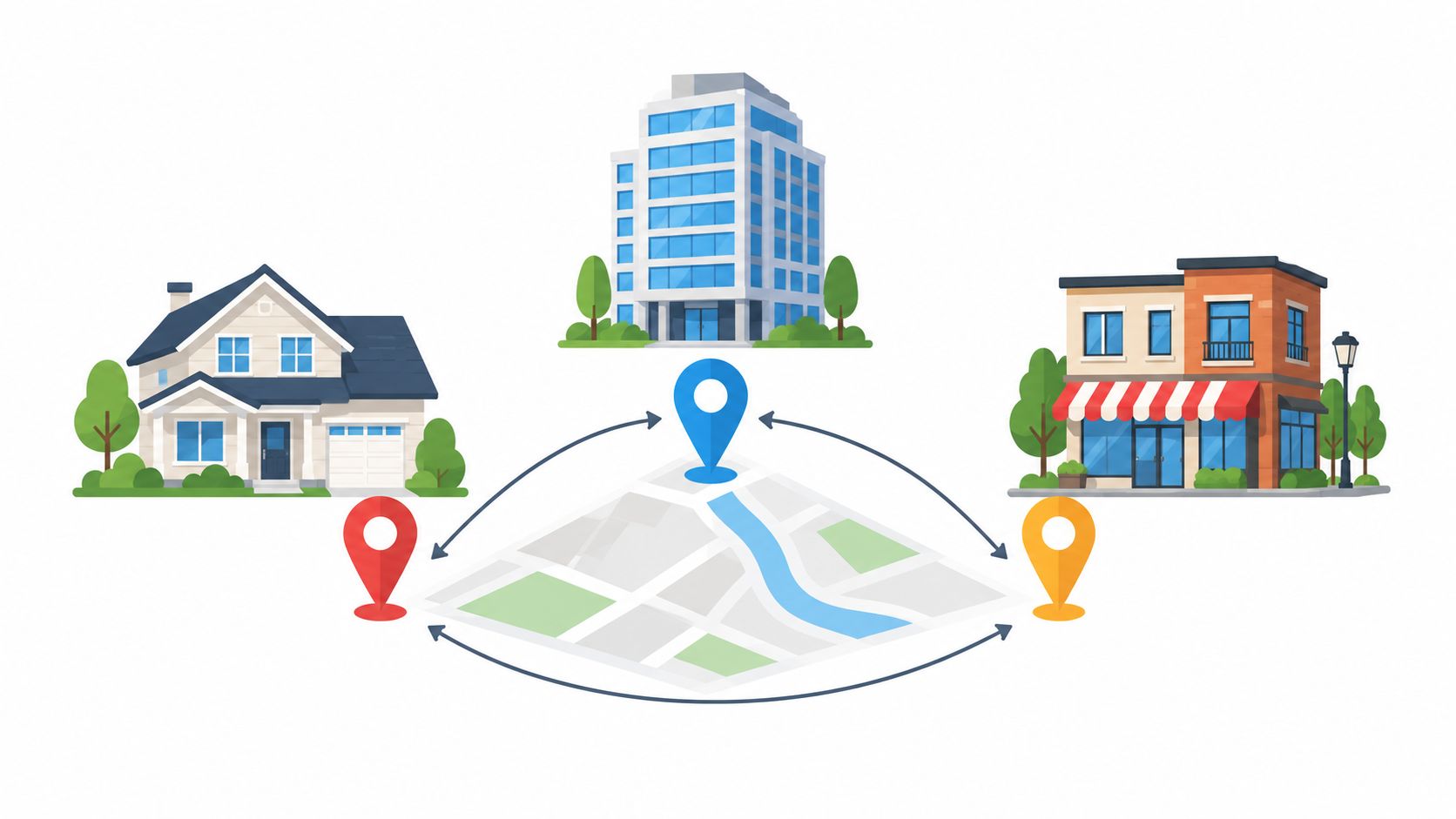
A resilient property portfolio rarely depends on one asset type, tenant profile, or neighborhood. Richard Maize's real estate background is associated with activity across residential and commercial markets, which creates a practical lesson for investors: diversification should be deliberate, not decorative.
A portfolio might combine residential rentals, office space, retail property, and mixed-use development. The objective isn't to own everything. It's to create several ways for the portfolio to produce cash flow, appreciation, or strategic flexibility as local conditions change.
Practical rule: Diversify by risk driver, not by property count.
An investor could acquire starter homes in an emerging Los Angeles neighborhood while evaluating commercial property in an established district. Another might hold residential rentals for recurring income and pursue a mixed-use project where improvements can attract both tenants and customers. The right combination depends on capital, financing, management capacity, and local demand.
Start with a market map. Review population movement, employment patterns, transportation access, comparable rents, vacancy, zoning, and the condition of competing properties. Then build relationships with local brokers, contractors, property managers, lenders, and planning professionals. Their knowledge often reveals operating risks that a spreadsheet misses.
For each acquisition, separate the appreciation case from the cash-flow case. Ask what happens if the property takes longer to lease, repairs cost more than expected, or market conditions soften. Focus on properties with clear value-add potential, maintain reserves for maintenance and disruption, and document why each asset belongs in the portfolio.
For a deeper framework, use Richard Maize's guide to building a strong real estate portfolio. The trade-off is complexity. More asset types can reduce concentration risk, but they also demand stronger systems and more disciplined oversight.
2. Entrepreneurial Venture Integration Across Sectors
A second path to value creation is to build ventures that reinforce one another without pretending they are the same business. The Richeeze Melts Food Truck illustrates how a consumer-facing operation can provide direct customer contact, brand visibility, and practical insight into what people buy.
That kind of venture can sit alongside real estate rather than replace it. Property holdings may offer stability while a food business tests products, pricing, locations, and customer preferences. An event such as POPPOP FEST can then create another point of contact, bringing together a consumer venture, community activity, promotional content, and relationship building.
The connection must be operational, not merely thematic. A shared audience can be useful, but each venture still needs its own economics.
Build a portfolio of experiments
Use a small consumer venture to test a larger commercial idea. Track sales, repeat demand, customer comments, staffing requirements, supply constraints, and the cost of acquiring attention. Don't assume that a popular event automatically proves a food concept or that a strong property network guarantees success in hospitality.
The most useful cross-sector links often involve shared capabilities:
Shared relationships: Use existing contacts for venues, vendors, media, suppliers, and community partnerships.
Shared content: Turn customer questions, event moments, and operating lessons into useful stories.
Independent measurement: Track each venture separately so one profitable activity doesn't hide another that is losing money.
Brand alignment: Choose businesses that fit the values and expertise you can credibly support.
The trade-off is management attention. Multiple ventures create more options, but they also create more ways to lose focus. Richard Maize's perspective on scaling from startup to empire is most useful when read as a reminder to build connections between ventures while preserving clear accountability inside each one.

3. Community-Centered Philanthropy as Brand Value
Philanthropy rarely creates durable brand value when it appears after the business is established. It earns trust when the operating team commits to a community need, stays involved, and reports what happened. Richard and Rochelle Maize lead charitable work through their foundation, supporting areas such as education, healthcare, youth development, and the arts (the foundation's official FAQ).
The practical test is local relevance. A real estate investor can work with a nonprofit already serving residents near a property. A consumer venture can support an organization that understands its intended customers. A festival can give local groups space to participate, raise funds, and reach new audiences. These activities connect community work to existing capabilities without turning beneficiaries into promotional assets.
Start with one defined partnership rather than a broad charitable promise. Select a nonprofit active on the block where the company owns property, then co-design a six-month mentorship cohort with its staff. Agree on attendance, completion, participant feedback, and responsibilities before announcing the program. This creates a usable record of progress and exposes weak assumptions early.
Choose aligned causes that fit the founder's values and the company's actual skills. Work with established partners that already hold local trust, rather than designing a solution from the office. Measure meaningful outputs, including participation, services delivered, continued partnerships, and feedback from the people served. Communicate responsibly by explaining the work and its limits without presenting recipients as proof of corporate virtue.
A foundation can provide governance and continuity, but paperwork does not produce impact. Listening, reliable funding, clear ownership, and follow-through do.
The trade-off is reputational exposure. Public communication can help partners attract support, while excessive promotion can make a worthwhile program look self-serving. Keep the community's benefit ahead of the brand story. This guide to community-driven real estate projects offers a practical framework for connecting property activity with local outcomes. Consistent action is what turns that connection into lasting value.
4. Content-Driven Thought Leadership and Market Positioning
Publishing alone does not create authority. Useful operating detail does. Richard Maize uses blog posts, press features, and multimedia content to make his views accessible across real estate, investment, entrepreneurship, and community work. His experience with real estate, food trucks, festivals, and foundations supports a cross-sector playbook: explain the decision, show the constraint, and give readers a next action.
Strong content examines how an outcome was produced. It identifies the assumptions that failed, the trade-offs accepted, and the steps another operator can test. A property investor could explain renovation planning. A food-truck owner could share customer testing. A festival organizer could outline partner selection, while a foundation leader could describe how a community relationship was assessed. Those examples turn experience into searchable material that can be reused across channels.
Publish for usefulness first
Set a publishing rhythm that can survive busy periods. A monthly article answering a specific audience question may outperform frequent promotional posts with little substance. Build a topic system around recurring needs, including financing, property markets, business growth, brand visibility, and community engagement.
Use a simple production sequence:
Start with a detailed article: Give readers enough context to understand the decision and its constraints.
Create shorter formats: Adapt the central lesson for video, audio, social posts, or media commentary.
Preserve the practical detail: Keep the conditions, process, and trade-offs instead of reducing every point to a slogan.
Review audience response: Use questions, engagement, and conversations to choose and refine future subjects.
Build media relationships: Offer clear commentary and useful background rather than generic pitches.
Search optimization can increase discovery, but accuracy and judgment determine whether the page solves the reader's problem. A well-ranked article still fails if it attracts the wrong audience or leaves the practical question unanswered.
The trade-off is patience. Authority develops through repeated explanations, consistent viewpoints, and evidence of applied experience. That body of work can support partnerships, speaking opportunities, media visibility, and customer trust without turning every article into a sales message.
5. Value-Add Property Renovation and Development
The best renovation plans begin before the purchase, not after the keys change hands. An investor should know which problem the property will solve, who will pay for that solution, and how the work will affect the operating plan.
Richard Maize's real estate career is described in his official career overview as involving residential and commercial property identification and development. The useful lesson is to inspect the gap between a building's current condition and its practical potential. That gap may involve layout, systems, tenant mix, permitted use, or the experience offered to customers and residents.
Consider a 1960s eight-unit building in Los Angeles. An underwriting plan might allocate $18,000 per unit for systems and layout improvements, hold a 15% contingency, and pre-qualify two contractors before closing to protect a 90-day lease-up assumption. The figures do not make the project viable by themselves. They force the investor to test whether the expected rent, schedule, and exit value can support the work.
Start with the intended tenant or buyer. A family rental may need durable finishes, storage, and efficient layouts. Professional tenants may value access, common areas, and reliable building systems. A mixed-use project introduces different circulation, permitting, and customer requirements.
Review comparable properties, local regulations, construction constraints, contractor availability, and the channels used to lease or sell the finished asset. Then use a work plan that connects each expense to a market response:
Scope the work before buying: Obtain inspections, preliminary designs, permit guidance, and contractor input.
Budget for uncertainty: Reserve contingency funds and identify decisions that can wait until conditions are clearer.
Prioritize target-market value: Tie each major improvement to a stated tenant or buyer need.
Manage the schedule actively: Delays increase financing, labor, vacancy, and carrying costs.
Document the transformation: Keep photographs, invoices, approvals, and records for marketing and later decisions.
Renovation creates value only when the improvement is wanted, affordable, legally feasible, and delivered with control. A polished finish cannot rescue weak demand, and a strong leasing concept can fail if costs or approvals run beyond the plan. Teams can use a visual explanation to distinguish cosmetic work from strategic repositioning.
6. Market Timing and Cycle-Based Investment Strategy
Timing can turn a sound asset into a poor investment. Financing terms, local demand, construction activity, and exit conditions all shape the result. Cycle awareness is not a forecast of every peak and trough. It is a process for stating assumptions clearly, watching conditions, and changing the acquisition, development, holding, or sale plan when the facts change.
A weak market may offer better entry prices, yet rents can soften, lenders can become cautious, and vacancies can last longer. A rising market may support development or a sale, while competition pushes prices beyond defensible operating assumptions. Each phase offers opportunity with a different form of risk.
Build a cycle thesis before committing capital
Begin with market history for the target area. Examine inventory, rents, employment, interest rates, transaction activity, construction pipelines, and demand at the neighborhood level. Write the thesis in plain language. State what must remain true, what would invalidate the plan, and which indicators will require a change in direction.
Use the thesis to test decisions rather than confirm enthusiasm:
Price is not demand. Rising asking prices do not prove that tenants can support the underwriting.
Model the uncomfortable cases. Test slower leasing, higher costs, refinancing difficulty, and a longer hold period.
Preserve room to adjust. Keep liquidity available and avoid commitments that depend on one sale date or financing outcome.
Match the action to the asset. Acquire, improve, hold, or sell according to the property's economics, not a market slogan.
Review on a set schedule. A quarterly review can identify changing conditions before they become expensive surprises.
Richard Maize's work across real estate, food trucks, festivals, and foundations points to the same operating principle: use a repeatable decision process, then adapt it to the sector and its cash-flow cycle. In property, that means setting trigger points before emotion enters the decision.
Housing also connects property wealth with entrepreneurship. An ECB working paper on home equity and entrepreneurship using US individual-level survey data from 1996 to 2006 found that a 10% increase in home equity raised the probability of transitioning into entrepreneurship by up to 14%, because higher collateral can ease financing constraints.
Property wealth can therefore support business formation, while timing still carries trade-offs. Better entry or exit conditions help, but conservative underwriting remains necessary in every cycle.
7. Strategic Networking and Relationship Capital
A useful network is not measured by the number of contacts in a database. It is measured by whether trusted people will share relevant information, make a thoughtful introduction, or speak candidly when a decision carries risk.
Relationships create value when they expand access to knowledge, capital, partners, customers, talent, or opportunities an operator couldn't reach alone. Richard Maize's work across real estate, business, media, consumer ventures, and philanthropy shows how relationships can support practical execution across sectors, provided they are built before a need becomes urgent.
Trust develops through repeated behavior. People notice whether you keep commitments, communicate clearly, and treat a connection as more than a transaction. That reputation can matter before a property deal, hiring need, funding request, media opportunity, or community project appears.
Give before you need access
Start with a specific contribution. Introduce two people who can help each other. Share a relevant market observation, recommend a capable contractor, or invite a local partner into an event or community initiative. The aim is to make the relationship useful without forcing an immediate return.
Build the network around clear operating needs:
Real estate peers: Exchange market intelligence and potential deal perspectives.
Contractors and vendors: Establish dependable execution capacity before a project becomes urgent.
Journalists and media professionals: Provide accurate, concise commentary that supports their work.
Community organizations: Form partnerships that give charitable and local initiatives greater credibility.
Investors and advisors: Ask for challenge and expertise, not simple approval.
Networking takes time, and returns are uncertain. Quick, transactional contact-building may create volume without trust. A relationship-led approach takes longer, but it can improve decision quality and execution when people understand one another's standards.
Follow-up is part of the work. Record commitments, send useful updates, and close open loops. Introductions tend to travel toward operators known for preparation, fairness, and reliability.
8. Data-Driven Decision Making and Market Intelligence
A neighborhood can feel promising and still produce a weak investment. Property decisions improve when demographic information, rental evidence, comparable sales, operating costs, tenant behavior, and local development plans are tested together rather than reduced to a general sense that an area is “up and coming.”
Richard Maize's property and business interests show how market intelligence can guide action across different ventures. The same operating discipline applies to a food truck, festival, media platform, or charitable program. Each needs a defined outcome, relevant evidence, and a scheduled review of what happened.
Turn evidence into operating choices
Start with a short decision record for each venture. A property owner might monitor occupancy, rent collection, maintenance response, operating expenses, and renewal behavior. A food business could track sales by location, menu performance, waste, labor, and repeat customers. An event organizer might examine attendance, partner participation, engagement, and follow-up activity.
The value comes from the questions behind the measures:
Compare forecast with actual: Preserve the original assumption beside the result, then identify the cause of any material difference.
Separate leading indicators: Review inquiries, inspections, bookings, or repeat visits before the financial outcome is visible.
Segment the evidence: Break results down by property, neighborhood, customer type, event, or channel.
Investigate exceptions: An abrupt change may indicate an operational problem or a new opportunity.
Update the model: Forecasts should guide current decisions, not become permanent beliefs.
A useful review also assigns an owner to each measure and sets a response when performance moves outside the expected range. Without that step, reporting becomes record-keeping rather than management.
The value-creation challenge increasingly concerns how work gets done. KPMG describes value creation as extending beyond cost-cutting toward sustainable productivity gains, while Deloitte research on global business services highlights GenAI, automation, analytics, process efficiency, and end-to-end ownership. KPMG's productivity perspective supports a practical rule: measure workflow improvement, not tool adoption alone.
The trade-off is false precision. Incomplete data, inconsistent definitions, or easy-to-track measures can create confidence without producing insight. Review data quality before acting on the dashboard.
9. Brand Building and Personal Authority Development
A personal brand earns value when it reduces uncertainty. People should understand the decisions you make, the work behind them, and the limits of your experience. Richard Maize's public work connects real estate, food trucks, festivals, and foundations, giving him practical material for a cross-sector point of view (Richard Maize's professional platform).
Authority grows through a repeatable operating system, not visibility alone. Start with one clear promise, such as practical property investing, cross-sector entrepreneurship, or community-centered development. Use the same idea across interviews, events, social profiles, and written content, then support it with examples from actual projects.
Turn experience into a publishing system
Publish one 800-word teardown each month that answers a single investor question. Repurpose it into a 90-second video and a press Q&A. Track inbound inquiries by topic, then use recurring questions to choose the next article. This creates a feedback loop between public expertise and market demand.
A useful authority system includes:
Useful proof: Show decisions, constraints, lessons, and outcomes without exaggeration.
Accessible language: Explain finance, development, food operations, or nonprofit work for a general audience.
Consistent publishing: Maintain a practical rhythm across articles, interviews, video, or events.
Direct engagement: Answer questions and record concerns that recur across conversations.
Transparent limits: State what you know, what you are testing, and where conditions differ.
The trade-off is exposure. A visible brand can attract partnerships and opportunities, while also making inconsistency easier to detect. Overselling a result may create short-term attention and weaken trust later. Review each claim against the underlying work, and let the person, operating principles, and ventures reinforce one another.
10. Strategic Event and Community Activation
A busy event is not automatically a valuable one. POPPOP FEST shows how a festival can connect visibility, participation, content, relationships, and consumer engagement in one physical setting. It also gives an operator a live test for ideas that online attention cannot validate on its own.
Richard Maize's experience across food trucks, festivals, foundations, and real estate points to a practical playbook: give the event a business and community purpose before booking the venue. That purpose might introduce a food venture to new customers, strengthen local partnerships, present a foundation's work, or produce material for future media. It should determine the audience, location, program, sponsors, vendors, and follow-up.
Set one primary objective, then choose a few supporting measures. Attendance is only an initial signal. Track qualified relationships, repeat customers, useful content, participant feedback, and community benefit. Collect consent-based contact information where appropriate, and schedule follow-up before the first guest arrives.
Build the operating brief around six decisions. Align the format with the audience, whether the program centers on music, food, education, networking, or families. Create memorable touchpoints by making the site easy to find and worth discussing afterward. Activate partner ventures so a food truck, nonprofit, sponsor, or local business contributes more than its logo. Invite relevant storytellers from media or the community who understand the event's purpose. Document responsibly with photos, video, testimonials, and lessons that respect participants. Review the business impact by comparing costs with relationships, content, customer activity, and community outcomes.

The trade-off is operational intensity. Events can build trust quickly, yet weak logistics can harm the brand they support. Safety, vendor coordination, accessibility, staffing, and follow-up belong in the value calculation, not in an administrative afterthought. A smaller, well-run activation may create more durable value than a larger event that produces attention without useful relationships or repeat activity.
10-Point Value Creation Ideas Comparison
Strategy | Implementation Complexity 🔄 | Resource Requirements ⚡ | Expected Outcomes 📊⭐ | Ideal Use Cases 💡 | Key Advantages ⭐ / Tip 💡 |
|---|---|---|---|---|---|
Strategic Real Estate Portfolio Diversification | High 🔄, multi-asset management & due diligence | High ⚡, capital, financing, management systems | Resilient income streams; long-term appreciation 📊 ⭐⭐⭐⭐ | Investors building scale across residential/commercial markets | Reduces single-market risk; tip: start with deep market analysis |
Entrepreneurial Venture Integration Across Sectors | Medium‑High 🔄, coordinate multiple business models | Moderate‑High ⚡, startup capital, ops bandwidth | Brand visibility, diversified revenue, synergies 📊 ⭐⭐⭐⭐ | Entrepreneurs leveraging a core brand to expand offerings | Creates cross-venture synergies; tip: align ventures with core values |
Community‑Centered Philanthropy as Brand Value | Medium 🔄, structured giving and stakeholder coordination | Moderate ⚡, ongoing funding, staff/time | Strong community ties and reputation; social impact 📊 ⭐⭐⭐ | Purpose-driven businesses seeking trust and goodwill | Builds authentic loyalty; tip: measure and communicate impact |
Content‑Driven Thought Leadership & Positioning | Medium 🔄, consistent content production & PR | Low‑Moderate ⚡, time, content production resources | Authority, organic leads, media opportunities 📊 ⭐⭐⭐⭐ | Experts who want long-term credibility and inbound leads | Compounds over time; tip: publish practical, consistent content |
Value‑Add Property Renovation & Development | High 🔄, construction, design, project management | High ⚡, capex, contractors, oversight | Tangible value uplift and faster returns 📊 ⭐⭐⭐⭐ | Investors targeting underperforming assets for repositioning | Direct ROI through improvements; tip: budget 10–20% contingency |
Market Timing & Cycle‑Based Investment Strategy | High 🔄, ongoing market analysis and flexible execution | Moderate ⚡, research, reserves, agility | Potentially enhanced returns when timed correctly 📊 ⭐⭐⭐ | Experienced investors exploiting cycle lows/peaks | Enables opportunistic buys/sells; tip: keep reserves and document assumptions |
Strategic Networking & Relationship Leverage | Medium 🔄, sustained cultivation and activation | Low‑Moderate ⚡, time, events, introductions | Faster access to deals, capital and expertise 📊 ⭐⭐⭐⭐ | Dealmakers and partnership-driven growth strategies | Exponential leverage via relationships; tip: provide value first |
Data‑Driven Decision Making & Market Intelligence | Medium‑High 🔄, data systems and analysis workflows | Moderate ⚡, tools, analysts, dashboards | More consistent decisions; early trend detection 📊 ⭐⭐⭐⭐ | Scaling investors/companies needing repeatable outcomes | Reduces bias and improves ROI; tip: define KPIs and automate dashboards |
Brand Building & Personal Authority Development | Medium 🔄, consistent messaging and visibility work | Moderate ⚡, PR, content, events | Increased opportunities, trust, and partnership flow 📊 ⭐⭐⭐⭐ | Individuals seeking media, partnerships, and deal flow | Brand becomes an asset; tip: be authentic and consistent |
Strategic Event & Community Activation | High 🔄, event planning, logistics, promotion | Moderate‑High ⚡, budget, staff, production | Memorable engagement, PR, community loyalty 📊 ⭐⭐⭐ | Product launches, community engagement, experiential marketing | Creates shareable experiences; tip: set clear metrics and invite media |
Where to Take These Ideas Next
Ten value creation ideas can create the wrong kind of motivation if they leave you trying to launch ten initiatives at once. The better move is to choose the idea that matches the resources already in your hands. A property owner may have more strength in renovation or portfolio diversification. A founder with a strong customer relationship may be better positioned to test a complementary venture. A community leader may have the trust needed to create a meaningful event or philanthropic partnership.
Start with a simple constraint review. List the capital you can responsibly commit, the skills you already possess, the relationships you can activate, and the hours you can sustain each week. Then select one operating problem. Avoid choosing an idea only because it sounds impressive. Choose the one where you can make a measurable improvement without depending on several uncertain conditions at once.
A 90-day operating cycle gives the initiative enough time to produce evidence without allowing an unproductive project to continue indefinitely. Define the starting position, the action you'll take, the indicators you'll monitor, and the decision that will follow. For a renovation, that might mean completing due diligence, confirming the target tenant, and testing the project budget. For content, it could mean publishing a focused set of practical articles and studying the questions they generate. For an event, it could mean validating the audience, partners, venue, and follow-up process before expanding the format.
Let evidence determine the next move
At the end of the cycle, ask four questions:
What changed for the customer, tenant, partner, or community?
Which assumption proved wrong or incomplete?
What work created value, and what work only created activity?
Should you improve, stop, or expand the initiative?
This discipline matters because durable value creation is rare at the highest level. Bain's 2025 analysis of 7,000 global companies found that fewer than half generated economic profit in a given year, slightly more than a quarter achieved revenue growth above inflation, and fewer than 20% achieved both in the same year (Bain's analysis of sustained value creation). Bain defines the highest standard as achieving profits above the cost of capital and real revenue growth in 8 of 10 years, which underscores why compounding execution matters more than a single successful launch.
The evidence also argues against treating value creation as cost-cutting alone. A 2007 value-creation framework identified nine nonfinancial drivers, including innovation, quality, customer relations, management capabilities, alliances, technology, brand value, employee relations, and environmental and community issues. Its value creation index had a 0.70 correlation with market value, and a 10% improvement in the index was associated with about a 5% increase in market value of equity (the value-creation framework). The practical takeaway isn't to chase a formula. It's to manage the operating drivers that customers, employees, partners, and investors experience.
AI adds another reason to focus on execution. BCG's research says 70% of AI's potential value is concentrated in core functions such as sales and marketing, manufacturing, supply chain, and pricing, while research and innovation contribute 15% (BCG's research on the AI value gap). That doesn't mean every company needs more tools. It means leaders should redesign workflows, assign ownership, and track whether the work improves revenue, margin, service, or decision quality.
Richard Maize's throughline is practical: build assets, test ventures, use relationships, communicate clearly, and connect business activity to community value. The strongest results come from repeating those behaviors across cycles. Choose one starting point, run it with discipline for 90 days, learn from the evidence, and add the next capability only when the first one can support it.
Follow Richard Maize's blog and foundation updates for continuing examples of real estate, entrepreneurship, media, and community-focused value creation. His official FAQ states that he has more than 30 years of experience in real estate and finance, while foundation materials describe charitable work led by Richard and Rochelle across education, mentorship, healthcare, community development, youth development, and the arts (Richard Maize's FAQ).
Richard Maize offers practical perspectives on real estate, entrepreneurship, brand visibility, and philanthropy through his articles, media work, ventures, and community initiatives. Visit Richard Maize to explore those examples, follow current updates, and find a grounded starting point for your own value creation plan.
Comments