Small Business Marketing Strategy Examples: 8 Proven Plays

You're the owner, the salesperson, and the entire marketing department. The budget is modest, the day is already full, and every platform is telling you to post more, advertise more, and try something new. That's exactly where most small business marketing strategy examples fail you, because they list channels without showing what a channel costs in time, what it can realistically return, or where it breaks down.
This guide takes a different approach. Each play pairs a real-world example with the tactics behind it, the trade-offs you need to weigh, and the failure points that waste money. The lens comes from Richard Maize, a Los Angeles based real estate expert, business investor, and philanthropist who has backed ventures from PR firms and food trucks to fintech. His perspective is practical and consistent across real estate, consumer ventures, and philanthropy. Create value first, measure what happens, and don't scale a tactic you can't connect to a customer.
You don't need all eight plays. You need one that matches how your customers buy, enough hours to run it properly for a full quarter, and one clear metric to judge it by. Read for fit, not novelty. A boring play that brings repeat calls beats a trendy play that only brings likes.
1. Hyper-Local Real Estate Content Marketing
A Los Angeles brokerage publishes a short market report for each neighborhood it serves, updates it monthly, and dates each one. A second set of posts answers narrower questions: what closing costs include, what a home inspection can and can't tell you, and when a seller should repair rather than discount. None of it asks for a listing appointment on the first screen. The ask comes after the reader has used the page to make a decision.
That is the shape Maize's expert-platform model takes. Answer the question a buyer or investor is searching for tonight, in the specific place they care about, before they are ready to transact. Generic national advice cannot do that work. A page built around one neighborhood, one property type, and one decision can.
How to Build It Without a Content Team
The discipline is measurement, not volume. Publish useful local commentary, then watch which pages produce calls, form fills, and repeat visits, and put your hours into the two or three topics that do.
Pick 10 to 15 neighborhoods: Build your calendar around places you can serve well, not an entire metro area.
Date every market update: Stale numbers damage trust faster than no numbers at all. A report still showing last spring's median price tells a buyer you stopped paying attention.
Give each article one next step: Link to a consultation, a neighborhood guide, or a contact page, never to three competing offers.
The trade-off is speed. Content compounds slowly at first and needs monthly maintenance, so an owner who writes twelve neighborhood reports and then skips two months has thrown away most of a quarter's work. If you won't update market data, don't publish it. Publish evergreen explainers instead, review them quarterly, and spend the saved hours on the handful of pages that bring calls.
2. Food Truck Social Media and Pop-Up Event Marketing
A food truck has no fixed storefront, so its schedule is its storefront. The image below captures the daily reality for mobile vendors and their customers, who check a phone before they decide where to eat.
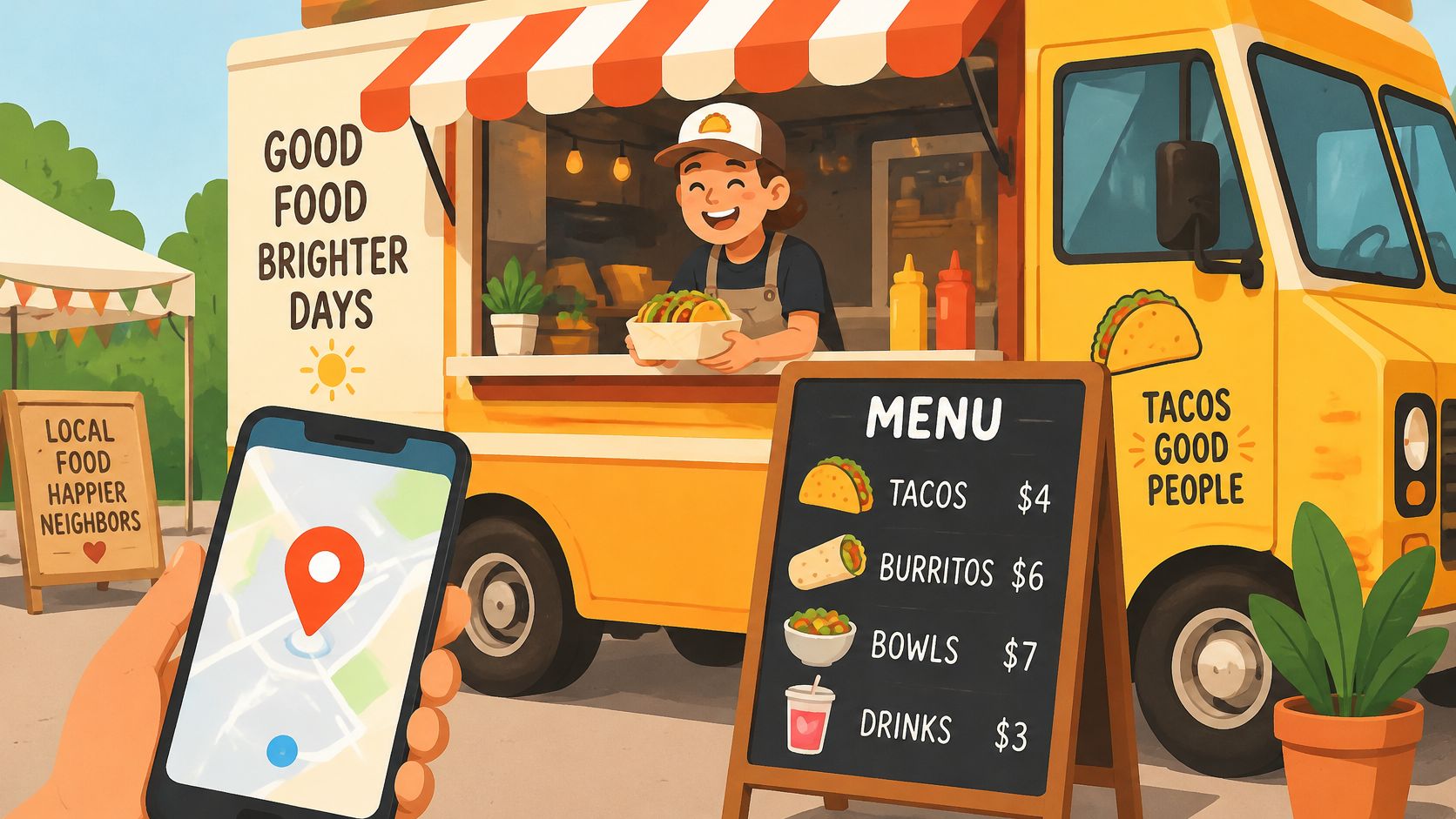
Kogi BBQ in Los Angeles built its early following by announcing truck locations on Twitter, turning a route update into a reason to show up. Trucks today do the same work with Instagram Stories, daily specials, sold out notices, and location tags. The Richeeze Melts Food Truck reflects the same consumer venture logic in Maize's portfolio, where visibility has to move with the truck. For the operational side behind that example, read how to start a food truck business by Richeeze Melts investor and co-founder Richard Maize.
What Makes Followers Show Up
Social content works when it's useful at lunchtime, not just attractive in a feed. VistaPrint reported in its 2024 small business marketing report that, in 2024, 78% of surveyed small businesses said they had experimented with or invested in new marketing approaches during the previous year, including social media advertising. Experimentation only helps if you keep the basics consistent while you test.
The short video below shows the kind of quick, location driven content a mobile business can repeat without a production crew.
Post the schedule at the same time each day, tag the location in every post, and let followers vote on a new menu item before you commit inventory. The failure point is inconsistency. If followers can't trust the schedule, they'll stop checking, and paid promotion won't fix that habit.
3. Press Features and Earned Media Outreach
A founder writes an op-ed for a business journal about a real problem in her industry, not about her product launch. A local restaurant earns TV coverage after starting a community program that a reporter can film and a neighbor can explain. Both get something advertising can't buy cleanly. A third party decided the story mattered.
Earned media is slower and less controllable than an ad, and that's why readers trust it more. Maize treats press the same way he treats an investment thesis. You need a clear point of view, evidence you can stand behind, and patience. You can see how that approach is organized on the Richard Maize press page, where features and commentary are kept in one place for future prospects, partners, and reporters to verify.
Lead with a story angle a reporter can use this week, not a product announcement only your team cares about.
Pitch Like a Source, Not a Sales Rep
Build a short list of local reporters and podcast hosts who already cover your industry. Personalize each pitch with a specific data point, customer problem, or contrarian lesson you can explain in plain language. Keep a running press page with links to every feature so one placement helps you win the next conversation.
There's also a compliance line you can't blur. The FTC states in its advertisement endorsements guidance that endorsers should not make claims requiring evidence that they do not possess. Separate firsthand experience from a general promise about returns or growth. If a result isn't typical, say what customers can generally expect instead of letting a testimonial imply more.
4. Cause-Driven Brand Marketing

The photo above shows where cause marketing either becomes credible or falls apart, in ordinary contact with the community you're claiming to support. TOMS became known for donating a pair of shoes for each pair sold, then later shifted to a broader giving model. Local restaurants run a smaller version when they donate a portion of sales to a neighborhood food bank and publish the total afterward.
The Rochelle and Richard Maize Foundation gives this play its anchor in Maize's work. Philanthropy isn't a seasonal campaign layered onto a business. It's a long term commitment that customers and partners can follow over years. That consistency is the marketing asset, because anyone can announce a donation once.
Rules That Keep Giving Credible
Pick one cause for several years: Depth beats a rotating list of logos.
Report specific numbers: Share what was given, what it funded, and what happens next.
Invite participation, don't just ask for applause: Volunteer days and matching campaigns turn customers into contributors.
Disclosure matters here too, especially when a venture, partner, or sponsored project appears in philanthropic storytelling. The FTC clarified in its 2023 updated advertising guides announcement that a platform's built-in disclosure tool may not always be sufficient. Put a visible disclosure in the post itself when a paid or business relationship is involved. Goodwill built on unclear promotion doesn't last.
5. Multimedia Storytelling and Video Content
Wine Library TV helped Gary Vaynerchuk grow a regional wine retailer by doing something simple and repeatable. He showed up on camera, tasted wine, and talked like a person instead of a brochure. Small contractors do a quieter version with project timelapses that prove craftsmanship without a sales pitch. The format differs. The trust mechanism is the same.
For Maize, multimedia isn't decoration around a written platform. It's how audiences see the people, properties, ventures, and community work behind a claim. A short interview, a walkthrough, or a behind the scenes clip lets a prospect judge tone and competence before a meeting. That familiarity shortens the first real conversation.
Produce Less, Repurpose Better
Record one solid long video, then cut several short clips from it for different questions and platforms. Hook viewers in the first five seconds with the problem or result, add captions for silent viewing, and end with one clear next step. You don't need a studio. You need clean audio, steady light, and a topic you can explain without reading.
Practical rule: If a video doesn't answer a question a customer asked this month, don't make it yet.
AI can help you repurpose transcripts, draft clip captions, and sort customer questions, but it shouldn't invent your position or your experience. A Fiverr survey reported in its Small Business Month survey release that 81% of AI-using small businesses apply it to content creation. Keep positioning, claims, and final review human led, and test AI assisted versions against human created work on qualified leads, not output volume.
6. Email Newsletter and Nurture Campaigns
A real estate agent sends past clients a monthly market update they can read in two minutes. A food business emails its list when a seasonal menu starts and when it's about to end. Neither email tries to do everything. Each one gives the reader a reason to remember the business at the moment a decision is forming.
Email is unfashionable and direct, which is why it still earns its place. You own the list, you control the timing, and you can see who opened, clicked, and replied. In Maize's content model, email turns a blog reader into a subscriber and a subscriber into a repeat contact, instead of hoping an algorithm shows the next post.
Build the List Before You Automate Anything
Offer something useful for signing up, such as a neighborhood guide, an investor checklist, or early notice of events. Keep a consistent send schedule you can maintain, then review subject lines and clicks monthly. One helpful email a month beats four rushed emails that train people to ignore you.
Your back office matters as much as your writing. The U.S. Census Bureau reported in its Annual Business Survey story on business data that approximately 10.6% of businesses kept all customer feedback in digital storage. Add a source field to every inquiry form, tag where each subscriber came from, and keep a simple feedback log. Without that, you can't tell whether email, search, press, or an event produced the customer.
7. Community Events and Sponsorships

A vendor hands out a sample at a farmers market booth and learns in one conversation what a survey would miss. That exchange is why local events still sell. A youth sports sponsorship buys a version of the same presence: your name shows up where families already gather, week after week.
Maize's community activity runs through POPPOP FEST and the Rochelle and Richard Maize Foundation. Community philanthropy updates on the site include the David Frank Memorial Golf Classic event page. Presence alone does little. The follow-up after the event is what turns a name on a banner into a customer.
Turn Attendance Into a Measurable Pipeline
A Cheltenham garden center shows why offline outcomes need their own scorecard. The JasmineDirectory hyperlocal campaign case study reported monthly revenue rising from GBP 28,000 to GBP 81,200 over six months, while daily visitors rose from 45 to 186. Those numbers come from one store. Copy the method, not the result. Track leading signals weekly, such as sign-ups and booth conversations, and commercial outcomes monthly, such as booked jobs or repeat visits.
Choose events your customers already attend: A booth in the wrong room is a donation with extra steps.
Capture leads on site: Use a QR code or short sign-up tied to that specific event.
Post photos within 24 hours: Tag the event so the audience that missed it sees the follow-through.
Assign the follow-up: One person should own the calls or emails within a couple of days.
Sponsorships and booths pull from the same budget. I would fund the event where you can collect names and measure return, not the one with the biggest banner. A small check to a youth team can work if you pair it with a simple offer and a way to track who came from it.
8. Local Search Optimization and Online Reviews
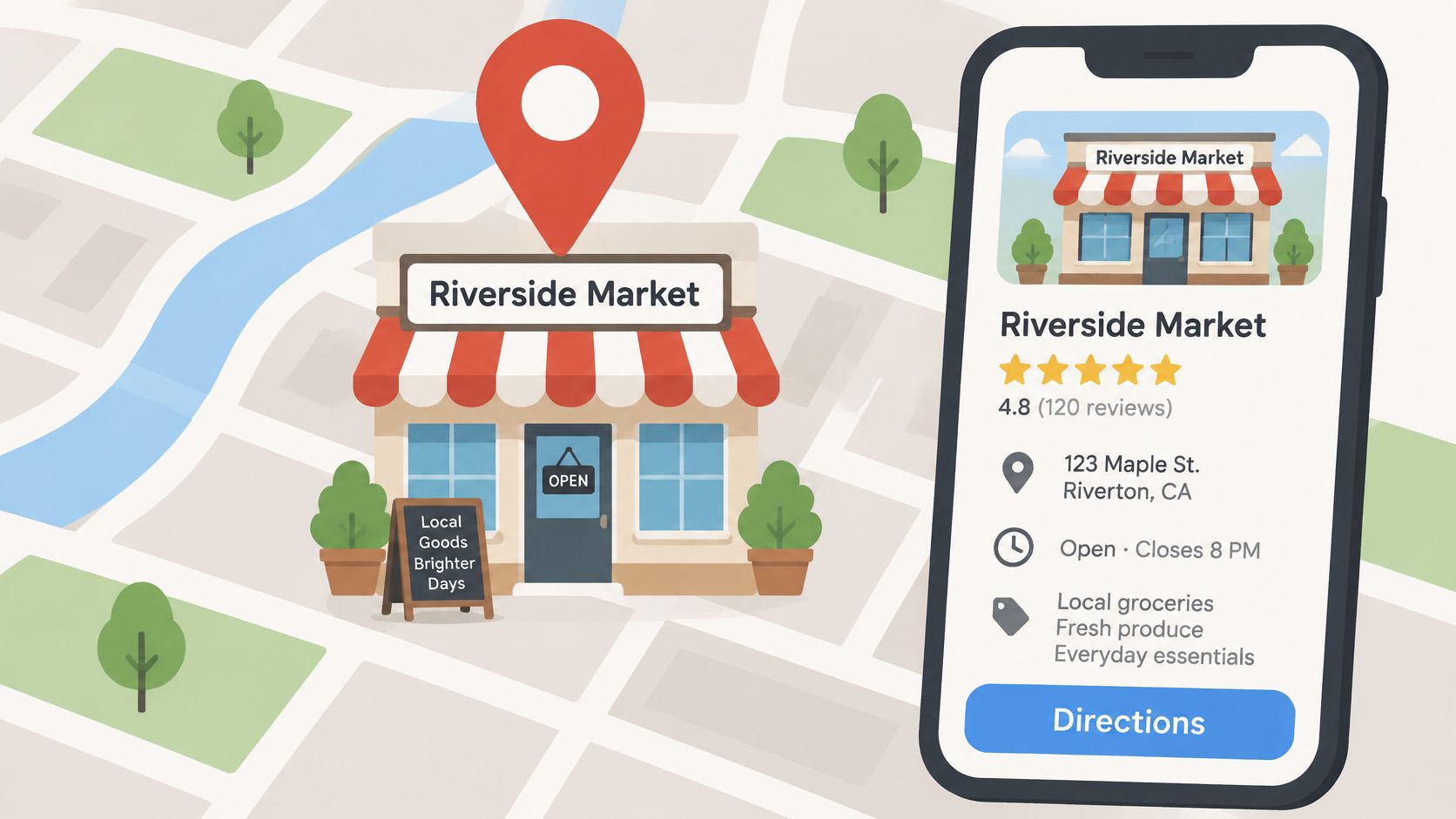
The map listing above is often the first impression a local customer gets, before your website and before your pitch. A contractor who gathers steady five star reviews and keeps hours, photos, and service areas current becomes easier to choose in map results. A restaurant that responds to reviews, including hard ones, shows attentiveness that a prospect can verify in public.
This is foundational work, not a growth hack. Google reported in its small business commitment post that, in 2017, only 51% of U.S. businesses had a website. A complete Google Business Profile, accurate location details, clear service descriptions, professional photos, and direct contact options still function as a competitive asset for a local firm with a limited budget.
The Weekly Habits That Compound
Ask for a review in person or by text right after a positive experience, while the result is fresh. Update photos and business hours monthly, and respond to every review within a few days. Thank the happy customer by name where appropriate, and answer a negative review with what you'll check, not with an argument.
From Maize's investor perspective, discoverability is a conversion channel, not a branding extra. A profile that produces calls, direction requests, bookings, and consultation inquiries is infrastructure. Build it before you spend heavily on ads, because paid traffic sent to an incomplete listing and a thin website leaks money you didn't need to lose.
How the eight small business marketing strategies compare
Eight plays, eight different cost structures. The table compares them on the three things that decide whether a small business can sustain a channel: what it costs to keep running, how long before the phone rings, and which kind of business each one suits.
Item | Typical Cost | Time to Results | Best For |
|---|---|---|---|
Hyper-Local Real Estate Content Marketing | Low ongoing cost; requires time for writing | Months for measurable results | Building local authority and long-term search visibility |
Food Truck Social Media and Pop-Up Event Marketing | Low cost; requires consistent content creation | Immediate visits; ongoing audience growth | Driving foot traffic to mobile food businesses |
Press Features and Earned Media Outreach | Low direct cost; requires staff time | Unpredictable; depends on media timing | Building credibility and earning third-party exposure |
Cause-Driven Brand Marketing | Moderate; a recurring giving budget scaled to margins | Long term with consistent commitment | Building community goodwill and customer loyalty |
Multimedia Storytelling and Video Content | Moderate; equipment, editing time, and freelance help | Gradual, depending on publishing and audience growth | Humanizing a brand through engaging visual stories |
Email Newsletter and Nurture Campaigns | Low to moderate; depends on tools and list size | Gradual as the subscriber list grows | Nurturing prospects and keeping customers engaged |
Community Events and Sponsorships | Moderate to high; costs include staffing and permits | Immediate visibility; impact varies by event | Building local recognition and face-to-face connections |
Local Search Optimization and Online Reviews | Low cost to set up and maintain | Gradual as listings and reviews improve | Reaching nearby customers searching for local services |
Two rows get misread most often. Cause-driven marketing looks free until the giving becomes recurring; a monthly commitment scaled to margins is moderate spend, not a rounding error. Video looks expensive until you price equipment, editing hours, and freelance help against the number of clips you publish per quarter. One usable video a month beats a studio setup you never switch on.
The cheap rows carry their own bill. Press outreach costs little cash and plenty of staff time, and coverage timing stays out of your hands. Email runs cheap until the list passes a few thousand names, then tool tiers and design hours show up.
Richard Maize has backed ventures from PR firms and food trucks to fintech, and the pattern across them holds: the channel that wins is the one whose cost per acquired customer the business can pay again next month. A food truck justifies near-zero social spend because visits happen the same day. A fintech cannot, because the sales cycle runs for weeks and needs nurture before it converts.
Read the Time to Results column against your cash runway. A play that takes months is fine if you have months of margin to fund it.
Choose One Play This Quarter and Measure What Happens
Running all eight plays at once makes each one look weaker than it is. Pick the play that matches how customers buy. If they search by neighborhood and compare reviews, start with local content and local search. If they find you in person, start with events and a reliable way to capture contact details. If your best customers return over years, build the email list and write as if their time matters.
Commit for one full quarter. Define one primary conversion before launch: a booked consultation, a qualified inquiry, a review, or a subscriber from a specific page or event. Give the campaign its own landing page, QR code, phone number, or intake question. That separation matters because social proof can mislead. A 2025 advertising trends report from QuickBooks found that 75% of small businesses called social media effective, yet referrals and direct traffic still make last-click attribution unreliable. Judge channels on customer acquisition cost, gross profit, repeat business, and referral value. Cost per lead means little if those leads never buy.
Test the page where intent is highest before you redesign anything else. MarketingProfs reported in its metrics and ROI case studies library a case where testing alternative landing pages increased conversions by up to 67%. That is not a guarantee. It is a reason to split traffic randomly and check whether more form submissions produce more qualified conversations and revenue per lead.
Keep claims clean while you test. The FTC requires in its Disclosures 101 for social media influencers that a material connection be disclosed clearly and conspicuously when it could affect how audiences evaluate an endorsement. That covers ventures, partners, payment, and free or discounted products or services. Clear disclosure protects the trust that makes expert-led marketing work.
Start small, measure, and reinvest in what produces profitable customers. Review the numbers at 30, 60, and 90 days, then put more resources behind the play that pays back. Richard Maize's work across real estate, food ventures, and philanthropy follows that order: value creation first, promotion second, proof throughout. Questions and opportunities for discussion can be sent to richardmaizebusiness@gmail.com.
Richard Maize shares practical commentary on real estate, entrepreneurship, brand visibility, and community impact, drawn from hands-on investing across property, consumer ventures, and philanthropy. If you are choosing your next marketing play and want examples grounded in real ventures rather than generic tactics, visit Richard Maize to explore his blog, press, and multimedia work.
Comments