Recession Proof Investments

Most advice about recession proof investments starts in the wrong place. It starts with labels. Buy gold. Hide in cash. Own defensive stocks. Wait it out.
That framing is too simple for real money.
A recession doesn't ask whether an asset sounds safe. It tests whether the asset can keep operating, keep producing cash, and keep its footing when buyers, tenants, customers, and lenders all get more selective at the same time. That's the lens seasoned investors use. It's also why Richard Maize stands out as an expert worth studying. His body of work reflects a practical investor's view of durability, especially around real estate, business ownership, and assets that stay useful when sentiment turns negative.
In my experience, the investors who come through downturns strongest aren't the ones chasing the highest upside in good years. They're the ones who built for stress before the stress arrived. They own assets with staying power, hold enough liquidity to act when others freeze, and know the difference between a temporary markdown and a permanent problem.
Fortifying Your Portfolio for Economic Storms
The phrase recession proof investments sounds comforting, but it promises something no honest investor should promise. Nothing is immune to pressure. Prices move. Credit tightens. Buyers hesitate. Even strong assets can get marked down when fear spreads.
What you can build is recession resilience.
That's a better objective because it focuses on what matters in practice. Can the asset keep serving a need? Can it keep generating income? Can you hold it without being forced to sell at the worst moment? Those questions matter more than whether someone calls an asset defensive.
I've watched enough market cycles to know that downturns reward discipline more than prediction. Investors spend too much energy trying to guess the exact start of a recession and too little energy preparing for what happens when one arrives. Preparation looks boring on the surface. Reduced debt. Stronger reserves. Better tenants. Durable businesses. Clear standards for what you'll buy and what you won't.
That's where real protection comes from.
Why the popular advice falls short
A lot of generic advice treats recessions like a signal to stop investing altogether. That usually leads to one of two bad outcomes. People either sell quality assets out of fear, or they sit on the sidelines so long that they miss the period when the best opportunities start to appear.
A better approach is to separate market volatility from asset fragility. Those are not the same thing. A quoted price can drop even when the underlying business or property remains useful and productive.
Practical rule: Don't look for investments that never move down. Look for investments you can still explain calmly when the market is under pressure.
The posture that holds up
A resilient investor thinks in layers.
Liquidity first: Cash reserves give you time and options.
Cash flow second: Income reduces your dependence on perfect timing.
Asset quality third: Better locations, stronger tenants, and essential demand hold up better.
Patience always: Distress creates openings, but only for investors who aren't distressed themselves.
That mindset is the foundation of financial resilience in uncertain times. It's less about finding a magic asset and more about building a portfolio that can absorb shocks without breaking.
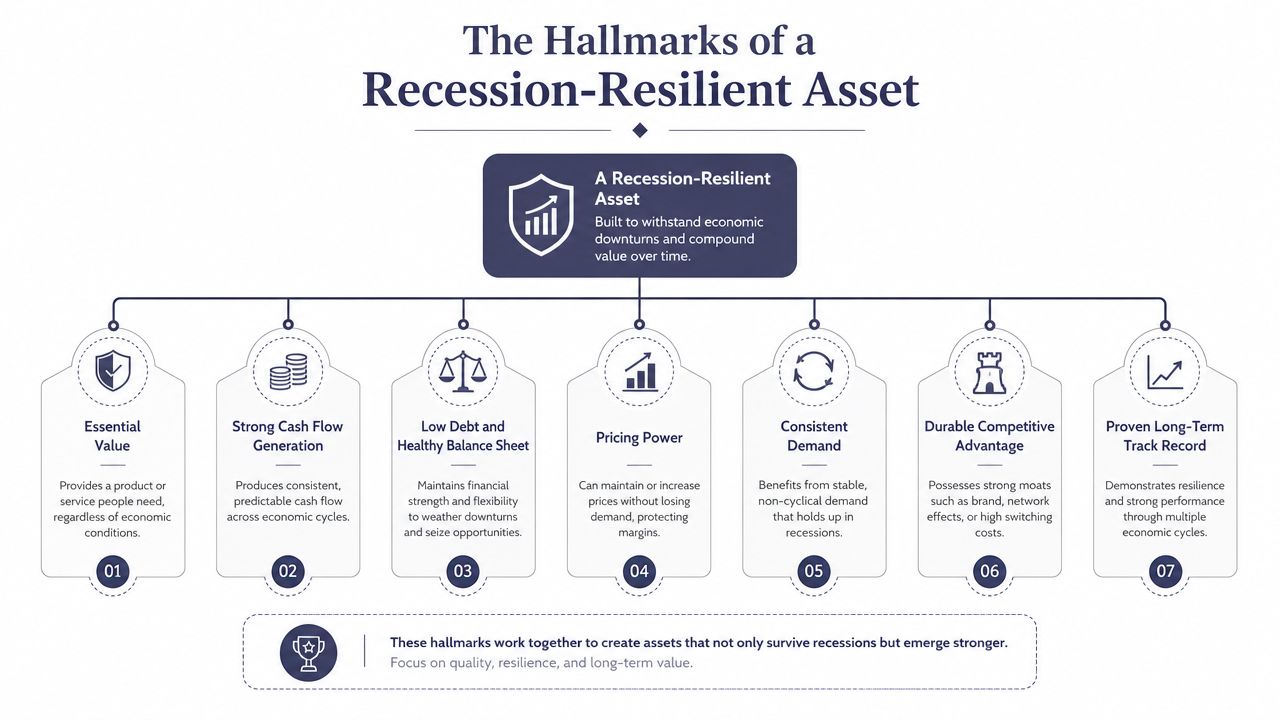
The Hallmarks of a Recession-Resilient Asset
Before you pick an asset class, you need a filter. I use a simple one. If an investment can't pass a durability test at the operating level, I don't care how good the story sounds.
Demand that doesn't disappear
The first hallmark is inelastic demand. People may delay buying a luxury watch, but they won't stop paying for housing, food, medical care, repairs, or core business services they need to keep operating. That's the difference between a want and a requirement.
Consider the analogy of a house's foundation. You don't notice it much when things are calm, but when pressure hits, the structure depends on it. Assets tied to essential needs usually have a sturdier foundation than assets tied to impulse spending or speculative enthusiasm.
Cash flow you can count on
The second hallmark is predictable cash flow. Appreciation is helpful, but appreciation without income can turn into a waiting game at exactly the wrong time. In tougher markets, cash flow gives you flexibility. It helps cover expenses, service debt, maintain the asset, and hold your position without panic.
I always pay close attention to how income is generated. Is it recurring? Is it diversified? Is it dependent on one customer, one tenant, or one fragile trend? Resilient assets usually don't rely on a single point of failure.
Operations that stay manageable
Some investments look attractive until you own the operating headaches. A recession magnifies weak systems. Margins get thinner. Mistakes cost more. Management quality matters more.
Here's a practical screen I like:
Hallmark | What it looks like in practice |
|---|---|
Essential use | The customer needs it even when budgets tighten |
Recurring income | Revenue repeats without constant re-selling |
Low volatility | Day-to-day operations stay understandable |
Pricing power | The asset or business can defend its economics |
Strong counterparties | Tenants, customers, or operators are credible |
Limited obsolescence | Demand isn't based on a fad |
Sensible leverage | Debt doesn't control the outcome |
The moat matters
A resilient asset also needs a moat. In real estate, that might be location, zoning, replacement cost, access, or tenant fit. In a business, it could be convenience, customer stickiness, local brand trust, or service reliability. If competitors can easily copy the offering, downturn pressure gets worse fast.
Strong assets don't need a perfect economy. They need a reason customers keep choosing them when budgets get tighter.
What fails this test
Some assets fail because demand is too discretionary. Others fail because the capital structure is too aggressive. Some fail because the owner counted on refinancing instead of operating performance. That's common in good times, and it gets exposed in bad ones.
When people talk about recession proof investments, I think they should spend less time naming sectors and more time asking five plain questions:
Would people still pay for this if the economy slows?
Can it produce cash without heroic assumptions?
Is management simple enough to execute under stress?
Does it have a real competitive edge?
Can I hold it through turbulence without depending on luck?
If the answers are weak, the label won't save you.
Defensive Staples and Safe Havens
Traditional defensive assets have a role. The mistake is assuming they're a complete strategy. They're not. They're tools, and each tool solves a different problem.
Consumer staples earn their reputation
Consumer staples deserve respect because they sell goods people keep buying when the economy weakens. During the 2008 financial crisis, while the S&P 500 fell by over 38%, the Consumer Staples Select Sector SPDR Fund declined by a more modest 17%, showing the relative resilience of companies selling essential goods, according to the Consumer Staples Select Sector SPDR Fund data page.
That doesn't mean every staples company is automatically a great investment. You still have to inspect the balance sheet, the brand strength, the pricing power, and whether management allocates capital sensibly. A weak operator inside a defensive sector is still a weak operator.
Names like Procter & Gamble often come up in these discussions for a reason. Household products remain part of daily life. The principle matters more than the ticker. People keep restocking necessities even when they cut back elsewhere.
Cash is more than safety
Cash gets dismissed when markets are rising and respected when liquidity disappears. I view cash as dry powder. It's not exciting, but it gives you freedom. In a downturn, freedom matters.
Cash lets you avoid forced selling. It lets you cover obligations without scrambling. It also lets you buy when good assets trade at unattractive prices for the seller, not because the asset itself stopped working.
That said, holding too much cash for too long has a cost. Cash doesn't produce the same kind of operating return you get from a productive property or a good business. It's a stabilizer, not the whole engine.
Utilities, healthcare, and gold
Utilities and healthcare often attract capital during uncertain periods because they provide necessary services. The right way to evaluate them is not by sector label alone. You want businesses with understandable operations and staying power.
Gold is different. It can act as a store of value and a hedge against loss of confidence in financial assets. But gold doesn't collect rent, ring a register, or send you operating income. That makes it useful in a portfolio, but limited if you need the asset itself to produce cash.
Gold can preserve purchasing confidence in uncertain periods. It can't replace a well-run asset that pays you while you wait.
A balanced investor uses these assets with intention. Cash for flexibility. Staples for essential demand. Utilities or healthcare where the underlying business is sturdy. Gold as insurance, not as a substitute for cash flow.
For investors thinking about inflation pressure alongside recession risk, this broader question of real assets and protection is worth exploring in real estate as a hedge in a volatile market.
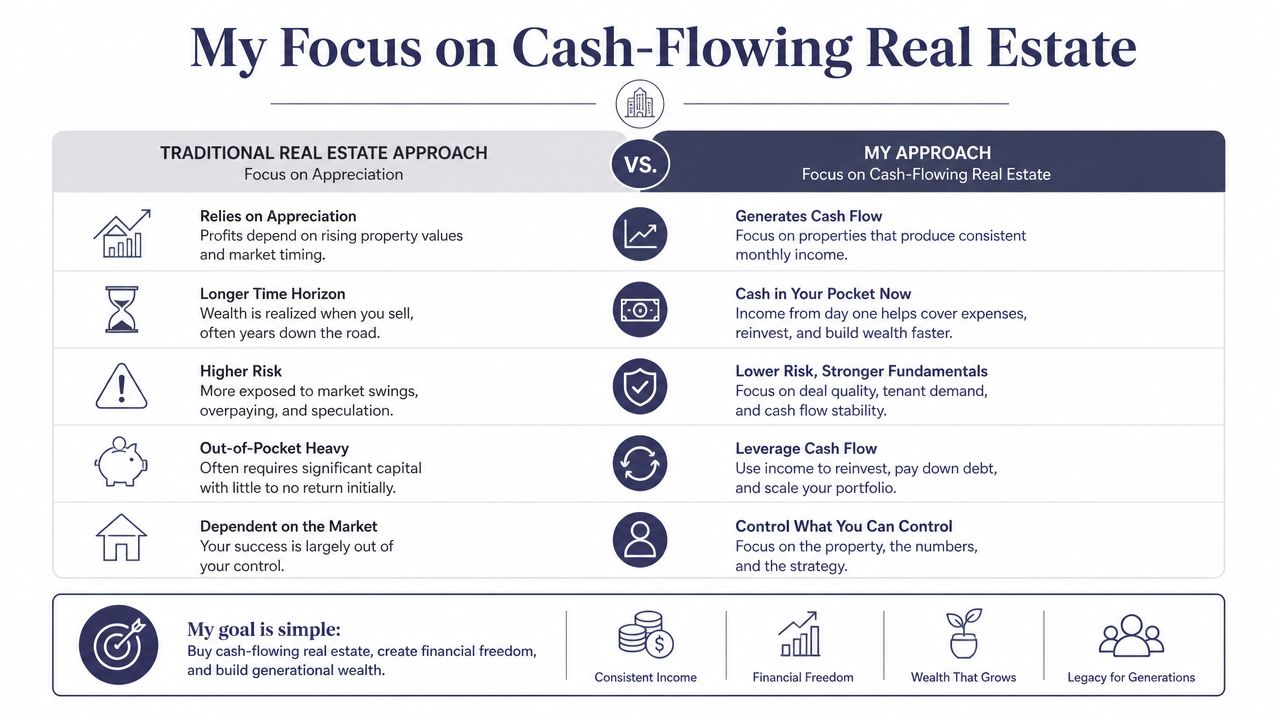
My Focus on Cash-Flowing Real Estate
If I had to pick the backbone of a resilient portfolio, I'd start with cash-flowing real estate. Not every property. Not every market. Not every deal structure. I mean well-located assets with durable demand, sensible financing, and income you can underwrite without fantasy.
That distinction matters.
A lot of investors talk about real estate as if all property behaves the same way. It doesn't. In Los Angeles, I've seen the gap firsthand between assets people need and assets people can postpone. A well-located apartment building solves an ongoing need. A retail property with a tenant mix built around convenience and essentials solves an ongoing need. A property bought only because the neighborhood feels trendy is a different proposition entirely.
Why income beats hope
I prefer properties that can support themselves through operations. If a deal only works because you assume aggressive appreciation, you're not investing. You're forecasting. And forecasts get punished quickly in recessionary periods.
Multifamily housing remains one of the clearest examples of operational resilience. People may trade down, double up, or renegotiate, but they still need a place to live. In Los Angeles, location quality matters enormously. Access to jobs, transportation corridors, neighborhood services, and everyday convenience can make the difference between a property that stays occupied and one that starts leaking income at the worst time.
A resilient property gives you multiple ways to win. Current income. Long-term equity buildup. Optionality when market sentiment improves. That's a much stronger setup than praying cap rates compress at the right moment.
The tenant matters as much as the building
One of the most expensive mistakes investors make is focusing on the roofline and ignoring the rent roll. In downturns, the tenant profile becomes the story.
For retail, I like triple-net lease structures when the tenant is tied to an essential use. Grocery operators, pharmacies, and necessity-based neighborhood services generally hold up better than concepts built on impulse traffic. The lease structure matters because it can shift certain expense burdens away from the owner, which helps preserve predictability.
For apartments, tenant quality and management discipline matter just as much. A building in a solid pocket of LA with consistent maintenance, professional screening, and hands-on oversight can outperform a prettier asset that's mismanaged.
Here's what I'm looking at before I get comfortable:
Location utility: Can tenants live or operate conveniently from this property?
Tenant necessity: Is the use essential, habitual, or easily cut from a budget?
Lease durability: Do the lease terms support stability?
Physical condition: Will deferred maintenance become a bigger bill under pressure?
Financing reality: Can the asset carry its debt without heroic rent assumptions?
That's the framework behind the importance of cash flow and equity in real estate investing.
To see the operating mindset in action, this short video adds useful context.
Los Angeles teaches discipline fast
LA is a strong teacher because it doesn't tolerate lazy underwriting for long. Costs are real. Regulation is real. Tenant behavior is local. If you own property here, you learn quickly that resilience isn't about having the flashiest asset. It's about having one that remains useful and manageable under pressure.
I've always favored assets where the business plan starts with operations, not slogans. Improve management. Tighten collections. Keep the property maintained. Understand tenant needs. Protect occupancy with service and responsiveness. Those aren't glamorous moves, but they're the moves that hold a portfolio together.
In real estate, recession resistance usually shows up in the rent roll before it shows up in the appraisal.
That's why I put cash-flowing real estate near the center of any serious conversation about recession proof investments. It's tangible, understandable, and if you buy the right asset the income can keep doing its job even when headlines turn ugly.
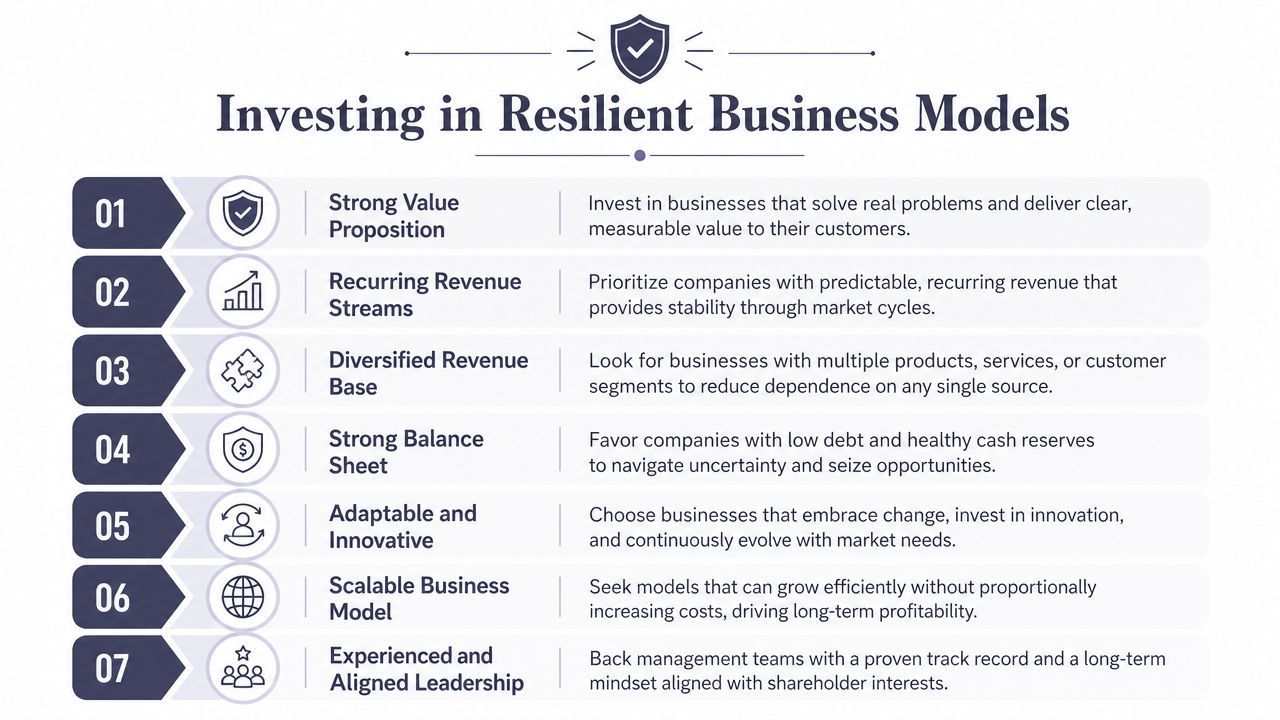
Investing in Resilient Business Models
The same filter that works in real estate works in operating businesses. A resilient business doesn't need ideal conditions to stay alive. It needs a reason customers keep showing up, and a cost structure management can control.
Essential service businesses stay closer to the customer's need
When people get nervous, they cut discretionary spending first. They still fix the car they need to get to work. They still call for plumbing, electrical, roofing, and critical home maintenance when something breaks. Businesses still pay for services that keep operations moving, reduce downtime, or protect revenue.
That's why I pay attention to categories such as:
Business type | Why it can stay resilient |
|---|---|
Auto repair | Transportation remains necessary for many households |
Home maintenance | Repairs don't wait for consumer confidence |
Practical B2B services | Businesses keep paying for mission-critical support |
Value-oriented food concepts | Consumers still seek convenience and affordable comfort |
The key is not just what the business sells. It's how the business sells it. Local reputation, repeat demand, route density, service reliability, and operating discipline all matter.
Franchise logic can work in a downturn
Certain franchise and food concepts can also hold up better than people expect, especially when they hit the right value point. Consumers often pull back from premium dining before they abandon affordable convenience. Comfort food and familiar formats can remain attractive when households become more price-conscious.
That's part of the appeal behind concepts like the Richeeze Melts truck. The value isn't abstract. It sits at the intersection of affordability, convenience, and a product people understand immediately. That kind of clarity helps in tougher markets.
Of course, not every franchise is resilient. Some are overbuilt. Some carry weak unit economics. Some depend on traffic patterns that can shift sharply. The same discipline applies here as in property investing.
Look at repeat demand: Is this a one-time novelty or a habit?
Check operating simplicity: Can management execute consistently?
Study local fit: Does the concept match the neighborhood and customer base?
Watch the cost structure: Labor, inputs, and occupancy costs can squeeze weak models fast.
What I avoid
I'm cautious around businesses that need constant promotion just to maintain sales, businesses with bloated overhead, and businesses whose entire value proposition disappears when the customer starts comparing options carefully.
A lot of private deals sound compelling because the story is polished. The resilient ones usually sound plainer. They solve a recurring problem. They charge fairly. They operate cleanly. They don't need perfect conditions to survive.
The best downturn businesses often aren't glamorous. They're useful, repeatable, and boring in the right ways.
That's a powerful extension of the recession proof investments idea. You don't have to stay inside public markets to build resilience. You can own operating businesses that serve daily needs, produce cash, and keep their footing when weaker models start wobbling.
Building Your All-Weather Portfolio
A strong portfolio isn't built by collecting assets that all react the same way. It's built by combining holdings that earn their place for different reasons. Some provide liquidity. Some produce income. Some preserve optionality. The point is balance, not uniformity.

Build around resilience traits
If you want an all-weather approach, diversify across characteristics, not just labels. Owning several assets that all depend on cheap credit and optimistic sentiment is not real diversification.
A sturdier mix often includes:
Liquid reserves so you can hold steady and act decisively.
Cash-flowing assets such as well-bought real estate or durable businesses.
Selective defensive exposure for stability during broader market stress.
Measured financial arrangements so a temporary downturn doesn't become a permanent loss.
A practical review checklist
Use this checklist against every holding in your portfolio.
Need test Ask whether the customer, tenant, or end user still needs this in a weaker economy.
Cash flow test Separate assets that produce current income from assets that only work if someone pays more later.
Debt resilience check Review debt. If refinancing conditions worsen, can the asset still stand on its own?
Management test Look at who is running the property or business. Execution quality shows up fastest under pressure.
Liquidity test Keep enough accessible capital that you won't be forced into bad sales or bad decisions.
Concentration test Make sure one tenant, one customer, one sector, or one thesis doesn't control too much of your outcome.
What works and what doesn't
What works is simple, even if it isn't easy. Own useful assets. Favor cash flow. Respect liquidity. Borrow prudently. Stay patient.
What doesn't work is pretending volatility is the same thing as opportunity, overpaying for weak assets because they carry a defensive label, or using debt as a substitute for margin of safety.
If you apply that standard consistently, recession proof investments stop being a marketing phrase and start becoming a practical portfolio discipline.
For readers who want a sharper view from a seasoned operator, Richard Maize offers a grounded perspective shaped by decades in Los Angeles real estate, business investing, and hands-on value creation. His platform is a useful place to explore ideas on cash flow, resilient assets, entrepreneurship, and the kind of disciplined decision-making that holds up when markets get difficult.
Comments