Community Impact Examples: 8 Ways That Work

The most popular advice says start with a big announcement, a ribbon cutting, and a photo of a check. That's backwards. Real impact is built, not announced, and the projects that last usually look unglamorous in their first year. They're disciplined about a lease, a maintenance reserve, a mentor showing up every week, or a foundation funding the same local partner again instead of chasing a new headline.
Los Angeles based investor and philanthropist Richard Maize is useful to study here not because one model fits every neighborhood, but because his work connects property, small business, events, and giving. Those pieces reinforce each other when they're managed with patience. A building brings foot traffic. A food business gives people a reason to stay. A festival builds identity. A foundation helps local organizations keep going after opening day.
The eight community impact examples below follow that practical logic. Each one can be copied at a modest scale, and each one has trade offs you should face early. Some need capital and permits. Others need time, tenant selection, and honest measurement. Pick the model that matches the assets you control, then fund it long enough for residents to trust it.
1. Adaptive Reuse of Vacant Commercial Property
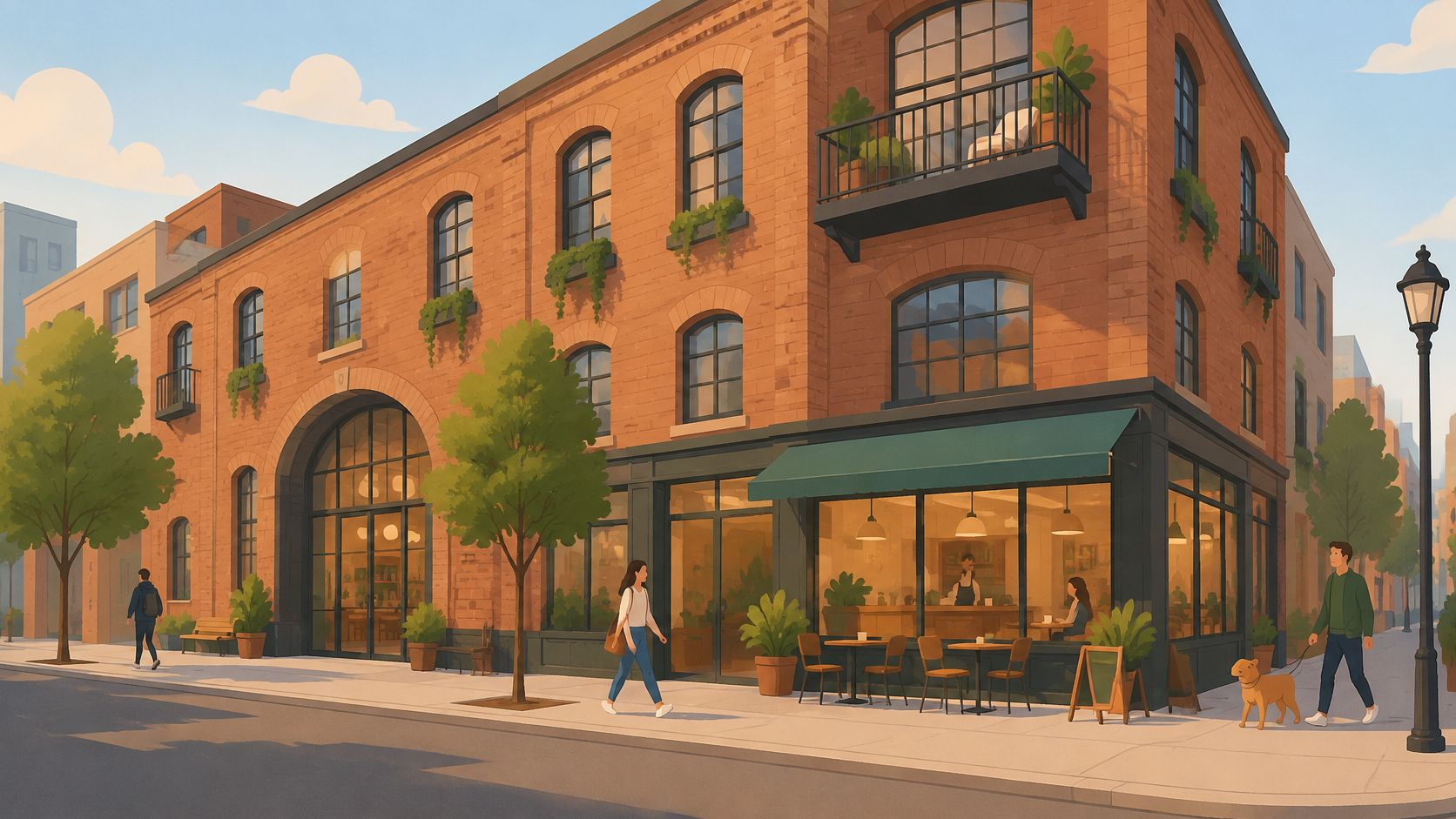
A vacant warehouse can become a neighborhood asset, but only if the new use can support its operating costs. Adaptive reuse converts underused buildings into housing, workspaces, studios, or community venues while retaining usable structures. For an investor or donor, the opportunity is to pair a property's physical potential with a use residents will keep using.
A five-year evaluation of 10 diverse, low-income U.S. neighborhoods found housing improvements alongside projects such as parks, community centers, murals, and grocery stores. The lesson for property partners is to consider how a building fits into wider neighborhood needs, rather than treating occupancy as the only measure of success. Office-to-residential conversions and former industrial spaces turned into studios apply that principle by bringing daily activity back to underused sites.
What to Check Before You Buy
Test feasibility before acquisition: Assess the building's structure, zoning, and permitting timeline before committing capital.
Ask residents early: Meet neighborhood groups before plans are fixed. Find out whether housing, workspace, childcare, or retail addresses a real local need.
Budget for shared space: An affordable unit or community room can serve residents, but only with a funded plan for ongoing operations.
The trade-off is cost and time. Code upgrades, seismic work, plumbing, and accessibility improvements can push expenses beyond initial expectations. Richard Maize's work connecting property investment with community benefit offers a useful model for partners: building sustainable impact through community-driven real estate projects requires disciplined budgeting, resident input, and a long-term operating plan. If those costs are not covered, shared spaces and other promised benefits are often the first features to be cut.
2. Affordable and Workforce Housing Development
Affordable housing and workforce housing solve related but distinct problems. Affordable housing reserves units for households below area median income. Workforce housing serves essential workers, such as teachers, nurses, and public employees, who may earn too much to qualify for some subsidies but still cannot afford nearby market rents. A neighborhood that loses these workers also loses the people who keep it running.
Capital does not flow evenly across neighborhoods. Urban Institute findings cited in the earlier revitalization discussion show that majority-White neighborhoods received more market investment per household than majority-Black and majority-Latino neighborhoods. For investors and donors, that disparity belongs in underwriting: assess where capital already flows, then determine whether patient financing can address a real housing gap without assuming demand alone will carry the project.
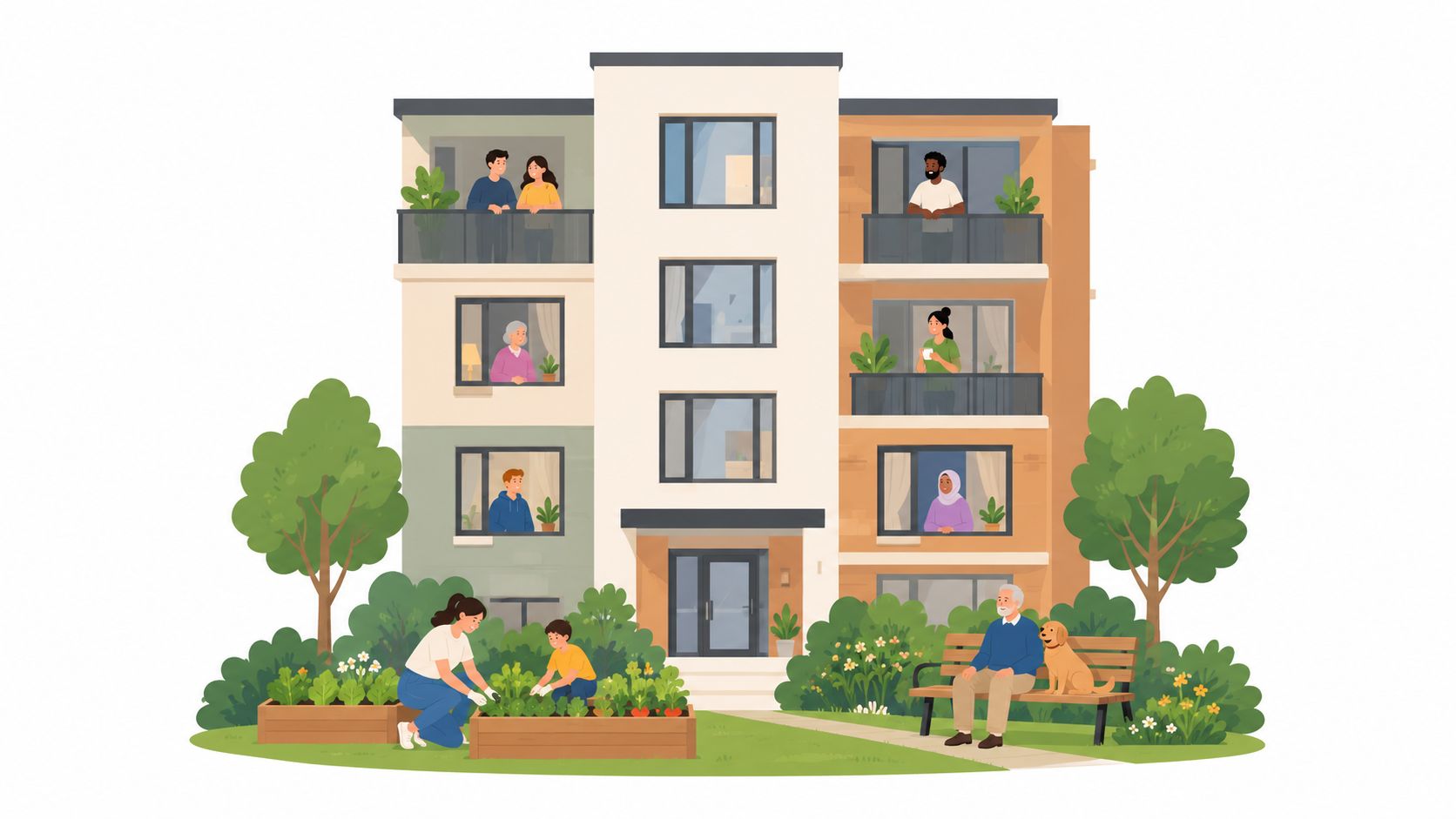
Low Income Housing Tax Credit developments and mixed-income buildings offer established models, pairing restricted rents with other sources of project income. Both require disciplined operations. Compliance, resident services, and long-term repairs determine whether affordability lasts beyond lease-up. The same patience that supports a lasting local venture, whether a food business such as Richeeze Melts or a community event like POPPOP FEST, applies here: fund the operating work, not just the launch.
Build for the Second Decade
Model rent limits early: Use local area median income tables when projecting revenue, before design decisions lock in costs.
Choose experienced partners: Nonprofit housing organizations can handle compliance and resident support.
Set aside maintenance reserves: Planned repairs help prevent deferred work from becoming a crisis that threatens affordability.
Practical rule: If your pro forma only works by underfunding maintenance, you haven't created affordable housing. You've scheduled its decline.
Richard Maize's focus on fundamentals and long-term value applies directly to housing investment. Careful underwriting, capable operations, and funded reserves support both durable returns and stable homes. Donors and partners can help by backing those ongoing costs, not only construction.
3. Community Foundation Grantmaking
A foundation creates more value through steady priorities than through one-off donations. Repeated funding gives local organizations room to plan, while clear limits help donors direct capital where it can do sustained work. For real-estate investors, the same discipline applies: assess the partner's capacity and the community need before committing funds.
The Rochelle and Richard Maize Foundation focuses on arts and culture, fundraising, family services, and youth mentorship, with healthcare initiatives among its stated objectives. Those priorities offer a practical model: define areas of focus, then let qualified organizations deliver programs suited to local needs. A portfolio can remain focused without relying on a single type of project.
Scale varies by partnership. A partnership with the Friends of Sheba Medical Center annual gala raised more than $650,000 for Sheba Medical Center in Israel. For donors and operating partners, the transferable lesson is to connect a specific fundraising effort to a defined institution and purpose, then assess whether the partnership can sustain results beyond one event.
Make a Proposal Fundable
Read published priorities: Match requests to stated program areas and grant cycles before applying.
Show outcomes, not activity: Set measurable goals, present a realistic budget, and identify who is accountable for delivery.
Start conversations early: Speak openly with program officers to test fit and surface weak assumptions before deadlines.
Good grantmaking also requires clear refusals. Saying no promptly protects applicants' time and keeps funds aligned with stated priorities. Richard Maize's perspective on philanthropy as part of modern business strategy offers a useful principle for donors and partners: build giving around long-term alignment, not publicity.
4. Local Food Truck and Small Food Business Incubation
A food truck is a small business with wheels, thin margins, and immediate community feedback. If residents don't like the food, price, or service, you'll know this week. That honesty makes mobile food a practical entry point for founders who can't yet carry a full restaurant lease.
Richeeze Melts, a Los Angeles based food truck, was identified by Richard Maize as one of his first investments outside real estate, after assessing the chef and founder as motivated, talented, and capable. The lesson isn't grilled cheese specifically. It's backing an operator whose discipline matches the ambition, then letting the concept prove demand at festivals, markets, and corporate events.
Some trucks stay mobile by choice. Others use the truck to test a menu and neighborhood before opening a permanent restaurant. Either path can hire locally and bring food options to areas with limited choices.
What Protects Margins
Permits before purchase: Check health, vending, and parking rules before buying a vehicle you can't legally operate where customers are.
Track costs daily: Food and labor costs drift fast, so review them before small losses become habits.
Build repeat demand: Community events and social media help, but consistent location and quality create loyalty.
The trade off is volatility. Weather, events, and fuel costs can swing a week. Founders should read practical operator guidance such as how to start a food truck business from the Richeeze Melts investor perspective before assuming low entry cost means low risk.
5. Community Festivals and Cultural Events
A festival can look successful because a street is crowded, yet still miss the residents it claimed to serve. That's the trap with cultural events. Attendance alone doesn't prove inclusive impact, and vendor slots, ticket prices, language access, and transport decide who benefits.
A 2025 evaluation of a community engagement project found teams struggled to connect with certain communities despite efforts to reach a broad and diverse audience, leaving identifiable participation gaps. The same evidence base noted 80% of participating organizations in Community Impact Measurement data reported positive changes in satisfaction, social capital, or physical conditions. Treat that as encouraging, not proof of equitable distribution.
Events such as POPPOP FEST, highlighted on the Richard Maize platform, show the upside when programming is intentional. Neighborhood art walks and multi day music festivals can support artists, food vendors, nearby shops, and short term jobs while strengthening local identity.
Run It Like an Operating Business
Start permits months early: Insurance, street closures, sound, and safety plans shouldn't be last minute negotiations.
Prioritize local vendors: Give neighborhood artists and food businesses first access to paid opportunities.
Measure who came: Track attendance, vendor sales, and feedback by outreach channel, then fix gaps next year.
A crowded event that locals can't afford to join isn't community building. It's programming placed in a community.
6. Vacant Lot Revitalization and Neighborhood Greening
A vacant lot can become a neighborhood asset, but planting alone does not make it one. Residents need to feel comfortable using the space, and someone must take responsibility for its upkeep. Clearing debris, repairing boundaries, and adding lighting can change how people perceive a corner; gardens, pop-up parks, or small markets give them a reason to return.
For a real-estate investor or donor, the first decision is whether the site can support a lasting use. A temporary garden may be easier to start than permanent construction, but it still requires permission, safe access, and a maintenance plan. Residents should help choose the activities and hours, while investors can bring local property knowledge and coordinate site work. That approach turns a neglected parcel into a place people can use without assuming that greening alone will raise property values or resolve every safety concern.
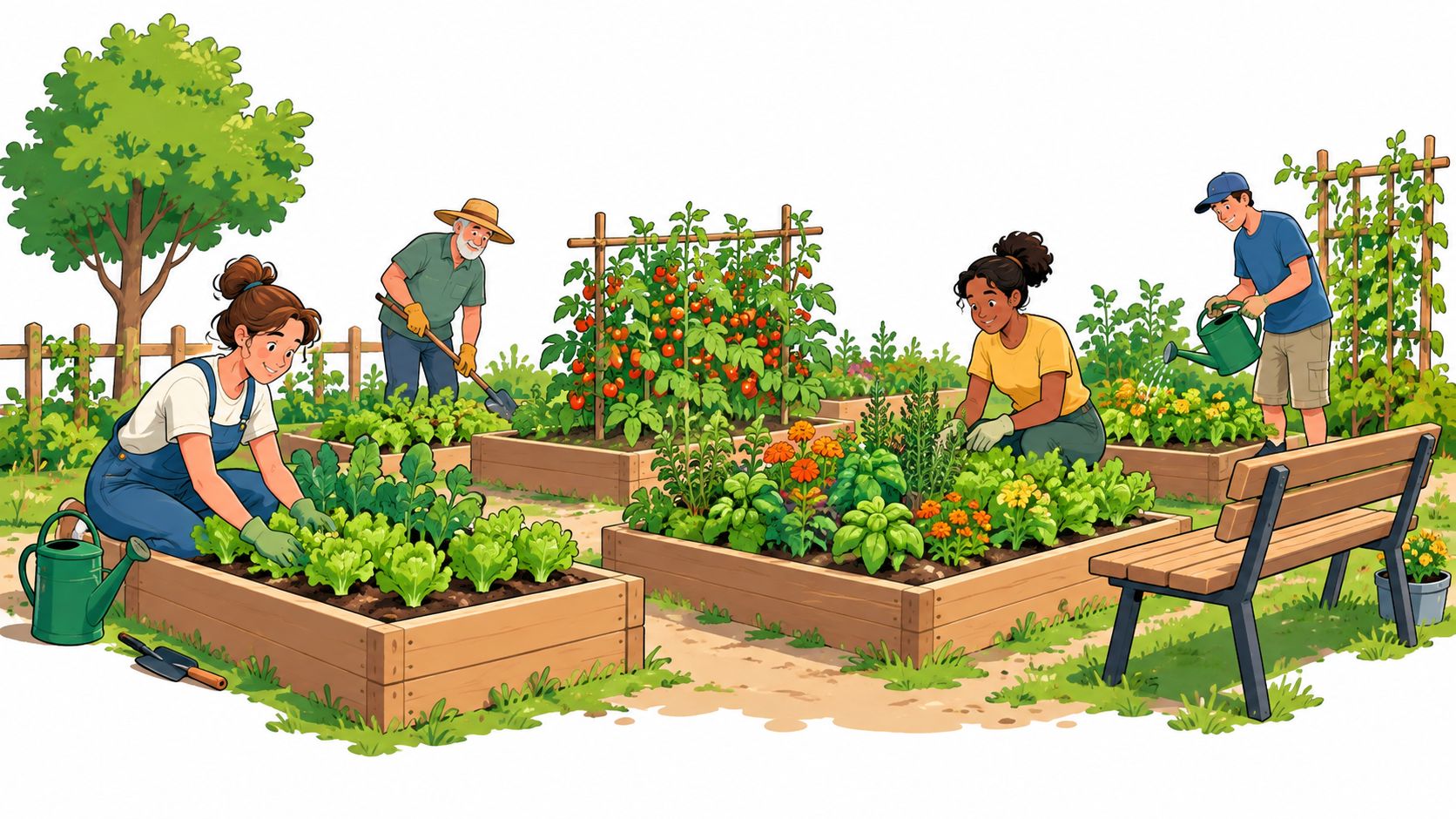
A community garden on a former city-owned lot or a pop-up park on a vacant corner can start as a temporary project. Richard Maize's ventures, including Richeeze Melts and POPPOP FEST, point to a practical lesson for donors and partners: local activity needs an operating plan, not just a launch. For a lot, that means confirming who can use it, who maintains it, and what happens when the temporary term ends.
Secure the Basics First
Verify ownership and history: Check public records for title, liens, and possible environmental concerns before planting or building.
Get written permission: Define the term, insurance, access, and restoration duties in a temporary-use agreement.
Plan maintenance weekly: Assign a dependable volunteer group and budget for water, tools, waste removal, and repairs.
Greening falters when launch volunteers move on and no one takes over. A smaller lot cared for every week is more useful than a larger site left looking abandoned by autumn.
7. Workforce Development and Youth Mentorship Programs
Mentorship sounds soft until you define the outcome. A young person completes training, earns a credential, gets hired, stays employed, and advances. If you can't track those steps, you're running a feel good activity, not a workforce program.
Education evidence shows why pairing access with skill gains matters. In a World Bank documented intervention, the share of out of school children fell by 42%, while literacy and numeracy among children aged 6 to 9 increased by 0.50 standard deviations. Enrollment alone wouldn't have proved learning. Standardized outcomes did.

Construction apprenticeships run by developers and mentorship pairings between entrepreneurs and high school students can adapt that discipline. Set a baseline, use age appropriate assessments where relevant, and follow participants after completion. Business owners benefit too, because a stronger local labor pool reduces hiring friction.
Design for Completion
Define milestones: Give each participant learning goals, attendance expectations, and a clear next step after graduation.
Partner with institutions: Schools, community colleges, and workforce boards can recruit, counsel, and validate skills.
Pay fairly and give feedback: Fair wages and direct coaching improve retention and signal respect.
The trade off is supervision time. A mentor who cancels repeatedly teaches the wrong lesson. Fewer participants with consistent adults will outperform a large roster managed casually.
8. Community Investment Through Local Business Support
The cheapest vacancy to fix is the one you prevent. Property owners can support local businesses with tiered leases, storefront incubators, shared marketing, and practical mentorship during the fragile early years. That keeps spending circulating nearby and gives corridors a mix residents use.
Valuation should go beyond rent collected. Goodstart's Australian study estimated every A$1 invested in social purpose activity generated A$5.11 in social value in 2024, combining quality, attendance, vulnerability, and service availability. Don't copy that ratio to your project. Copy its method, define outcomes, test assumptions, and separate gross value from value your intervention caused.
That caution matters because measurement is unsettled. Recent evidence notes no internationally standardized framework currently exists for measuring community engagement, while qualitative methods and structured local indicators remain underused. Stories can reveal trust and dignity, but they should sit beside baselines and follow up.
Support Tenants Without Subsidizing Denial
Offer tiered leases: Let rent step up as a viable tenant grows, with dates and triggers written clearly.
Review business health: Read the tenant's plan, cash flow, and staffing assumptions before signing.
Coordinate promotion: Work with chambers and business improvement districts on shared marketing.
Storefront incubators offering short term leases work when graduation expectations are honest. Support should create independence, not permanent dependence on below market space.
8 Community Impact Examples Compared
Community Initiative | Implementation Complexity & Resources | Expected Outcomes | Ideal Use Cases | Key Advantages |
|---|---|---|---|---|
Adaptive Reuse of Vacant Commercial Property | 🔄 High; renovation, code compliance, and zoning review | 📊 Adds housing or community space; reduces vacancy and embodied carbon | Underused retail, office, or industrial buildings in established areas | ⭐ Preserves building character and can revitalize nearby streets |
Affordable and Workforce Housing Development | 🔄 High; complex financing, subsidies, and long-term compliance | 📊 Expands access to housing and helps reduce displacement | Communities with housing-cost pressures and demand from essential workers | ⭐ Supports housing stability and can provide steady returns when structured well |
Community Foundation Grantmaking | 🔄 Moderate; requires funding, grant processes, and outcome tracking | 📊 Provides sustained support to local organizations and services | Local causes needing flexible or ongoing funding | ⭐ Can address funding gaps and respond to emerging needs |
Local Food Truck and Small Food Business Incubation | 🔄 Moderate; permits, equipment, and operating costs | 📊 Creates small-business opportunities, jobs, and neighborhood food options | Entrepreneurs testing food concepts or serving events and underserved areas | ⚡ Lower-cost entry and flexibility compared with a restaurant |
Community Festivals and Cultural Events | 🔄 High; planning, permits, insurance, and sponsorship | 📊 Builds civic pride and generates activity for vendors and nearby businesses | Neighborhoods seeking cultural programming and local visibility | ⭐ Showcases local talent and brings residents together |
Vacant Lot Revitalization and Neighborhood Greening | 🔄 Low to moderate; site agreements, possible soil testing, and ongoing maintenance | 📊 Adds green space and gathering areas; improves neighborhood appearance | Vacant sites suitable for gardens, pop-up parks, or temporary markets | ⚡ Can start small and grow through community participation |
Workforce Development and Youth Mentorship Programs | 🔄 Moderate; requires mentors, training, supervision, and funding | 📊 Builds skills, employment pathways, and local talent pipelines | Communities seeking career access and employers needing trained workers | ⭐ Connects participants with practical experience and guidance |
Community Investment Through Local Business Support | 🔄 Moderate; requires lease planning, tenant screening, and promotion | 📊 Supports storefront occupancy and local business growth | Commercial corridors with vacancies or emerging small businesses | ⭐ Helps local brands establish themselves and strengthens shopping districts |
Turn Inspiration Into Local Action
Choose one model, not eight. That's the main lesson from Richard Maize inspired work across property, philanthropy, food, and events. Each effort is understandable on its own, but value grows when operators stay focused long enough to learn a neighborhood, earn trust, and fix operational details that outsiders miss.
Start by inventorying what you control. A property owner can offer space, flexible lease terms, or capital for adaptive reuse. A business owner can mentor, hire trainees, or buy from local suppliers. A donor can fund a foundation priority for several cycles. A resident group can maintain a lot, recruit festival vendors, and tell sponsors who isn't being reached.
Next, write the outcome in plain language before you spend. Do you want stable homes, a viable storefront, youth employment, safer public space, or stronger family services? Name the population, the barrier you're removing, and how you'll know after six to twelve months whether life improved. Count participation, but don't stop there. Look at who benefited, who didn't participate, what changed after feedback, and whether residents had real decision making power.
Then fund the unglamorous parts. Maintenance reserves, permit help, insurance, bookkeeping, mentor coordination, and follow up surveys rarely make a press release. They decide whether a project survives. In housing, that means reserves and compliance. In food, it means permits and cost control. In festivals, it means access and local vendor payment. In grantmaking, it means clear priorities and repeated support for competent partners.
Be willing to publish mixed results. A garden may thrive while attendance at workshops stays low. A storefront incubator may graduate one strong tenant and teach you that another concept needs a different location. That isn't failure if you adjust. It's operating information. The weak approach is reporting only donations, visitors, or people reached and calling that impact.
Finally, think in connections, but execute in sequence. Reuse a building, recruit a local food tenant, host a cultural event that residents help program, and support youth training connected to real jobs there. Over time, those links create a corridor people recognize and defend. That's long term value, financial and civic, built through fundamentals rather than hype.
Richard Maize shares practical perspectives on real estate, entrepreneurship, and philanthropy, including ventures such as Richeeze Melts, POPPOP FEST, and the Rochelle and Richard Maize Foundation. If you're choosing a community initiative and want grounded examples of value creation across sectors, visit Richard Maize to explore his projects, insights, and opportunities to collaborate.
Comments