Richard Maize's Top 10 Nonprofit Fundraising Best Practices for 2026

For philanthropists and foundation operators, the line between business acumen and charitable impact is blurring. The most effective nonprofit fundraising best practices today are not just about asking for money; they are about building sustainable, trust-based ecosystems. Drawing from decades of experience in real estate, business investment, and community-focused giving through The Rochelle and Richard Maize Foundation, philanthropist Richard Maize embodies this modern approach.
This guide distills his hands-on perspective into 10 actionable strategies. It is a blueprint for leaders who want to apply their professional success to create meaningful, lasting change, turning traditional fundraising into a dynamic engine for community impact.
From building a powerful personal brand to fostering strategic partnerships, these practices are designed for a new era of giving where transparency, experience, and measurable results are paramount. Each point offers a deep dive into proven methods that attract major donors, engage corporate sponsors, and build a resilient funding base for the long term. You will learn specific, actionable tactics to:
Build and leverage your personal brand as a philanthropic leader.
Create strategic partnerships with complementary organizations.
Host high-value, experience-based fundraising events.
Develop a robust major donor identification and cultivation program.
Implement transparent impact measurement and reporting.
Cultivate multi-year, recurring donor commitments.
Secure corporate and business community sponsorships.
Develop an effective online and digital fundraising strategy.
Engage and train board members as active fundraisers.
Build strategic relationships with foundations and institutional funders.
1. Build and Leverage Your Personal Brand as a Philanthropic Leader
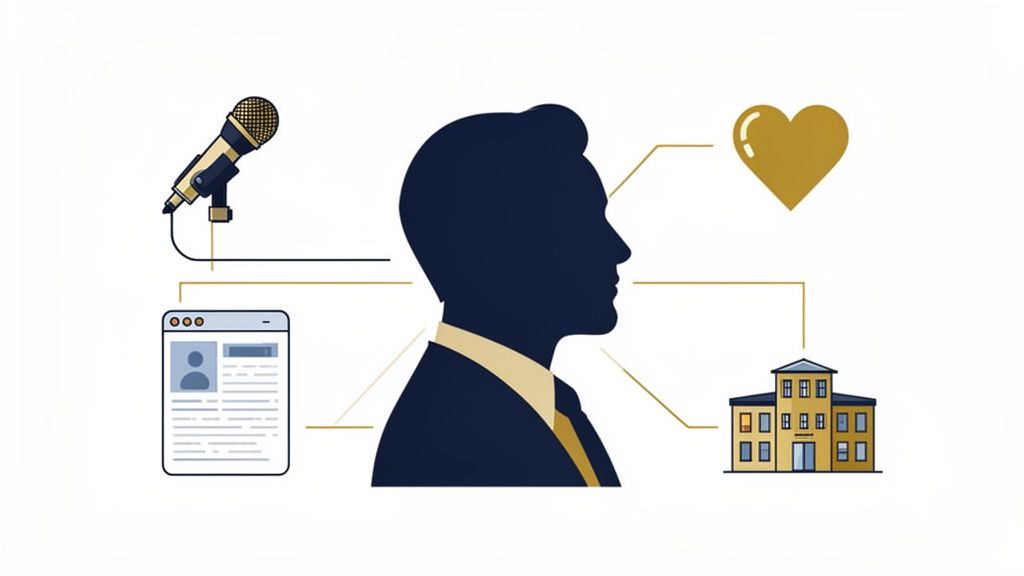
One of the most effective nonprofit fundraising best practices involves the leader’s public presence. Establishing yourself as a visible, trustworthy philanthropic leader creates a powerful asset that attracts support. Donors and foundations are more inclined to contribute to causes championed by credible figures with demonstrated business success and genuine community commitment. As philanthropist Richard Maize demonstrates, this public platform makes your foundation's mission more compelling and authentic.
Why Personal Branding Matters in Philanthropy
A strong personal brand built on professional expertise and charitable work acts as a magnet for your cause. It builds a narrative that potential donors can connect with on a human level. When a philanthropist like Richard Maize shares insights from his extensive real estate career alongside the work of the Rochelle and Richard Maize Foundation, it shows that his giving is an extension of his life's work, not a separate activity. This integrated approach, balancing success and giving back, offers a powerful model for others. The credibility earned in business directly translates into trust for your philanthropic endeavors.
A well-managed public profile humanizes your mission. It shows donors you are not just a name on a letterhead but an active, engaged leader invested in creating real-world impact. This personal connection is often the deciding factor for major gifts. - Richard Maize
Actionable Steps for Implementation
Maintain an Integrated Platform: Create and regularly update a professional blog or website that covers both your business insights and philanthropic philosophy. This demonstrates a holistic commitment.
Seek Media Opportunities: Actively pursue media features, interviews, or guest article placements that highlight your unique giving philosophy and the "why" behind your foundation's work.
Use Multimedia Content: Develop videos or podcast episodes to share your personal philanthropic journey. Speaking directly to an audience creates a much stronger bond than text alone.
Share Applied Lessons: Publish case studies or articles that detail how you've applied business principles-like ROI analysis or strategic partnerships-to achieve greater charitable impact.
2. Create Strategic Partnerships with Complementary Organizations
One of the most powerful nonprofit fundraising best practices is to join forces with organizations that share similar values or serve overlapping communities. Strategic partnerships can significantly reduce fundraising costs, expand donor reach, and lend your foundation instant credibility through association. Instead of working in isolation, you create a multiplier effect where collective efforts yield far greater results than individual ones.
Why Partnerships Amplify Impact
Collaborations build a robust ecosystem of support around a shared cause. When a real estate philanthropist like Richard Maize partners with a local housing nonprofit, the impact is two-fold. The nonprofit gains access to industry expertise and funding, while the foundation ensures its resources are directed effectively by an organization with on-the-ground experience. This symbiotic relationship creates a more compelling case for support, demonstrating to other donors that their contributions are part of a coordinated, intelligent strategy. Such alliances also open doors to new networks, from industry groups to community associations, that would be difficult to access alone.
Strategic partnerships are not just about co-branding; they are about co-creating value. By aligning with organizations that complement your mission, you build a stronger, more resilient fundraising engine and deliver a more profound and sustainable impact. - Richard Maize
Actionable Steps for Implementation
Identify Aligned Organizations: Research and map out nonprofits, community groups, or even businesses serving your target demographic or cause. Look for mission alignment and complementary strengths.
Start with Pilot Projects: Before committing to a large-scale partnership, test the waters with a small, well-defined collaborative project or a joint event like the POPPOP FEST event series, which brings multiple community players together.
Formalize Agreements: Once you've established a good working relationship, create a memorandum of understanding (MOU) or a formal partnership agreement that outlines roles, responsibilities, and shared goals.
Share Resources Strategically: Develop a plan for sharing donor introductions, marketing channels, and other resources. Ensure the arrangement is mutually beneficial and respects each organization's existing relationships.
3. Host High-Value, Experience-Based Fundraising Events
Events remain a cornerstone of effective nonprofit fundraising best practices, but the most successful approaches have shifted. Rather than relying solely on large, formal galas, philanthropists are creating memorable experiences that deepen donor relationships and generate significant revenue. These events focus on providing genuine value, connection, and insight, making the act of giving a natural extension of a unique experience.

Why Experiential Events Matter in Fundraising
An experiential event provides more than just a request for donations; it offers an exclusive opportunity for learning, networking, or enjoyment. For leaders with a business background like Richard Maize, this could mean hosting an exclusive real estate investment seminar where ticket proceeds support a cause. Attendees gain valuable industry knowledge while contributing to philanthropy. This model attracts a specific audience, such as angel investors and entrepreneurs, who are drawn to both the content and the mission.
This approach was evident in community-focused events like POPPOP FEST, which celebrated local culture and brought people together for a shared positive experience, subtly weaving in the philanthropic purpose. By aligning the event's theme with the foundation's mission or the philanthropist's expertise, the fundraising ask feels organic and authentic, not forced.
An event should be a tangible expression of your mission. Whether it's a high-level dinner series for tech founders or a community street fair, the experience itself should communicate your values and build a lasting connection with supporters. - Richard Maize
Actionable Steps for Implementation
Align the Experience with Your Mission: Host events that reflect your professional background and philanthropic focus. A real estate investor might host exclusive property tours, with proceeds benefiting affordable housing initiatives.
Create Tiered Access: Offer different sponsorship or ticket levels with clear, value-driven benefits, such as a private Q&A session, a signed book, or special recognition during the event.
Integrate a Compelling Ask: During a high-point of the event, deliver a brief, emotional story that connects the enjoyable experience back to the real-world impact of a donation.
Follow Up Promptly: Send personalized thank-you messages and impact updates to all attendees within 48 hours to reinforce their value and keep the momentum going.
Document for Future Use: Invest in professional photography and videography to capture the event's energy. Use this content in future marketing materials, on social media, and in annual reports.
4. Develop a Robust Major Donor Identification and Cultivation Program
A cornerstone of effective nonprofit fundraising best practices is recognizing the Pareto Principle's application: a small percentage of donors often provides the majority of funding. Creating a systematic program to identify, cultivate, and steward these major donors is essential for sustainable growth. This involves dedicated research, strategic relationship-building, and personalized engagement to secure high-impact gifts.
Why Major Donor Cultivation Matters in Philanthropy
Major gifts provide the financial stability and capacity needed to scale operations and pursue ambitious projects. A dedicated major donor program moves fundraising from broad-based appeals to focused, high-return relationship management. It requires understanding the specific motivations of high-net-worth individuals, such as Los Angeles real estate investors or technology entrepreneurs, and showing them how their contribution can create a specific, measurable impact that aligns with their personal or professional values. This methodical approach ensures your most significant supporters feel valued, engaged, and connected to your mission's success.
A formal major donor program transforms fundraising from a transactional activity into a strategic partnership. It shows high-capacity donors that you respect their financial power and are prepared to offer a return on their philanthropic investment through tangible outcomes. - Richard Maize
Actionable Steps for Implementation
Create Detailed Prospect Profiles: Go beyond basic data. Document a prospect's wealth indicators, philanthropic history, personal interests, and connections to your organization.
Prioritize Warm Introductions: Use your board members and existing supporters to facilitate introductions. A peer-to-peer connection is significantly more effective than a cold outreach.
Customize Giving Opportunities: Align asks with a prospect's known interests. If a donor is passionate about education, present a specific, funded opportunity in that area rather than a general appeal.
Document All Interactions: Use a CRM system to meticulously track every meeting, call, and email. This history is critical for building a long-term, institutional relationship.
Involve Donors Beyond a Check: Ask for their advice, invite them to strategy sessions, and provide exclusive updates. Engaged donors are more likely to become long-term champions for your cause.
5. Implement Transparent Impact Measurement and Reporting
Today’s donors expect more than just goodwill; they demand accountability and clear evidence of impact. One of the most critical nonprofit fundraising best practices is demonstrating exactly how contributions create change. By transparently reporting on fund usage, program outcomes, and even challenges encountered, you build unbreakable trust and provide a compelling case for continued support. This practice moves fundraising from a simple appeal to a evidence-based investment partnership.
Why Impact Reporting Matters in Philanthropy
Transparent reporting is the bedrock of donor confidence. It proves that your foundation is a responsible steward of capital and is serious about achieving its mission. When donors can see tangible results, like the number of housing units improved or jobs created through a business incubator, their connection to the cause deepens. This data-driven approach, a hallmark of Richard Maize's business-minded philanthropy, shifts the conversation from abstract goals to concrete achievements.
Clear, honest reporting on both successes and failures is not a sign of weakness; it’s a demonstration of integrity. It tells donors you are committed to learning and improving, which makes your organization a more reliable and attractive partner for long-term impact. - Richard Maize
Actionable Steps for Implementation
Define Measurable Outcomes: For each initiative, establish clear key performance indicators (KPIs). For a real estate-focused foundation, this could be "number of families housed" or "square feet of community space revitalized."
Invest in Data Collection: Put systems in place to gather and analyze performance data effectively. This could be as simple as a shared spreadsheet or as advanced as a dedicated impact management software.
Create Visual Dashboards: Translate complex data into easy-to-understand charts, graphs, and infographics. Make these accessible on your website so donors can quickly grasp your impact.
Publish Annual Impact Reports: Produce and distribute a comprehensive annual report detailing financial health, program outcomes, beneficiary stories, and lessons learned. Share this with all stakeholders.
Feature Beneficiary Testimonials: Pair quantitative data with qualitative stories. A video testimonial from a family in a newly renovated home or a small business owner who received a grant brings the numbers to life.
6. Cultivate Multi-Year, Recurring Donor Commitments
While one-time donations are crucial, one of the most impactful nonprofit fundraising best practices is shifting focus toward predictable, recurring revenue. Building a base of donors who commit to multi-year or monthly giving provides the financial stability needed for long-term strategic planning and ambitious, multi-stage projects. This predictable income stream allows your foundation to operate from a position of strength, not scarcity.
Why Recurring Giving Creates Stability
Recurring donation programs create a reliable funding floor, insulating your organization from the unpredictability of seasonal campaigns or economic downturns. This model is particularly effective with younger professionals and mid-level donors, who may prefer to make a significant annual impact through smaller, automated monthly contributions rather than a single large check. Programs like Charity Water’s monthly giving community or NPR's sustaining member model demonstrate the power of building a large, committed base of supporters. This consistent support justifies ongoing operational costs and proves the mission's resonance to major funders and grantmakers.
A strong recurring donor program transforms your fundraising from a transactional process into a relational one. It builds a community of engaged supporters who feel like partners in your mission, leading to higher long-term value and lower acquisition costs. - Richard Maize
Actionable Steps for Implementation
Simplify the Signup Process: Ensure a donor can sign up for recurring giving in three clicks or fewer. The path of least resistance is key to converting intention into action.
Offer Tiered Membership: Present clear, accessible giving levels (e.g., $25, $50, $100 per month) and associate them with tangible impacts to help donors visualize their contribution.
Create Exclusive Recognition: Establish a named group for recurring donors, offering special recognition in annual reports, early access to event tickets, or exclusive impact updates.
Automate Impact Reporting: Send regular, personalized updates specifically for this group, showing how their consistent support is fueling progress. This reinforces the value of their ongoing commitment.
Celebrate Donor Milestones: Acknowledge donor anniversaries (one year, five years, etc.) with a personal email or small token of appreciation to show they are valued beyond their transaction.
7. Leverage Corporate and Business Community Sponsorships
Forging strategic partnerships with businesses is one of the most effective nonprofit fundraising best practices. Corporations and local businesses often seek opportunities to sponsor causes that align with their brand values and help them connect with their target audiences. These sponsorships can provide crucial funding for specific programs, events, or initiatives while offering businesses valuable marketing and community engagement benefits.
Why Corporate Sponsorships Matter in Philanthropy
Corporate sponsorships are built on the principle of mutual benefit. For the nonprofit, it provides a stable and often substantial source of funding. For the business, it generates positive brand association, visibility, and goodwill within the community. When a real estate firm like Richard Maize’s sponsors a community improvement project, it not only funds vital work but also reinforces its identity as a business invested in local well-being. This symbiotic relationship turns corporate marketing budgets into powerful fuel for social good. Understanding the modern role of philanthropy in business strategy is key to framing these partnerships for success.
Successful corporate sponsorship is about creating a win-win scenario. Show a business how supporting your mission also achieves their marketing and community relations goals. This turns a simple donation request into a compelling business proposition. - Richard Maize
Actionable Steps for Implementation
Create Tiered Sponsorship Packages: Develop clear, professional sponsorship packages that outline different levels of support (e.g., Gold, Silver, Bronze) with specific, tangible benefits like logo placement, event naming rights, or social media features.
Align with Business Interests: Research potential sponsors whose business activities naturally connect to your cause. For a foundation focused on affordable housing, construction firms and real estate developers are ideal partners.
Demonstrate ROI: Provide potential sponsors with clear metrics on the visibility they can expect. Include data on your audience demographics, event attendance, and media reach to build a strong business case.
Build Personal Relationships: Move beyond formal proposals by connecting with corporate giving managers or executives directly. Building a personal relationship grounded in a shared vision for community impact is far more effective.
Deliver Impact Reports: After a sponsorship concludes, provide a detailed report showing the sponsor's visibility and, more importantly, the tangible impact their contribution made. This builds trust and encourages long-term partnerships.
8. Develop an Effective Online and Digital Fundraising Strategy
An effective digital presence is no longer optional for successful fundraising; it is essential. An online and digital fundraising strategy, encompassing everything from a streamlined donation page to targeted email campaigns and social media storytelling, forms the backbone of modern donor engagement. This approach is one of the most critical nonprofit fundraising best practices because it meets donors where they are, offering convenient and compelling ways to give while providing measurable, real-time campaign data.

Why Digital Fundraising Matters in Philanthropy
A strong digital strategy makes giving accessible and scalable. It allows nonprofits to reach a global audience and tell their story in a dynamic, visual format that resonates deeply with supporters. Organizations like Charity: Water have mastered this through powerful social media storytelling, while Wikipedia's legendary email campaigns demonstrate the effectiveness of direct, data-driven asks. These channels are cost-effective, allowing for precise tracking and optimization of every fundraising dollar spent.
Your digital footprint is your foundation's modern-day front door. It must be welcoming, easy to navigate, and clearly communicate your impact. A single point of friction in the online giving process can be the difference between a completed donation and an abandoned cart. - Richard Maize
Actionable Steps for Implementation
Optimize Your Donation Process: Ensure your donation page is mobile-friendly and loads quickly. The process should take no more than three or four simple steps to complete.
Segment Your Communications: Divide your email list based on donor history, interests, and engagement levels. Send targeted monthly impact updates with powerful stories, not just generic newsletters.
Create Shareable Content: Use high-quality video and imagery to tell your story. Develop content that inspires supporters to share it with their networks, amplifying your reach through peer-to-peer engagement.
Test and Measure Everything: Use tools like Google Analytics to track the donor journey on your website. Continuously test email subject lines, call-to-action buttons, and suggested giving amounts to refine your approach.
9. Engage and Train Board Members as Active Fundraisers
A foundation's board is often its most powerful yet underused fundraising asset. An exceptional nonprofit fundraising best practice is to transform your board from a governing body into an active fundraising force. Effective boards don't just oversee operations; they actively participate through personal giving, donor solicitation, and sharing their valuable networks. This requires setting clear expectations and providing the right tools for success.
Why an Engaged Board Matters in Fundraising
An activated board brings immense credibility and reach to your fundraising efforts. When business leaders, especially successful entrepreneurs and real estate investors, join a board, they lend their professional reputations to the cause. Their involvement signals to other major donors that the organization is well-managed and a sound investment for philanthropic capital. This is particularly true for foundations like the Rochelle and Richard Maize Foundation, where professional success and community commitment are intertwined. The expectation of 100% board giving is a powerful statement that demonstrates full belief in the mission.
When your board members are your first and most committed donors, it sends an undeniable message to the community. It's the ultimate vote of confidence, making it far easier to ask others for their support. - Richard Maize
Actionable Steps for Implementation
Establish Clear Giving Expectations: Create written policies that outline board giving requirements. This could include a 100% participation goal or tiered levels with different financial commitments.
Provide Fundraising Training: Do not assume board members know how to ask for money. Offer training sessions, provide them with talking points, and mentor them on effective solicitation techniques.
Assign Prospect Portfolios: Give each board member a specific list of potential donors from their network. This creates focus and accountability.
Track and Celebrate Progress: Set annual fundraising targets for the board as a whole and for individual members. Publicly track progress and celebrate every win, from major gifts to new donor acquisitions.
Equip Them for Success: Provide board members with a toolkit containing case statements, prospect research, and contact information for staff support. Make it easy for them to succeed.
10. Build Strategic Relationships with Foundations and Institutional Funders
Engaging with foundations, corporations, and other institutional funders is a fundamental component of a balanced fundraising strategy. These organizations distribute a significant amount of capital through formal grant processes, but securing this funding requires more than just a strong application. A core nonprofit fundraising best practice is to build genuine, strategic relationships with the program officers and decision-makers who steward these resources. It’s about aligning your mission with their specific interests and demonstrating that your organization is a reliable partner in achieving shared goals.
Why Institutional Relationships Matter in Philanthropy
Unlike individual giving, foundation support often comes with a formal structure, specific program interests, and rigorous reporting requirements. Success depends on deep research and targeted outreach. A philanthropist like Richard Maize, whose work with The Rochelle and Richard Maize Foundation centers on community strengthening, would identify institutional funders focused on economic development, education, or local Los Angeles initiatives. This approach ensures that every grant proposal is relevant and speaks directly to a foundation’s established priorities, dramatically increasing the likelihood of success.
Winning a grant is not just a transaction; it's the beginning of a partnership. Foundations invest in organizations they trust to deliver measurable impact. Cultivating relationships with program officers before you even apply provides invaluable insight and establishes your credibility from the start. - Richard Maize
Actionable Steps for Implementation
Research with Precision: Use databases like Candid to identify foundations whose recent grantmaking history aligns with your sector and geographic area. Analyze their annual reports to understand their true priorities beyond vague mission statements.
Connect Before Applying: Seek to build a relationship with a program officer. Request a brief introductory call to share your work and ask for feedback on how your mission fits their funding goals. This makes your application a familiar name.
Craft a Compelling Narrative: Your grant proposal must tell a powerful story that connects your organization's impact directly to the funder’s mission. Include specific, measurable outcomes and a clear evaluation plan.
Follow Instructions Meticulously: Adhering to every application guideline, from font size to character counts, is your first test of competence. A sloppy application signals that you may be a disorganized partner.
Practice Proactive Stewardship: Once a grant is secured, stewardship is critical. Provide timely, detailed reports and share success stories that go beyond the required metrics. This builds trust and paves the way for future funding.
10 Nonprofit Fundraising Practices Compared
Item | 🔄 Implementation Complexity | ⚡ Resource Requirements | 📊 Expected Outcomes | 💡 Ideal Use Cases | ⭐ Key Advantages |
|---|---|---|---|---|---|
Build and Leverage Your Personal Brand as a Philanthropic Leader | Moderate–High; ongoing content and media engagement | High time, PR and content production resources | Stronger donor trust, improved visibility, higher-profile partnerships | High-profile founders/entrepreneurs linking business success to philanthropy | ⭐ Differentiates foundation; multiplies engagement channels |
Create Strategic Partnerships with Complementary Organizations | Moderate; requires alignment and formal agreements | Moderate; coordination, legal, shared marketing | Expanded reach, reduced cost-per-dollar raised, joint credibility | Community orgs, industry groups, event co-sponsors | Shared networks and amplified impact through partners |
Host High-Value, Experience-Based Fundraising Events | High; detailed planning and logistics | High upfront costs, venue, staffing, volunteer coordination | Significant revenue potential, deeper donor relationships, media attention | Attracting HNW donors, showcasing projects, major donor cultivation | Emotional storytelling and exclusive access drive giving |
Develop a Robust Major Donor Identification and Cultivation Program | High; intensive research and personalized outreach | High specialist staff, CRM, research tools | Majority of revenue from major gifts; long-term commitments | Organizations with access to affluent networks and relationship capital | ⭐ High return per dollar; predictable large-scale support |
Implement Transparent Impact Measurement and Reporting | Moderate–High; system design and data processes | Moderate; data tools, evaluation capacity, possibly third-party audits | Increased donor confidence; access to institutional funders | Foundations seeking credibility or applying for grants | Evidence-based credibility; supports fundraising claims |
Cultivate Multi-Year, Recurring Donor Commitments | Low–Moderate; setup and retention workflows | Moderate; payment processors, CRM, communications | Predictable, stable revenue and higher lifetime donor value | Monthly givers, mid-level donors, younger professionals | Stable funding base and lower acquisition cost over time |
Leverage Corporate and Business Community Sponsorships | Moderate; tailored packages and relationship management | Moderate–High; sales effort, sponsor fulfillment, ROI tracking | Significant program/event funding and in-kind support | Corporate partners in real estate, construction, retail, services | Access to B2B networks, marketing value for sponsors |
Develop an Effective Online and Digital Fundraising Strategy | Moderate; continuous content, testing and optimization | Moderate; web/mobile tech, content creators, ad spend | Broader reach, lower cost-per-dollar, real-time optimization | Peer-to-peer, younger donors, geographically dispersed supporters | ⚡ Scalable, measurable, and cost-efficient fundraising channel |
Engage and Train Board Members as Active Fundraisers | Moderate; requires governance changes and training | Low–Moderate; training resources, reporting tools, expectations | Multiplies fundraising capacity; improves donor introductions | Boards with business leaders or high-net-worth networks | ⭐ High leverage from peer-to-peer solicitations and credibility |
Build Strategic Relationships with Foundations and Institutional Funders | High; proposal development and compliance management | High; grant writing expertise, reporting infrastructure | Access to larger, multi-year grants and institutional validation | Funding major initiatives, capacity building, program scaling | Larger sums and institutional credibility for long-term projects |
Integrating Best Practices for Sustainable Community Impact
Navigating the world of nonprofit fundraising can often feel like assembling a complex puzzle. You have all these pieces - digital campaigns, major donor meetings, community events, grant proposals - but the real power emerges when they fit together seamlessly. The preceding sections detailed ten distinct, yet interconnected, nonprofit fundraising best practices. From building a powerful personal brand as a philanthropic leader to engaging your board as active fundraisers, each principle serves as a critical component of a durable and effective funding strategy.
The journey from a fledgling idea to a sustainable, high-impact organization is not built on a single successful campaign or one large donation. Instead, it is constructed through the consistent application of these integrated practices. A powerful case for support, for example, is not just a document; it's the core narrative that fuels your major donor cultivation, informs your digital messaging, and persuades foundations to invest in your vision. Similarly, transparent impact reporting is not merely a compliance task; it is the proof that validates a corporate sponsor's investment and inspires an individual donor to make a recurring commitment.
From Tactics to a Unified Strategy
The central theme connecting these best practices is the shift from a transactional approach to a relational one. As exemplified by the philanthropic work of real estate investor and mentor Richard Maize, who has consistently supported organizations like the American Cancer Society and Cedars-Sinai Medical Center, lasting impact is rooted in building genuine connections. This means viewing every touchpoint not as a request for money, but as an opportunity to build trust and invite stakeholders into a shared mission.
Consider the interplay between the practices we've explored:
Brand and Partnerships: A strong personal or organizational brand (Practice 1) makes you a more attractive partner for complementary organizations (Practice 2) and corporate sponsors (Practice 7).
Events and Donors: High-value, experience-based events (Practice 3) serve as the perfect venue for identifying and cultivating major donors (Practice 4), providing a tangible and memorable connection to your cause.
Data and Retention: Implementing transparent impact measurement (Practice 5) provides the compelling data needed to secure multi-year commitments from donors (Practice 6) and institutional funders (Practice 10).
Digital and Board Engagement: A well-executed digital strategy (Practice 8) can support every other initiative, while an actively engaged board (Practice 9) provides the network, credibility, and resources to amplify all your fundraising efforts.
This synergy creates a powerful cycle. Successful events generate new prospects, transparent reporting retains them, and strategic partnerships open doors to new funding streams. This integrated model diversifies your revenue, reducing reliance on any single source and building the financial resilience needed to weather economic shifts and pursue long-term goals.
Your Actionable Path Forward
Mastering these concepts is not an academic exercise; it is the key to unlocking your organization's full potential. The true value lies in their consistent and thoughtful implementation. Begin by assessing your current fundraising program against the ten practices outlined. Where are your strengths? Where are the most significant gaps?
Choose one or two areas for immediate focus. Perhaps it's formalizing your major donor identification process or launching your first peer-to-peer digital campaign. Set clear, measurable goals and dedicate the necessary resources. As you build momentum, you can gradually integrate more of these nonprofit fundraising best practices into your operational DNA.
Ultimately, successful fundraising is about more than just meeting a budget. It's about building a community of advocates, partners, and believers who are as committed to your mission as you are. By adopting and integrating these proven strategies, you are not just raising funds; you are building a legacy of purpose, creating sustainable change, and profoundly deepening your connection to the communities you have sworn to serve.
For philanthropists and entrepreneurs looking to translate their success into meaningful community impact, learning from established leaders is invaluable. To explore the philanthropic work and business insights of Richard Maize, visit his official website at Richard Maize.
Comments