10 Mobile Business Ideas an Investor Would Fund

Mobile business is not a niche anymore. It is one of the clearest ways to build around how customers already buy, book, and ask for service from their phones.
Richard Maize has spent decades backing businesses that hold up under pressure. He built his career on cash flow, controlled risk, and assets that keep producing through changing markets, as outlined in IdeaMensch's profile of Richard Maize, his official site, and his business background page. The same rules apply here. Good mobile business ideas stay close to demand, keep fixed costs in check, protect margins, and create repeat business instead of one-off hustle.
That is the filter for this list.
I have never had much use for trend pieces that toss out dozens of ideas without asking the hard question first. Can this model produce steady revenue without trapping the owner in a fragile operation? A mobile business should do more than generate activity. It should build a customer base, a reputation, and systems that make the business more valuable over time.
The 10 ideas below meet that standard from different angles. Some depend on local service density. Some are digital and easier to scale. Some can start as side income and grow into a durable operating business. If you want a closer look at one mobile model with real operating discipline, Richard Maize breaks that down in his guide to starting a food truck business through the lens of Richeeze Melts.
What matters is not novelty. It is whether the business can hold its value once the initial excitement wears off.
1. Mobile Food Truck Service
A well-run food truck can produce cash flow faster than many first-time founders expect. It puts the kitchen, the signage, and the point of sale in one movable asset, which gives you room to test demand without locking yourself into a long restaurant lease before the numbers justify it.
That mobility is the advantage.
Richard Maize has discussed this model through Richeeze Melts, and the lesson is straightforward. Food trucks work when the concept is easy to understand, the menu stays focused, and the operator goes where demand already exists. They break down when the owner treats the truck like a creative hobby instead of a disciplined operating business.

What makes the model fundable
From an investment standpoint, a food truck earns attention for one reason. It can test product-market fit with lower fixed overhead than a traditional restaurant. That does not make it cheap or easy, but it does improve your ability to protect capital while you learn which locations, hours, and menu items produce margin.
The strongest operators build around repeatable demand, not novelty. Kogi BBQ in Los Angeles showed how movement, consistency, and a clear identity can turn a truck into a loyal local brand. Smaller operators can apply the same principle without trying to become a media story. Customers want food they recognize, service that moves fast, and a reliable schedule.
Practical rule: A food truck becomes durable when the menu is simple, ticket times stay short, and each stop has a clear sales reason behind it.
If you want a more grounded operating view, Richard Maize lays out the basics in his guide on how to start a food truck business through the lens of Richeeze Melts.
A truck also gives you a better way to read a local market. You can test an office corridor at lunch, a brewery in the evening, and a weekend event without betting everything on one address. That flexibility matters early. It helps you find profitable demand pockets before you commit more capital, hire more labor, or widen the menu.
Scout before you commit: Visit lunch spots, breweries, and event sites during peak hours. Watch foot traffic, line length, parking constraints, and what buyers already choose.
Build a private-location pipeline: Property owners, schools, breweries, and event organizers usually offer more predictable revenue than relying on street traffic alone.
Keep the menu narrow: Fewer ingredients usually mean stronger margins, faster prep, and less spoilage.
Track unit economics by stop: Revenue can look healthy while profit disappears into labor, commissary fees, fuel, and waste. Measure each location on contribution, not excitement.
The long-term value is not in the truck by itself. It is in the route discipline, the repeat customers, the event relationships, and the operating system behind the window. That is the difference between a food business that stays busy and one that becomes an asset.
2. Mobile Phone Repair Service
A well-run phone repair business can throw off reliable cash flow because the problem is urgent, easy to understand, and tied to a device people use all day for work, banking, communication, and entertainment.
That urgency is the opportunity. A cracked screen, dead battery, or failed charging port is not a discretionary purchase for many customers. They want a clear price, a fast turnaround, and confidence that the repair will hold. A mobile operator who can deliver those three things can build a strong local business without carrying the overhead of a large retail footprint.
I like this model when the owner treats it as a service company first and a technical trade second. Technical skill gets you in the door. Process keeps you there. The operators who last usually have disciplined intake procedures, documented repair steps, clean parts sourcing, and a written policy for warranties, refunds, and data privacy. That operating discipline is what turns one-time jobs into repeat business and referral volume.
Scale matters here too, but not in the usual startup sense. The goal is not growth for its own sake. The goal is a repair operation that can add technicians, business accounts, and pickup routes without losing quality. Richard Maize's approach to building systems that support long-term business growth fits this category well.
Where this business wins or loses
Local reputation decides the outcome. One botched screen replacement, one vague quote, or one missed service window can cost far more than the margin on a single repair. Reviews spread fast, and in a local service business, trust is the essential inventory.
Convenience also creates pricing power. A customer will often pay more for same-day service at home, at the office, or through a pickup-and-dropoff model than for a cheaper repair that takes three days and multiple trips. That is why mobile service can outperform a basic storefront in the right market, even if labor and routing require tighter scheduling.
There is a trade-off. This business looks simple from the outside, but inventory mistakes can eat profit quickly. Stock too few common parts and you lose same-day revenue. Stock too many low-turn items and cash sits on the shelf. Strong operators keep fast-moving screens, batteries, and charging components on hand, then order uncommon parts after collecting a deposit.
Specialize by device type or customer segment: iPhones, business fleet support, student repairs, or older-device battery replacements each create a clearer offer than trying to do everything.
Set expectations in writing: Quote ranges, repair time, warranty terms, and data-risk disclosures should be clear before any work starts.
Pursue recurring accounts: Realtors, property managers, contractors, and small sales teams often need ongoing device support and value speed more than the lowest price.
Track rework closely: If a technician has too many comeback jobs, margins are already under pressure.
A good repair business does not sell parts. It sells uptime, trust, and a reputation for showing up when the device matters most.
3. Virtual Assistant Service for Small Businesses
A well-run virtual assistant service can become one of the cleanest cash-flow businesses on this list. The startup cost is low, demand is steady, and small businesses will keep paying for reliable support that protects the owner's time.
That last point matters. Owners do not buy administrative help because they enjoy delegation. They buy it because missed follow-up, sloppy calendars, and neglected customer messages cost revenue. A good virtual assistant solves those problems without adding the overhead of a full-time hire.
The business gets stronger when the offer is narrow. General admin support is easy to compare on price. Specialized support is harder to replace. A VA who understands real estate transaction timelines, ecommerce returns, podcast scheduling, or founder inbox triage can charge more because the work carries real operating risk.
I have seen the same pattern across service businesses for years. The operators who build long-term value do not sell random hours. They sell reliability, process, and clear outcomes. That is the difference between freelance task work and a business that can scale. Richard Maize's article on scaling a business from startup to empire reflects that discipline.
The mobile angle is practical, not trendy. Clients approve tasks from their phones, reply between meetings, and expect quick status updates without a long chain of emails. If your service model makes communication easy on mobile, retention improves. If every request turns into confusion, clients leave.
Reliable administrative support rarely looks impressive from the outside. Inside a small business, it often protects sales, client relationships, and the owner's ability to focus on higher-value work.
There is a trade-off. This model can turn into a low-margin staffing operation if you accept every task for every client. Scope drift is the biggest threat. Once a client starts treating a monthly retainer like unlimited access, delivery quality drops and your best people burn out.
Start with one client profile: Realtors, consultants, law firms, and ecommerce brands all need different workflows, tools, and response times.
Package around recurring work: Calendar management, inbox cleanup, CRM updates, and customer follow-up fit monthly retainers better than one-off requests.
Set service boundaries early: Define hours, response windows, revision limits, and communication channels before work begins.
Document the work: SOPs, templates, and checklists protect margin when you add contractors or account managers.
Track retention by account: A client who stays for 12 months is worth far more than a string of small, custom projects.
The best virtual assistant firms do more than save time. They reduce operational friction, keep the client organized, and create recurring revenue that can hold up in a tougher market.
4. Social Media Management Agency
A social media agency becomes a real business when it produces measurable client outcomes on a repeatable schedule. Agencies fail when they sell motion. More posts, more platforms, more revisions, more noise. None of that matters if the client is not getting inquiries, bookings, stronger retention, or a better local reputation.
This model fits Richard Maize's lens when it is built around recurring cash flow and clear service value. A restaurant, med spa, broker, or home service company does not need a resident internet commentator. It needs consistent visibility, timely customer response, and content that supports revenue. That is a service business with a retainer. It can be attractive if the work is standardized and the client base is chosen with discipline.
Specialization protects margin
Generalist agencies get trapped in custom work. Every client wants a different voice, a different approval process, and a different definition of success. Margin disappears fast.
Specialization fixes that. Real estate teams need listing content, agent branding, and neighborhood updates. Restaurants need short-form video, offers, and review management. Fitness studios need class promotion, trainer highlights, and member stories. In each case, the operator can build templates, pricing, reporting, and staffing around one type of buyer.
The mobile angle is practical, not theoretical. Clients approve content on their phones. Customers discover businesses in social feeds, maps, DMs, and review threads on their phones. If the content does not hold attention on a small screen, the agency is producing inventory the client cannot use.
Examples already exist at both ends of the market. Buffer and Hootsuite serve the software side. Smaller agencies win by handling the work those tools do not do well on their own: content planning, creative production, posting, comment moderation, and local audience engagement.
Build one offer around one client type: "Instagram and short-form video for restaurants" is stronger than "full-service social media for everyone."
Price for ongoing management: Monthly retainers create better cash flow than one-off content packages.
Tie reporting to business activity: Track calls, booked appointments, direct messages, lead form submissions, and review volume. Vanity metrics do not support retention.
Control the approval process: Set deadlines, revision limits, asset requirements, and posting calendars early.
Include community management carefully: Responding to comments and messages can raise value, but it also adds labor quickly. Scope it clearly.
There is a trade-off. This business can look scalable before it is. A founder who promises custom strategy, daily posting, paid ads, video production, influencer outreach, and round-the-clock responses for a mid-level retainer is buying revenue with future burnout. Better agencies stay narrow, prove results, and expand services only after the process is profitable.
The firms that last do not sell relevance. They sell dependable visibility and client acquisition support. That is a much better business.
5. Personal Training and Fitness Coaching App or Service
Fitness can become a real business fast. It produces service income up front, and the operators who build accountability into the offer can add recurring revenue without taking on heavy overhead.
A trainer with a phone, scheduling system, payment setup, and a clear program can start selling right away. The stronger version of the business adds habit tracking, weekly check-ins, video support, and a simple client portal or app. Peloton, Fitbit Coach, and independent coaches using Trainerize prove the format. The question is not whether people will train through their phones. The question is whether your offer keeps them engaged long enough to stay and refer others.

The real product is consistency
From an investor's standpoint, fitness coaching gets interesting when retention comes from habit, trust, and community. One-off session sales create income. Ongoing accountability creates a business.
That starts with focus. A coach serving new mothers returning to exercise is building a different service from one aimed at traveling executives, older adults working on mobility, or former athletes trying to regain structure. Specific positioning lowers customer acquisition costs, sharpens referrals, and makes programming easier to standardize.
The hybrid model often gives the best economics. In-person sessions build trust quickly. Remote coaching expands reach, protects margins, and gives clients a reason to stay connected between sessions. If you want a broader view of how technology is changing service businesses tied to physical assets and local relationships, Richard Maize's take on how AI and technology are rewriting real estate makes the same larger point. Digital tools work best when they strengthen an already useful service.
There is a trade-off. Many trainers try to sell custom meal plans, daily messaging, live classes, one-on-one coaching, and a low monthly price. That model fills the calendar before it builds profit. A better path is to keep the core offer narrow, systemize check-ins, and reserve high-touch access for higher-paying clients.
Choose one clear outcome: Beginner strength, postnatal fitness, mobility for older adults, or fat-loss coaching for busy professionals.
Set the delivery model early: In-person, remote, or hybrid affects pricing, scheduling, and capacity.
Use accountability as a product feature: Weekly check-ins, habit scorecards, and group accountability improve retention more than constant motivation talk.
Track client progress in plain terms: Measurements, strength gains, attendance, energy, and mobility are easier to sell than vague promises.
Build community carefully: Group chats and member challenges can reduce churn, but they also require moderation and boundaries.
The best fitness businesses do not depend on inspiration. They run on repeatable client results, disciplined scope, and recurring cash flow. That is what turns coaching into an asset instead of a demanding job.
6. Real Estate Photography and Virtual Tour Service
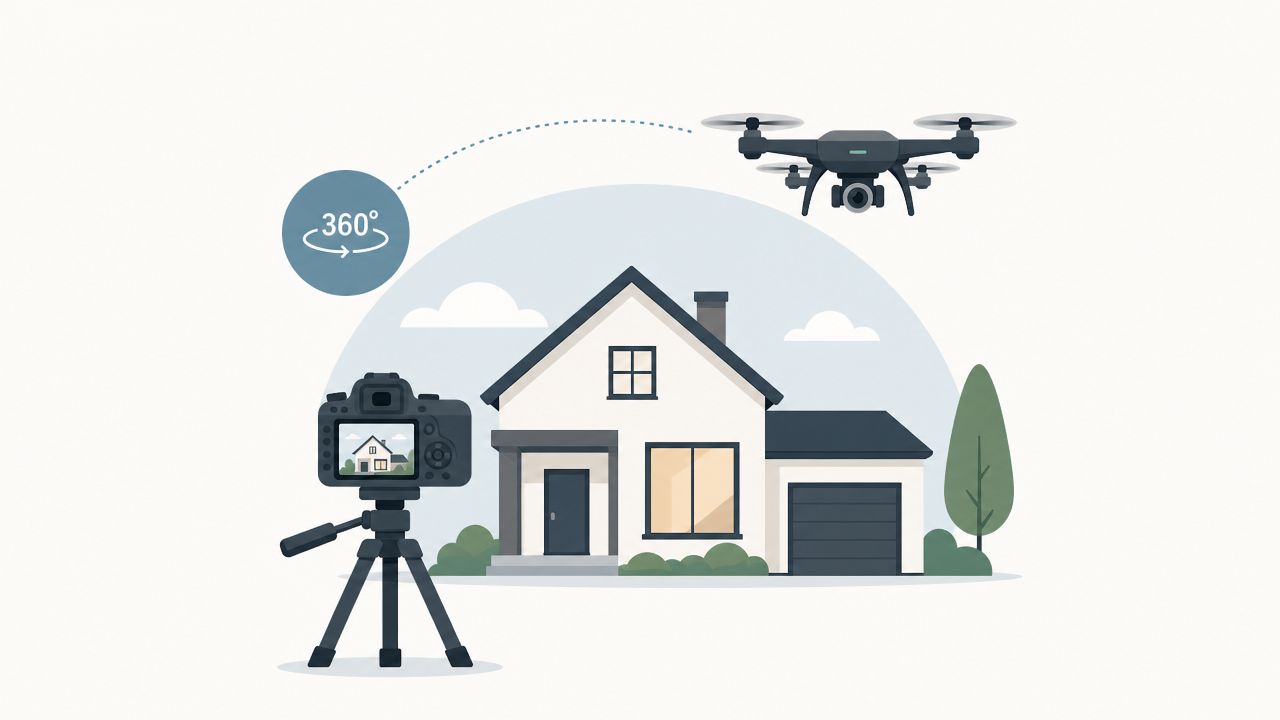
Good listing media can raise perceived value before an agent says a word. That is why real estate photography works as a mobile business. It serves a clear commercial need, it travels well, and it can produce repeat revenue from the same clients.
A capable operator can move from property to property with cameras, lighting, stabilizers, drones where permitted, and 3D tour tools. The overhead is still lower than running a fixed studio. More important, the service sits close to the transaction. If the photos are weak, showings suffer. If the tour is clean, accurate, and delivered on time, agents notice quickly.
Why this business fits Richard Maize's philosophy
I like this model because it sells service-based value into an established market. It does not depend on hype. It depends on helping brokers, agents, developers, and property owners present an asset properly and move it faster.
That lines up with Richard Maize's long-held view that positioning matters in real estate. Technology helps, but only when it improves a real business outcome. His perspective on how AI and technology are rewriting real estate makes the same point. Tools are useful when they strengthen execution, not when they distract from it.
There is a trade-off here. Many new operators spend heavily on gear before they have stable demand. The better path is to start with the core package clients already buy, then add higher-margin services after volume is consistent. In this business, cash flow discipline matters more than owning every piece of equipment on day one.
Competition exists in every serious market. The opportunity usually comes from reliability. Agents remember the vendor who answers quickly, arrives prepared, keeps the property looking right in the frame, and delivers files on schedule.
To see the kind of presentation clients respond to, this format is useful.
How operators build repeat business
Sell packages, not isolated shots: Photos, drone work, floor plans, and virtual tours create larger orders and make comparison shopping harder.
Target broker teams and property managers: They produce steadier volume than one-off sellers and give the business a better base of recurring work.
Set turnaround standards early: Fast delivery wins listings, but consistency protects margins. Promise only what the workflow can support.
Create a service process clients can trust: Confirm appointments, send prep checklists, and keep editing standards consistent across every property.
A photographer who becomes part of the listing process builds an asset with referral value, repeat orders, and stronger pricing power.
7. Freelance Writing and Content Creation Service
Writing is still one of the most accessible mobile businesses because the startup cost is low and the demand is broad. Businesses need website copy, blogs, email campaigns, landing pages, product descriptions, scripts, and social captions. The mistake is assuming that broad demand means broad positioning works.
It doesn't. Writers who specialize usually win. A finance writer, real estate writer, healthcare writer, or B2B SaaS writer can speak the client's language faster and with fewer revisions. That improves margins on both sides.
Content now lives on mobile screens
This service matters even more because customer attention is overwhelmingly mobile. A large share of internet traffic comes from mobile devices, and many businesses still underperform on mobile execution. Sales-driven content that reads well on a desktop but feels bloated on a phone won't convert the same way.
There's another shift too. AI tools are now part of the workflow whether people like it or not. Salesgenie notes that AI-driven content generation is now used by many marketers, and mobile-first architecture is becoming essential for viability in digital ventures, as covered in Salesgenie's mobile marketing statistics. That doesn't erase the writer. It raises the standard. Businesses need writers who can combine speed, judgment, structure, and editorial restraint.
Examples range from freelancers on Upwork and Reedsy to networks like Contently. The scalable version of this business often starts as solo writing, then expands into an editorial studio with designers, strategists, and SEO support.
Choose a vertical early: Industry fluency reduces research time and improves close rates.
Offer retainers where possible: Monthly content packages are steadier than chasing one-offs.
Write for screens people use: Short paragraphs, clear subheads, and direct calls to action matter.
The strongest writing businesses don't sell words. They sell clarity that helps another business get paid.
8. Home Cleaning and Organization Service
This is an old business model with a durable advantage. People will continue paying for a cleaner, more organized home because time pressure doesn't disappear. What changes is how they discover, book, review, and refer the service.
That makes home cleaning one of the more grounded mobile business ideas available. You don't need speculative technology. You need reliable staff, route discipline, quality control, and customer trust.
The simple model often wins
Many founders overcomplicate this category. A basic recurring cleaning service with clear standards and dependable arrival windows can outperform a fancier brand with weak execution. Add organizing, decluttering, or light staging, and the average ticket can improve without changing the core operating model.
The best examples include national brands like The Cleaning Authority and Maid Brigade, but local independents often win strong loyalty because service is personal. Customers remember whether the team was careful, respectful, and consistent. They also remember whether rescheduling was painless.
A useful operating approach for hyper-local mobile services is density first. Instead of trying to serve an entire city, build one neighborhood thoroughly, identify repeated frustrations like missed messages or no-shows, and earn feedback from early providers and customers. That practical framework is outlined in Anything.com's advice on mobile app business ideas that make money.
In service businesses, route density protects profit. Long drive times and scattered appointments quietly destroy a decent-looking business.
Start with recurring plans: One-time deep cleans are good cash. Recurring clients build the company.
Keep supplies and standards uniform: Consistency is what earns referrals.
Expand only after one zone is stable: A packed neighborhood is worth more than a thin citywide footprint.
9. Digital Marketing Consulting and Campaign Management
Digital marketing consulting is profitable only when it improves cash flow. Everything else is decoration.
That is the right standard for this category. Small and midsize businesses do not need another vendor sending charts they do not understand. They need someone who can diagnose why leads are weak, why conversion is low, why customer acquisition costs are rising, and which channel deserves the next dollar. A mobile operator can run that work efficiently because strategy calls, approvals, ad checks, and reporting can all happen from the field.
The core service is judgment. Good consultants cut waste early. They may tell a client to stop buying traffic until the offer is clearer, fix a broken follow-up process before raising ad spend, or focus on one channel that already shows intent instead of scattering money across five platforms. That kind of advice is not flashy, but it protects capital.
From an investor's standpoint, this business gets stronger when it becomes specific. A consultant who serves everybody usually builds a shallow practice with constant churn. A consultant who understands one buyer type, such as dentists, roofers, brokers, law firms, or local retailers, can price better, produce repeatable results, and earn referrals faster. Specialization also lowers risk because the operator learns which metrics matter and which promises to avoid.
A serious operator should build around a few disciplined habits:
Audit before selling execution: Diagnose the funnel, the offer, the follow-up, and the economics before proposing campaigns.
Package around business problems: Lead generation, retention, email automation, paid search, and landing page improvement should be separate offers with clear outcomes.
Report like an owner would: Show what changed, what it cost, what it produced, and what should happen next.
This is a service business with advisory pricing. Trust determines retention, but results determine trust. That is why the best firms often grow through reputation inside a local business community, not through clever branding alone.
10. Event Planning and Coordination Service
Event planning is one of the most practical mobile service businesses because the operator goes where the event happens. That mobility can apply to weddings, corporate functions, product launches, community gatherings, nonprofit events, and private celebrations.
It's also one of the easiest businesses to misunderstand. Clients don't hire planners because timelines are pretty. They hire planners because mistakes are expensive, public, and stressful. A strong planner reduces chaos.
Why this model creates long-term value
A planner with strong vendor relationships becomes more valuable over time. Venues, caterers, photographers, florists, rental companies, and entertainers all provide an advantage if you've earned their trust. That relationship base becomes an asset in itself.
There's also a community angle that matters. Richard Maize and the Rochelle and Richard Maize Foundation, co-founded in 2003, have supported youth education, homelessness relief, and health initiatives, according to Hello Entrepreneurs' profile of Richard Maize. That kind of local commitment is a useful lens for event businesses. Community events, nonprofit partnerships, and mission-driven gatherings often create reputation that paid advertising can't buy.
Another practical point is validation. Most mobile business ideas content skips the hard part, which is identifying an underserved user group before building. The better approach is to study a specific demographic, ask direct questions about pain points and preferences, and validate demand before spending heavily. That principle is emphasized in this analysis of how mobile experts discover app ideas, and it applies just as well to event services.
Choose your event lane: Weddings and corporate launches require different systems and temperaments.
Build preferred-vendor depth: Reliable partners reduce risk on event day.
Create tiered packages: Some clients need full production. Others need coordination only.
Good planners don't sell celebration. They sell control under pressure.
10 Mobile Business Ideas, Side-by-Side Comparison
Service | Implementation Complexity 🔄 | Resource Requirements ⚡ | Expected Outcomes 📊 | Ideal Use Cases 💡 | Key Advantages ⭐ |
|---|---|---|---|---|---|
Mobile Food Truck Service | Moderate, vehicle fit-out, health permits, location approvals | Truck/kitchen equipment, suppliers, staff, fuel, permits | Local sales, event income, variable daily revenue | Office lunch crowds, festivals, private catering | ⭐ Lower overhead than restaurant; mobility; multiple revenue streams |
Mobile Phone Repair Service | Low–Moderate, technical training and certification needed | Repair tools, parts inventory, training, insurance | Recurring repair revenue; good margins; corporate contracts | On-site repairs for busy users; storefront or van service | ⭐ High demand; quick turnaround; strong repeat business |
Virtual Assistant Service for Small Businesses | Low, set up processes, packages, communication systems | Computer, collaboration tools, productivity software | Recurring retainers; high margins; scalable with hires | Solopreneurs, consultants, small businesses needing admin help | ⭐ Minimal startup cost; location-independent; flexible scaling |
Social Media Management Agency | Moderate, content systems, ad workflows, analytics setup | Creative team, scheduling/ads tools, reporting platforms | Recurring retainers; measurable engagement and lead growth | SMBs needing content, ads, and community growth | ⭐ Recurring revenue; clear ROI metrics; scalable services |
Personal Training & Fitness Coaching App/Service | Moderate–High, certifications plus app/platform development | Certified trainers, app/platform, content library, marketing | Subscription income; high retention if results delivered | Busy professionals, weight-loss clients, community programs | ⭐ Community-driven retention; multiple revenue streams; scalable |
Real Estate Photography & Virtual Tour Service | Moderate, equipment, drone certification, software skills | Camera gear, drone, virtual tour software, portfolio | Premium per-listing fees; recurring agent partnerships | Real estate agents, Airbnb hosts, commercial listings | ⭐ Premium pricing; tech differentiation; recurring listing demand |
Freelance Writing & Content Creation Service | Low, portfolio, niche positioning, pricing structure | Laptop, writing tools, research access, portfolio site | Per-project and retainer revenue; scalable with team | Startups, agencies, e‑commerce, thought-leadership content | ⭐ Low startup cost; flexible schedule; high profit margins |
Home Cleaning & Organization Service | Low, basic training, insurance, scheduling systems | Cleaning supplies, transport, staff, liability insurance | Recurring contracts; stable local demand | Busy households, elderly clients, home sellers | ⭐ Consistent demand; easy to scale; low entry cost |
Digital Marketing Consulting & Campaign Management | Moderate–High, multi-channel expertise and reporting | Analytics/ads tools, skilled staff, certifications, ad budgets | Measurable ROI; recurring retainers; growth for clients | SMBs, e‑commerce, startups seeking online growth | ⭐ Data-driven results; high demand; scalable offerings |
Event Planning & Coordination Service | High, complex logistics, vendor networks, on-site execution | Vendor relationships, planning tools, insurance, staff | High-value project revenue; strong referrals | Weddings, corporate events, conferences, launches | ⭐ Significant per-event revenue; strong referral potential |
Your Next Move: Turning an Idea into an Asset
The right mobile business can become a durable asset faster than a lot of founders expect. The test is simple. It should solve a recurring problem, collect cash without heavy overhead, and keep its value when the owner is not handling every task personally.
That is the filter Richard Maize has applied for years across operating businesses and real estate. A good opportunity is not defined by novelty. It is defined by demand, margin, repeat business, and the ability to build systems around it.
That is why the strongest ideas in this list have more in common than they first appear to. A food truck, phone repair service, cleaning route, virtual assistant firm, and real estate media operation all start with direct customer need. They also offer a practical path to recurring revenue if the operator is reliable, priced correctly, and disciplined about service quality.
Execution decides the outcome.
A weak operator can take a solid model and turn it into a cash drain through poor scheduling, loose standards, underpriced work, or expansion that comes too early. I have seen founders add territory before they had one route running profitably. I have seen service businesses lose repeat customers because they never documented the work well enough to hand it off. Those are not market failures. They are management failures.
Start with one offer and one customer segment. Prove that people will pay for it. Then track the basics closely. Customer acquisition cost, repeat purchase rate, labor efficiency, gross margin, and cancellation rate will tell you more than enthusiasm ever will.
The goal is not to stay small. The goal is to grow in a way that protects cash flow.
If you are choosing among these ideas, pick the one that fits your skills and your tolerance for operational detail. Mobile food and event planning can produce strong revenue, but they come with logistical complexity. Phone repair, cleaning, and virtual assistant services can start leaner, though they still require process discipline. Social media management, writing, and digital marketing can scale well, but only if you can prove results and keep clients long enough to build predictable income.
That is how an idea stops being a side hustle and starts becoming an asset. Build around demand. Keep overhead under control. Standardize the work. Earn repeat business. Then expand from a position of strength.
If you want more practical insight on building durable businesses, evaluating opportunities, and creating long-term value, explore Richard Maize. His platform brings together real estate perspective, entrepreneurial lessons, venture highlights, and community-focused thinking for founders who care about cash flow, resilience, and substance.
Comments