Luxury Homes in California for Sale: Your 2026 Guide by Richard Maize

Buying luxury property in California isn't like buying anywhere else. It’s a market driven by a unique mix of global wealth, tech innovation, and an unwavering pursuit of a certain lifestyle.
Over decades in this business, as a Los Angeles-based real estate investor and philanthropist, I, Richard Maize, have learned that navigating it successfully requires more than just capital. It requires an insider’s understanding of how things really work, from Malibu’s beachfront estates to the private compounds of Silicon Valley.
Your Expert Guide to California Luxury Real Estate
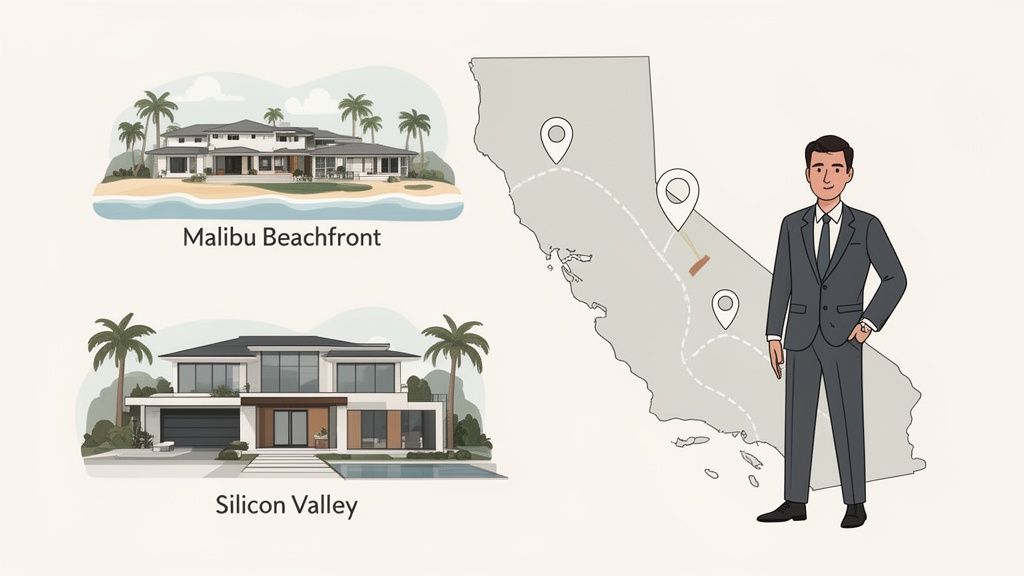
Think of this guide as a masterclass in acquiring premier California real estate. We're not just looking at listings; we're breaking down the strategies that help you secure a property that serves as both a home and a cornerstone asset in your portfolio.
My goal, as Richard Maize, is to give you the clarity and confidence you need to make the right move in 2026.
What Defines California Luxury in 2026
The idea of luxury is always changing. It used to be about size and location above all else. Today, those things still matter, but the definition has become much more sophisticated.
In 2026, the most discerning buyers are looking for a complete living experience. The property has to support their entire lifestyle, not just house it.
Here are the elements that truly define modern California luxury:
Wellness-Centered Design: Homes are now expected to be private sanctuaries. Features like in-home saunas, cold plunge pools, meditation gardens, and sophisticated air and water filtration are becoming the standard.
"Quiet Luxury" Finishes: The trend has moved away from anything too flashy. Instead, the focus is on subtle, exceptional craftsmanship. Think hand-troweled plaster walls, unlacquered brass that patinas over time, and natural woods that bring a sense of calm.
Invisible Smart Home Integration: The best technology is the technology you don't see. Buyers want systems that are woven into the architecture, controlling lighting, security, and climate without a single clunky interface disrupting the home's aesthetic.
Curated Outdoor Living: A simple pool isn't enough anymore. Luxury now means creating layered outdoor "rooms" for dining, working, and relaxing. These spaces come with built-in heating, integrated sound systems, and thoughtful, native landscaping.
As Richard Maize, I’ve always approached luxury real estate from two angles: it must be a profound lifestyle improvement and a sound financial decision. Understanding these evolving buyer desires is the first step to making an investment that succeeds on both fronts.
This guide will cover everything from regional market dynamics to the financing strategies that work best in this competitive environment. For high-net-worth individuals, the rules are different, which is something we explore in our article on why their real estate strategy looks different in 2026.
With the right insights, you can move forward in your search for luxury homes in California for sale with absolute confidence.
Navigating the 2026 California Luxury Market
If you want to understand California's luxury real estate market, you have to look past the surface numbers. It’s not about a single trend. I've learned over decades that what truly shapes the market is a blend of tech wealth, global capital, and the persistent demand for a certain kind of life.
The market for luxury homes in California for sale is really a tale of two very different regions. You can't use the same playbook for both.
In Northern California, especially Silicon Valley, property values are almost directly tied to the tech sector's health. A strong stock market or a few big IPOs can unleash a wave of new, highly motivated buyers overnight. This is what drives the intense competition for homes in places like Atherton and Palo Alto.
Southern California moves to an entirely different rhythm. While tech's influence is growing, the real drivers here remain the entertainment industry, international money, and the simple allure of the lifestyle. A buyer in Beverly Hills is often thinking about proximity to the industry. A buyer in Malibu is investing in privacy and an oceanfront view.
Key Forces Defining California's 2026 Market
A handful of critical factors are shaping high-end property values right now. I always advise clients to look at where these forces are headed, not just where they are today. Predicting the next move is far more valuable than analyzing the last one.
These are the dynamics at play:
Tech Sector Wealth: When major tech companies do well, they create a new class of millionaires ready to invest in real property. This has a direct impact on demand and pricing in the Bay Area.
International Buyer Activity: California continues to be a safe harbor for global investors. Buyers from Asia, Europe, and the Middle East see our real estate as a stable asset, and they often come to the table with all-cash offers.
Shifting Lifestyle Priorities: The demand for privacy, wellness amenities, and seamless indoor-outdoor living is only getting stronger. Homes that feel like a private sanctuary now command a significant premium.
Inventory Scarcity: In the most sought-after enclaves, from La Jolla to Napa Valley, the supply of homes for sale is consistently low. This scarcity puts a floor under property values and often ignites bidding wars for the best properties.
For an investor, these forces create both challenges and opportunities. A market with low inventory and high demand rewards buyers who are prepared, decisive, and well-advised. That's a core principle of my, Richard Maize's, investment philosophy.
Recent data shows just how resilient this market is. Even with shifts in the broader economy, California is still home to 51 of the top 100 luxury housing markets in the country. We're seeing hotspots like Newport Beach dominated by cash purchases, while places like Calabasas have seen median prices climb to $4.875 million on 7.2% year-over-year growth. This is why I've always viewed real estate here as a mix of portfolio strategy and community investment. You can find more data on trends in the luxury market outlook.
A Comparative Look at California's Luxury Hubs
To make a smart move, you have to compare these regional markets side-by-side. The table below gives you a high-level snapshot of what to expect in 2026. This is the kind of analysis I use to figure out where capital will work hardest.
2026 California Luxury Market Snapshot
A comparative overview of key performance indicators for top luxury real estate markets across California, helping buyers identify regional strengths and trends.
Region | Key Driver | Median Luxury Price Trend | Inventory Status |
|---|---|---|---|
Silicon Valley | Tech Industry Performance | Strong, tied to market cycles | Extremely Low |
Los Angeles (Westside) | Entertainment & Lifestyle | Steady, with blockbuster sales | Chronically Low |
Malibu/Coastal | Exclusivity & Ocean Views | Consistently High | Very Low, premium on location |
Napa/Sonoma Valley | Second Home/Leisure Market | Growing, lifestyle-focused | Limited, unique properties |
Palm Springs | Desert Modernism & Tourism | Stable, seasonal demand | Moderate but competitive |
This table makes it clear why a one-size-fits-all strategy will fail in California. A buyer chasing rapid appreciation might focus on Silicon Valley during a tech upswing. An investor looking for a stable, legacy asset might find Beverly Hills or Malibu a better fit.
Understanding these differences is the first step toward building a successful real estate strategy in the Golden State.
Exploring California's Most Exclusive Enclaves
To understand California luxury real estate, you have to look beyond the statewide numbers. California isn't a single market. It's a collection of distinct enclaves, each with its own culture, architecture, and idea of what "value" really means.
Based on my years navigating these communities as Richard Maize, here’s a look at what truly defines them. Our tour starts in Southern California, where the idea of glamour was born.
The Timeless Prestige of Beverly Hills and Hollywood Hills
Beverly Hills is more than a zip code; it’s a global symbol of established wealth. The appeal is timeless, built on a foundation of sprawling estates, absolute privacy, and a legacy of iconic owners.
For a buyer here, value is measured in pedigree. It’s the prestige of a 90210 address and proximity to Rodeo Drive. This is where people come to own a piece of history.
Just over the hill, you find a completely different world. The Hollywood Hills are defined by cutting-edge architecture and staggering city views. These homes are for buyers who want to live inside a piece of art—think walls of glass and infinity pools that seem to spill into the skyline.
It’s less about old-world status and more about modern design and a connection to the city's creative energy.
The chart below shows some of the key forces at play in the broader California market. You'll see rising prices, but also longer sales timelines for the most expensive homes and a huge number of deals happening in private.
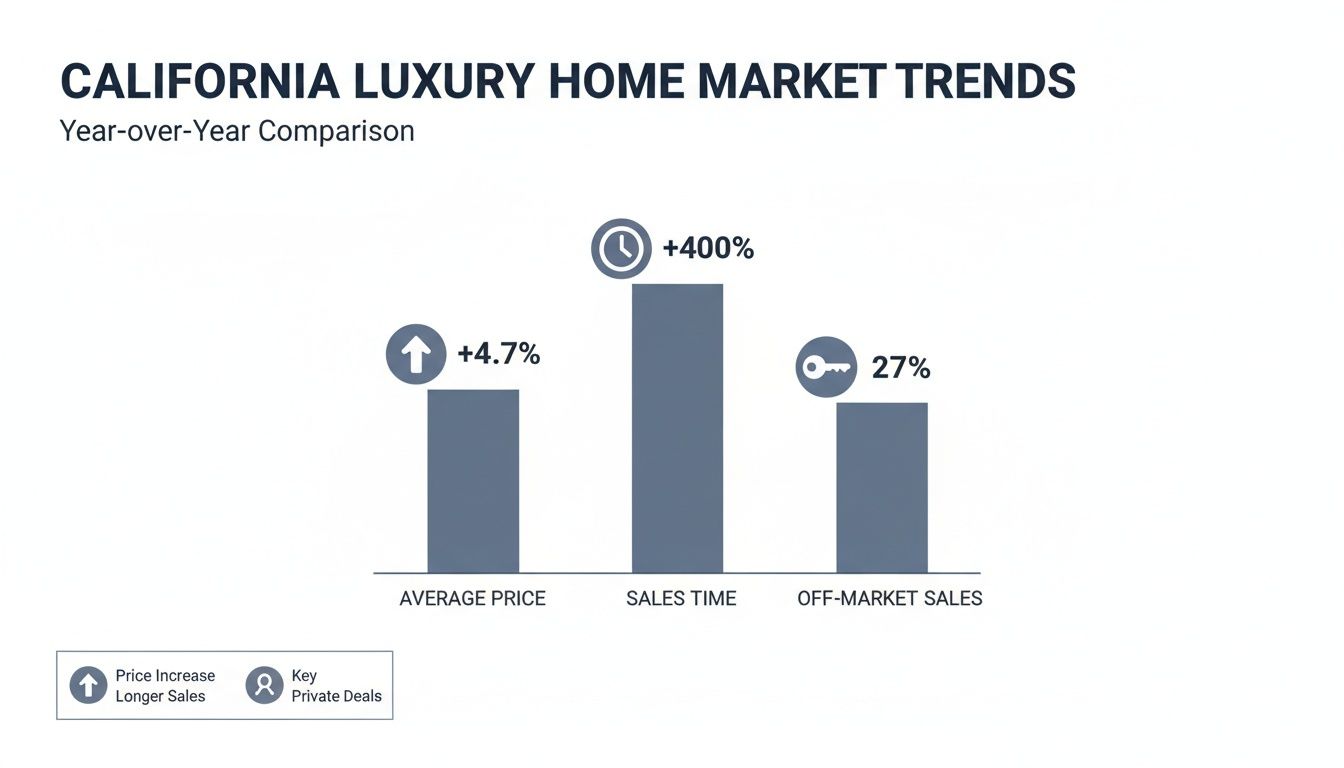
These numbers confirm what we see on the ground: prices are up, but the best properties take time to sell, and a huge part of the market operates away from public view.
Coastal Opulence and Desert Modernism
Moving west, Malibu represents the peak of California's coastal lifestyle. Here, the ultimate luxury isn’t the house—it’s the Pacific Ocean.
Properties along Carbon Beach, often called "Billionaire's Beach," offer direct access to the sand and surf. The Malibu buyer is looking for an escape, a retreat where they can disconnect from the city without giving up an ounce of sophistication. Value is measured in feet of ocean frontage.
Head inland, and you'll find Palm Springs, a desert oasis that offers a completely different kind of escape. The city is a living museum of mid-century modern architecture, defined by a relaxed, leisure-driven lifestyle.
Buyers here are often looking for a second or third home, drawn by world-class golf, a rich design history, and the dry desert heat. This market values architectural integrity and a connection to the unique desert landscape.
The market in and around Los Angeles remains intensely competitive. Despite luxury listings being down 15% year-over-year, sales volume is climbing. In Calabasas, the median price recently hit $4.875 million, a 7.2% jump, with high-end homes selling in just 28 days.
A staggering 27% of deals over $5 million are now happening off-market for discerning buyers. With sales like the recent $51.75 million transaction in Beverly Hills, LA's place as a hub for global wealth is undeniable. You can explore exclusive insights on LA and Calabasas real estate trends for a deeper look at these dynamics.
Northern California's Hubs of Innovation and Leisure
In Northern California, the definition of luxury shifts again. In Atherton and Palo Alto, the epicenters of tech wealth, value is tied directly to proximity and access.
As Richard Maize, I’ve always found that in these communities, the ultimate luxury is convenience and access. A top-tier school district or a short commute to a corporate campus can add millions to a property’s value.
The buyers are often tech founders and venture capitalists. They prioritize education, privacy, and an understated environment over flash. The underlying value of a home here is its connection to the intellectual and economic engine of Silicon Valley.
Finally, we land in Napa Valley. Here, luxury is measured in acres of vineyards and a life built around food, wine, and natural beauty.
Buyers aren't just purchasing a home; they are acquiring a piece of a world-renowned agricultural region. A Napa estate is an investment in a slower, more intentional way of life. It’s for the person who wants a legacy property that connects them to the land itself.
Understanding these differences is the key to making a smart investment. Each enclave serves a different purpose for a different kind of buyer. Aligning your goals with the right community ensures your purchase is more than just a transaction—it's a fit for your life.
Accessing Off-Market and Unlisted Properties

In the market for luxury homes in California for sale, the best properties are often the ones you never see listed. They trade hands quietly, moving from one owner to the next without ever hitting the public market.
These are off-market listings, often called "pocket listings," and getting access to them is one of the single greatest advantages a serious buyer can have.
Think of the public market as a luxury department store—impressive, but open to everyone. The off-market is a private, by-appointment-only showroom. I’ve handled these transactions for years, and high-profile sellers prefer this privacy for a few critical reasons.
Why High-Profile Sellers Prefer Privacy
For industry titans, celebrities, or anyone with a public profile, privacy is the most valuable commodity. A public listing brings unwanted attention, security issues, and a steady stream of unqualified people wanting a tour.
Selling off-market gives them complete control.
They can vet every potential buyer, demand total confidentiality, and negotiate terms without the world watching. This isn’t just a preference; for many, it’s a necessity. From my perspective as Richard Maize, I've seen firsthand how a private sale protects a seller’s personal and business life, making it the only path they will consider.
The takeaway is simple: for many of California’s most exclusive homes, the sale is a private transaction between trusted parties, not a public event. To play at this level, you have to understand that mindset. This is a principle I, Richard Maize, have built my career on.
A private sale also lets a seller test an ambitious price without leaving a digital footprint. If the price isn't met, there is no public record of days on market or price cuts, which protects the property’s perceived value down the road.
How to Unlock the Off-Market Showroom
Accessing these properties isn’t about finding a secret website. It’s about becoming a known and trusted buyer in the right circles. Over the years, I've seen that a few key steps separate the buyers who get in from those who don't.
Here’s how to gain access:
Align with a Well-Connected Broker. Your agent is your key. A broker with deep relationships with other top agents, wealth managers, and attorneys will hear about properties long before anyone else. Their reputation is your entry ticket.
Clearly Define Your Criteria. Vague interest gets you nowhere. You need to give your broker a precise, realistic brief: location, architectural style, non-negotiable features, and your budget. This allows them to effectively pitch you when an opportunity surfaces.
Demonstrate Your Seriousness. To be shown an off-market property, you have to be a credible, decisive buyer. That means having your financing in order and being ready to move. Sellers and their agents won’t waste time on anyone who isn't prepared to transact.
Leveraging Your Professional and Social Network
Beyond your broker, your own network is a powerful asset. Let your key contacts—your attorney, accountant, or business partners—know you’re looking. These professionals move in high-net-worth circles and often hear about opportunities from their own clients.
Sometimes, the connection is more personal than professional. The right introduction at a charity gala or social club can open doors that would otherwise stay shut. It’s about building a reputation as a serious, discreet player in the community.
For those looking to sharpen their eye for opportunity, our guide on how to spot a high-value property before anyone else provides insights that are critical in this space.
Ultimately, entering the world of off-market real estate is a relationship game. By positioning yourself correctly with the right team, you can unlock access to California’s most exceptional hidden homes.
Financing and Negotiating Your Purchase
Finding the right property is only the first step. The real work begins when it’s time to secure it. I’ve always said that more value is created or lost in the financing and negotiation phase than at any other point in a deal.
A winning strategy starts long before an offer is ever written. It begins with structuring your finances to project absolute strength and flexibility. In a competitive market, this is your primary advantage.
Sophisticated Financing for High-Net-Worth Buyers
For a luxury property, a standard mortgage is rarely the best approach. High-net-worth buyers have access to far more powerful and flexible financing tools that can make an offer stand out.
As an investor, I always advise clients to think beyond conventional loans and explore these avenues first.
Private Banking Relationships: Your private banker understands your entire financial picture and can structure custom lending solutions. This might be a jumbo loan with better terms or a line of credit against your investment portfolio, which functions just like cash.
Asset-Based Lending: This type of financing uses your existing assets—stocks, bonds, even other real estate—as collateral, rather than focusing solely on income. It’s an incredibly useful tool for entrepreneurs or investors whose wealth is in assets, not just liquid cash.
The All-Cash Offer: In a market as fast as California, nothing speaks louder than an all-cash offer. It signals seriousness, removes the financing contingency, and promises a quick, clean close. It puts you at the front of the line.
The right financing isn't just about getting the money. It's about crafting an offer a seller can't ignore. I’ve found that the ability to close with speed and certainty often outweighs a slightly higher price. For a deeper look, you can explore our guide on the essential methods for financing investment properties.
The Art of High-Stakes Negotiation
With your financing in order, the negotiation begins. The most successful negotiators I’ve worked with understand a simple truth: it’s not always about the price. It’s about discovering the seller’s true motivation.
A seller relocating for a new job might value a fast, guaranteed close more than the highest possible offer. Another might need to rent the home back for a few months while their next property is finished. Uncovering these non-financial needs gives you incredible leverage.
As Richard Maize, I treat every negotiation like a business transaction. The goal is to find a win for both sides, but you must walk in knowing exactly what you want and where you’re willing to bend. Your offer is your opening argument, so make it a strong one.
This strategic approach is essential, especially in markets like the Bay Area. Recent data shows a massive surge in luxury sales, with the median price for homes over $3 million now at $4.05 million. Properties in Santa Clara County over $5M are setting all-time highs and selling in a median of just 14 days. In San Francisco, a sale-to-original-price ratio of 108.5% shows just how intense the bidding wars have become.
These numbers prove that a weak or poorly structured offer has no chance.
Assembling Your Deal Team
No one navigates a high-stakes deal alone. Surrounding yourself with the right experts isn’t a luxury; it’s a necessity.
Your team should include:
A Top-Tier Real Estate Attorney: To review contracts, navigate complex title and escrow issues, and protect your legal standing.
A Savvy Tax Advisor: To structure the purchase in a way that aligns with your overall financial picture and minimizes tax liabilities.
A Meticulous Inspector: To conduct deep due diligence on the property’s physical condition, from the foundation to the systems.
I learned long ago that investing in the best advisors at the start saves you from expensive mistakes down the road. Their job is to protect your downside so you can focus on securing the asset on the best possible terms.
Executing Your California Real Estate Strategy
Strategy is important. Execution is everything.
We’ve covered the groundwork for acquiring premier property in California—from decoding market trends and finding your ideal community to sourcing off-market deals. But a plan only has value when you act on it.
I've learned that the most successful purchases happen when a buyer treats the property as two things at once: a foundational piece of their financial portfolio and a place that genuinely enhances their life. The two are not mutually exclusive. In fact, they must work together. A home that drains you financially or doesn’t fit your lifestyle is a failed investment, no matter the address.
Moving from Plan to Purchase
The best buyers I work with don't just have a plan; they have conviction. They’ve done the preparation, they know what they want, and they’re ready to move without hesitation when the right opportunity appears. In a market like California’s, that clarity is a decisive advantage.
This is the final, most critical phase of your acquisition. It’s where deep-seated knowledge transforms into confident action.
The greatest strategy is worthless without the confidence to execute it. My work, as Richard Maize, is designed to give you that confidence, turning market complexities into clear, actionable steps.
My goal has always been to share the insights I’ve gained over decades in the field. I encourage you to continue exploring my articles and analyses on investment, legacy, and market dynamics. Use them to sharpen your perspective.
By arming yourself with a proven framework, you'll be prepared to make a purchase that delivers returns, both financial and personal, for years to come. Now, it's time to make it happen.
Answering Your Questions About California's Luxury Market
Buying a luxury home in California isn't like any other transaction. The questions are different, the stakes are higher, and the rules are unwritten. Over decades of working with high-net-worth buyers, I've seen the same fundamental concerns come up time and again.
Here are my direct answers, from my perspective as Richard Maize, to the most common questions I hear.
What Is the First Step in Buying a Luxury Home?
Success in this market isn’t about finding the perfect house. It's about building the right team first. Before you even begin to browse listings, your first move should be to assemble your key advisors.
My experience shows that the most prepared buyers have a well-connected real estate broker, a real estate attorney, and a trusted tax advisor in place from day one. This team helps you define what you’re really looking for, structure your finances for maximum impact, and position you to act decisively when the right opportunity—especially an off-market one—surfaces.
How Much of the Luxury Market Is Off-Market?
A significant portion of the high-end market never appears online. While it shifts by neighborhood, it’s not unusual in prime areas of Los Angeles for 25% to 30% of transactions over $5 million to be completely private.
The most exclusive properties are often sold through private networks to maintain seller confidentiality and control. My work as Richard Maize frequently involves connecting qualified buyers with these unlisted opportunities, which are the cornerstone of the ultra-luxury market.
Access to these "pocket listings" comes down almost entirely to your broker's reputation and relationships. It’s a world built on trust, not public listings.
What Are Today’s Buyers Looking For in a Luxury Home?
The idea of luxury has evolved. It’s no longer just about a prestigious address or sheer square footage. The buyers I work with today are focused on features that support their overall well-being and a more integrated lifestyle.
Modern luxury is now defined by:
Integrated Wellness: In-home saunas, cold plunges, and advanced air and water filtration systems are becoming standard expectations, not just amenities.
Understated Quality: The trend is toward "quiet luxury"—an emphasis on exceptional craftsmanship, natural materials, and subtle, high-end finishes that speak for themselves.
Seamless Technology: Smart home systems must be intuitive and invisible, blending perfectly into the home’s design without being intrusive.
Curated Outdoor Spaces: Buyers want more than a pool. They are looking for functional outdoor "rooms" designed for dining, working, and genuine relaxation.
Are All-Cash Offers Still Necessary to Be Competitive?
An all-cash offer is still the most powerful position in any competitive scenario. It’s not just about the money; it’s about certainty. It signals to a seller that you are serious, financially sound, and can close without the risk of a financing contingency.
That said, a well-structured offer with a substantial down payment and a pre-approval from a reputable private bank can also be incredibly strong. As I always advise my clients, the goal is to project financial strength and the absolute ability to close without complications.
At Richard Maize, my focus is on providing the strategic insights and deep market knowledge necessary for a successful real estate investment. Discover more about my approach to creating value across real estate, business, and philanthropy at richardmaize.com.
Comments