Los Angeles Real Estate News: 7 Sources to Follow

No single outlet captures Los Angeles real estate news completely, and the market's own numbers explain why. In June 2026, Los Angeles single-family homes had a $1,060,000 median sale price, 3,115 closings, and a 16-day median time on market, while condos recorded a $685,000 median sale price and a 29-day median according to the Greater Los Angeles REALTORS® June 2026 market analysis. Those figures describe activity, but not the approvals, insurance pressures, financing conditions, policy changes, or neighborhood-level risks behind each transaction.
Readers need to triangulate lead stories, project approvals, commercial deals, policy, pricing signals, inventory, and interest-rate effects instead of reacting to one dramatic headline. This roundup builds a practical monitoring workflow, with Richard Maize providing the featured Los Angeles-based practitioner perspective. The habit is simple: scan the sources, verify the primary report, identify the affected neighborhood or property type, and decide whether the development changes timing, underwriting, or follow-up research.
Headlines start the investigation. They shouldn't finish the investment decision.
1. Richard Maize
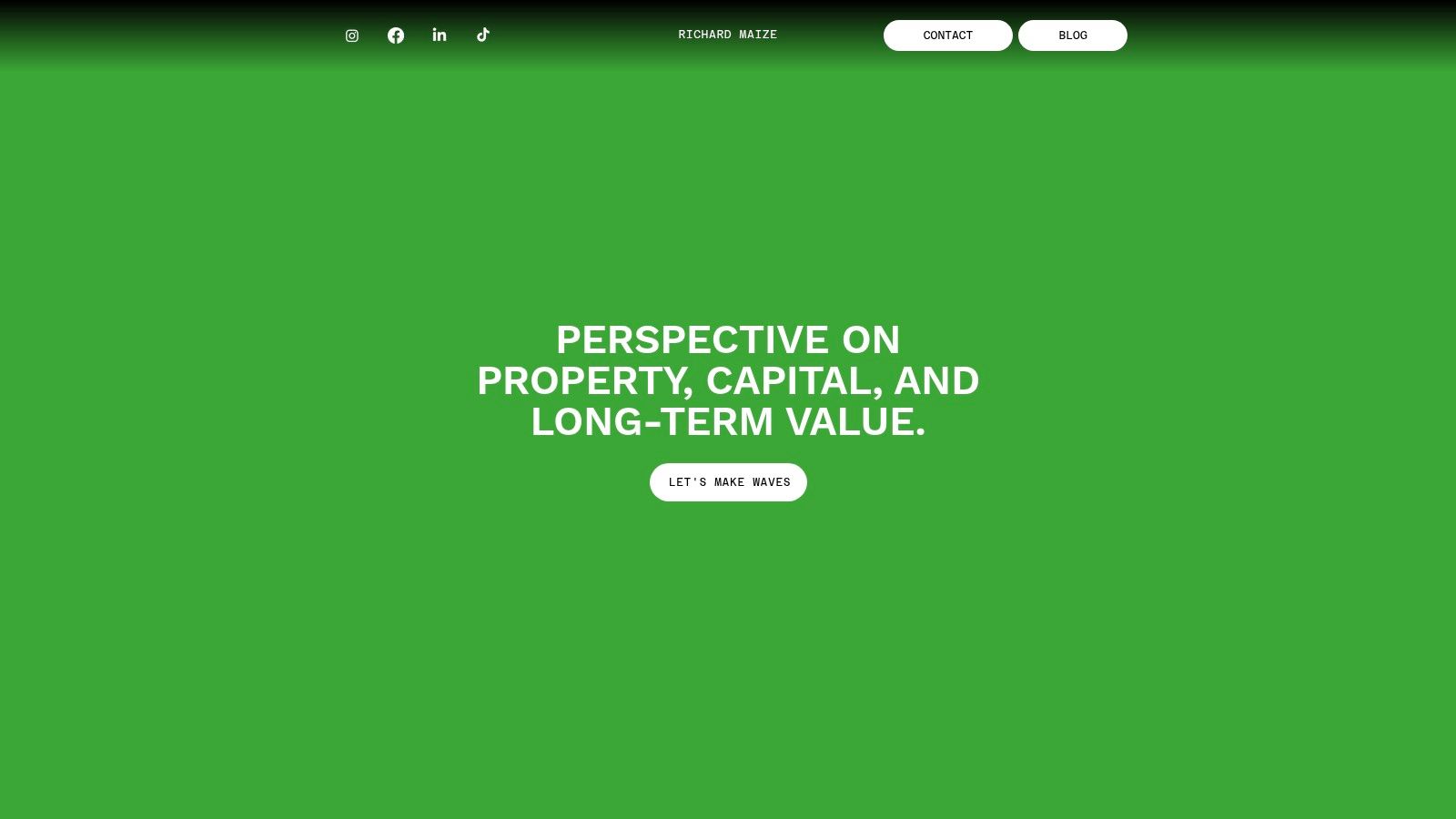
Richard Maize's platform is the most personal source in this group. His website brings together his work as a Los Angeles-based real estate expert, angel investor, entrepreneur, and philanthropist, alongside his media presence and community activities. The Richard Maize website links visitors to his Blog, Press, Multimedia, and FAQs, giving investors and entrepreneurs a central place to find commentary, portfolio highlights, and potential collaboration paths.
The strength is perspective shaped by practice. Regular posts and multimedia translate hands-on investing into readable lessons about property markets, entrepreneurship, brand building, and value creation. His public portfolio also reaches beyond property, including the Richeeze Melts Food Truck, digital and promotional initiatives, and community events such as POPPOP FEST. The Rochelle and Richard Maize Foundation adds a purpose-driven dimension, showing how business activity and philanthropy can sit within a longer-term view of community impact.
What the practitioner lens adds
Maize's material is useful when a headline needs to become an operating question. A report about softer prices, rising inventory, or insurance costs should prompt investors to ask whether the opportunity reflects durable value or a more attractive entry point into a difficult risk profile. His Los Angeles real estate expert insights can help frame those questions around discipline, preparation, and value creation.
The limitation is equally important. The site doesn't publish pricing for advisory services, formal service packages, detailed performance metrics, or extensive quantified case studies. Interested parties need to use the contact pathway to discuss an engagement or request additional information.
Practical rule: Use Richard Maize's platform to sharpen the questions behind a deal, then verify property, market, financing, and legal facts through primary documents and specialist sources.
For investors, the follow-up action is to write down the assumption a headline creates, then test it. Is the property type gaining demand? Does a proposed development affect the subject neighborhood? Has insurance changed the operating model? Maize's cross-sector experience makes the site especially useful for readers who want a practitioner's view without treating commentary as a substitute for underwriting.
2. Los Angeles Times Real Estate
The Los Angeles Times Real Estate section is the broad local reporting layer. It covers housing trends, affordability, development, policy, and major Southern California stories, while its business coverage also reaches commercial real estate. That breadth matters because a residential buyer, landlord, or investor can encounter the same underlying issue through different channels, from zoning and public policy to employment and construction.
Its strongest feature is context. The Times has a broad reporting network across Southern California and can connect a neighborhood story to wider affordability, economic, or policy questions. For readers following Los Angeles real estate news, that makes it a useful first scan when a major announcement breaks or public debate intensifies. The dedicated real estate vertical also supports a regular reading routine rather than forcing readers to search across unrelated sections.
Access is the main trade-off. Some stories sit behind a metered paywall, and highly specialized submarkets may require supplemental coverage from trade publications or local planning sources. A broad newspaper report can identify the issue, but it may not provide the property-level details an investor needs.
A useful example is the relationship between market conditions and regional resilience. Richard Maize's discussion of how the Los Angeles economy can bounce back quickly from wildfires offers a practitioner-oriented lens, while newspaper reporting can supply the broader civic and economic context.
Turn a Times headline into a question about exposure. If a story concerns a new housing policy, identify the affected jurisdiction, property category, implementation date, and likely compliance burden. If it concerns a wildfire or economic disruption, ask whether the impact changes insurance, tenant demand, construction timing, or resale assumptions. The Times is strongest at telling readers why a story matters. The next source should help establish what may be built.
3. Urbanize LA
Urbanize LA is the development-intelligence source. Its dense project feed tracks entitlements, groundbreakings, architecture, transit-linked development, and neighborhood-scale proposals across Los Angeles County. For anyone trying to understand what may change a block, corridor, or station area, this is often more useful than a general market article.
The outlet's value comes from project-level specificity. Concise write-ups, maps, and imagery help readers identify a proposal's location, design, scale, and development stage. Weekly roundups make it easier to catch planning and real estate headlines that might otherwise disappear into a busy news cycle. An optional Urbanize Pro subscription adds enhanced tools and saved searches for readers who need a more systematic way to follow selected neighborhoods or project types.
From proposal to investment question
Urbanize LA's limitation is its focus. It's primarily a development and urban-planning publication, not a pricing service or transaction database. A rendering can show intent, but it doesn't prove that financing is complete, construction will begin, or the final project will perform as proposed. Readers should treat each item as a pipeline signal that requires verification.
The practical workflow is straightforward:
Confirm the stage: Check whether the project is proposed, approved, under construction, or completed.
Map the exposure: Identify nearby properties, competing inventory, access changes, and possible construction disruption.
Check the primary record: Review planning documents, public meeting materials, and official filings before changing an underwriting assumption.
Test the demand thesis: Ask whether the project adds a useful amenity, competing units, commercial space, or transportation access.
This source is especially valuable for landowners, developers, and buyers considering a neighborhood before a project becomes widely discussed. It can also challenge a simple bullish narrative. New development may improve an area over time, but it can create competition for existing landlords or introduce execution risk for nearby projects. Urbanize LA tells readers where the physical change may occur. It doesn't replace market evidence about rents, sales, vacancy, or financing.
4. Los Angeles Business Journal Real Estate
The Los Angeles Business Journal real estate section follows the people and companies moving capital through Los Angeles property markets. Its coverage includes deals, developers, landlords, tenants, financing, and policy impacts across office, industrial, retail, multifamily, and hospitality. That asset-class range gives business readers a way to follow how local operators respond to changing conditions.
The section is strongest when the question is, “Who is doing what, where, and with which partners?” Executive profiles and deal reporting can reveal the lenders, developers, brokers, owners, and tenants behind a market story. Daily newsletters, special reports, and events support readers who want a consistent commercial real estate feed rather than occasional headline searches.
The trade-off is audience and access. Full digital access typically requires a subscription, and some articles are written for executives and industry participants rather than consumers. Readers may need to translate a transaction report into implications for a smaller property or a different submarket.
The follow-up that matters
A reported sale or lease shouldn't be treated as a direct comparable without checking its structure. Ask whether the deal involved a distressed seller, unusual financing, a major tenant, a redevelopment plan, or a property condition that makes it unlike the asset under review. The headline may identify a trend, but the underwriting question is whether the same factor exists in the reader's deal.
For owners, the section can help monitor tenant movement, competitive projects, and the behavior of local landlords. For investors, it can reveal which asset classes attract attention and where financing or policy is influencing decisions. For tenants, it offers context on landlords, development plans, and changing commercial corridors.
The publication is not designed to deliver every residential pricing signal or granular neighborhood statistic. Pair it with a broad housing source and local records. Its role is to explain the commercial ecosystem, especially the participants and transactions that shape Los Angeles beyond the single-family listing market.
5. Bisnow Los Angeles
Bisnow Los Angeles is built for commercial real estate readers who want rapid coverage and industry access. Its Los Angeles feed and Deal Sheet updates emphasize office, industrial, multifamily, financing, major projects, and the people behind them. The events calendar is a central part of the platform, creating a direct connection between reporting, networking, and market discussion.
That combination is Bisnow's clear strength. A reader can follow a deal online, then use an event to hear from operators, lenders, brokers, or public officials involved in the same market. Free newsletters provide a practical entry point, while the optional Insider Access tier offers additional content for readers who need more specialized coverage.
The limitation is focus. Residential consumer reporting is limited, so a homeowner or single-family buyer shouldn't use Bisnow as a complete source for neighborhood pricing or household affordability. Some premium content and event access also sit behind paid tiers, which means the most useful information may require a deliberate subscription decision.
Use events as a verification tool
Commercial headlines often compress complex transactions into a few lines. A financing announcement might leave unanswered questions about maturity, recourse, leasing assumptions, or construction status. An event can provide a chance to ask those questions directly, but readers should still separate promotional commentary from verified transaction terms.
For an investor, the follow-up action is to connect the reported deal to an asset-class thesis. Is the story about office demand, industrial logistics, multifamily supply, or capital availability? Which assumptions would have to remain true for the transaction to work? Does the deal provide a comparable, or merely evidence that a well-capitalized participant sees an opportunity?
Bisnow is most useful in the middle of the research process. Broad coverage identifies the macro issue, and Bisnow adds industry participants and deal mechanics. The reader still needs property records, operating statements, financing documents, and local market evidence before committing capital. That separation protects against confusing fast industry conversation with completed investment analysis.
6. GlobeSt Los Angeles Market
The GlobeSt Los Angeles market hub aggregates commercial real estate stories, transactions, and trend analysis within a broader national platform. It also connects local reporting to webcasts, podcasts, special reports, and industry events. For readers tracking capital flows, sector sentiment, and larger transactions, that national context can make Los Angeles activity easier to compare with other markets.
GlobeSt is strongest for following mid-to-large commercial deals and the forces behind them. Its market page gives readers a single place to monitor local stories, while audio and video formats can add detail that a short article doesn't provide. Events featuring Los Angeles decision-makers may also help readers understand how lenders, owners, developers, and public officials describe changing conditions.
The weakness is scope. Not every story in a national CRE publication is strictly Los Angeles-specific, even when it appears within a local market area. Full access to newsletters and some content often requires registration or sign-in, so casual readers may encounter limits.
Read local news through a capital lens
GlobeSt can help answer a question that local neighborhood reporting sometimes misses: who has the capacity and willingness to fund the next phase of activity? A transaction story may point toward lender caution, institutional interest, redevelopment capital, or a shift in preferred asset classes. Those signals don't determine a property's value, but they can inform a reader's questions about exit liquidity and financing risk.
Use the platform to compare the stated transaction rationale with the property's actual circumstances. If a report highlights a sector trend, investigate whether the subject asset has the same location, tenancy, physical condition, and capital requirements. If the story comes from a webcast or podcast, look for supporting documents rather than relying on a speaker's market framing alone.
GlobeSt works best beside Bisnow and the Los Angeles Business Journal. Each may surface different participants or levels of detail. The reader gains more by comparing the narratives than by treating any one commercial source as definitive.
7. The Real Deal Los Angeles
The Real Deal's Los Angeles desk combines high-velocity local reporting with national commercial real estate coverage. Its Los Angeles sections track development, major deals, policy shifts, distress, adaptive reuse, and prominent market players. The platform also reaches high-end residential readers, making it one of the more useful sources for seeing how institutional and luxury-market stories overlap.
Its strength is enterprise reporting tied to specific submarkets. Tag-based sections help readers follow areas such as Los Angeles County and DTLA, while exclusives can surface policy, distress, and redevelopment developments before they become part of general business coverage. LA-focused events, newsletters, and community programming, including the LA Real Estate Forum, extend the publication beyond the article feed.
Access requires attention. Free article limits apply unless readers register or subscribe, and specialty data or features may require paid tiers or separate data products. The publication's high velocity also creates a reason to verify details, especially when a preliminary report concerns a proposed deal, legal dispute, or policy change.
Richard Maize's real estate market analysis template is a useful companion for turning a Real Deal headline into a structured review. Rather than asking whether a story sounds bullish or bearish, record the asset type, location, participants, transaction status, stated rationale, and missing evidence.
A reported deal is a lead, not a valuation conclusion.
For investors, The Real Deal is particularly valuable when the question involves market power, distressed assets, adaptive reuse, or major developers. For residential readers, its luxury coverage can provide context but shouldn't be generalized to the entire market. Pair the article with local comparables, title and planning records, insurance information, and current financing terms before acting.
7-Source Comparison: Los Angeles Real Estate News
Source | Implementation complexity 🔄 | Resource requirements ⚡ | Expected outcomes 📊 | Ideal use cases 💡 | Key advantages ⭐ |
|---|---|---|---|---|---|
Richard Maize | Low 🔄, single‑hub personal platform; direct contact for services | Low ⚡, free content; paid advisory via contact | Practical, practitioner-led insights and lessons 📊 | Investors, entrepreneurs, community partners seeking practitioner advice 💡 | Multi‑sector credibility; purpose‑driven brand ⭐ |
Los Angeles Times, Real Estate | Medium 🔄, professional newsroom operations, regular cadence | Medium ⚡, metered paywall; subscription for full access | Broad context on policy, affordability and market trends 📊 | Residents, policy watchers, investors needing context 💡 | High name recognition and wide reporting network ⭐ |
Urbanize LA | Low–Medium 🔄, rapid, project-focused updates; Pro adds features | Low–Medium ⚡, free feed; optional Urbanize Pro for advanced tools | Early intelligence on entitlements, groundbreakings and pipeline 📊 | Developers, planners, neighborhood watchers tracking proposals 💡 | Fastest local pulse with clear maps/imagery ⭐⚡ |
Los Angeles Business Journal, Real Estate | Medium 🔄, business‑oriented reporting and deal coverage | Medium ⚡, subscription often required; newsletters/events | Deal-level coverage, exec profiles and local market context 📊 | Business professionals tracking deals, landlords and financiers 💡 | Hyperlocal business journalism focused on mid‑market activity ⭐ |
Bisnow Los Angeles | Medium 🔄, rapid CRE coverage plus event production | Medium ⚡, free newsletters; paid tiers and event fees | Networking access and timely commercial real estate updates 📊 | CRE operators, lenders and networkers seeking events/insight 💡 | Strong events calendar and industry participation ⭐⚡ |
GlobeSt, Los Angeles Market | Medium 🔄, national CRE platform with local aggregation | Medium ⚡, registration often required; access to webcasts/events | Mid‑to‑large CRE deal tracking and sector trend analysis 📊 | Investors and execs monitoring capital flows and sector trends 💡 | Combines quick hits with deeper sector features and events ⭐ |
The Real Deal, Los Angeles | Medium–High 🔄, frequent exclusives and investigative reporting | Medium–High ⚡, metered access; paid data/products for full depth | High‑velocity deal news, exclusives and development coverage 📊 | Brokers, developers and investors needing deal intelligence 💡 | Strong investigative reporting and LA‑focused exclusives ⭐ |
Turn Headlines Into Better Decisions
The seven sources serve different jobs, and that's the point. The Los Angeles Times provides broad local and statewide context. Urbanize LA tracks the physical development pipeline. The Los Angeles Business Journal identifies local companies, deals, and decision-makers. Bisnow adds commercial speed and event-based access, while GlobeSt connects Los Angeles activity to national capital and sector trends. The Real Deal brings high-velocity reporting, investigations, and prominent transactions. Richard Maize adds a practitioner lens focused on discipline, value creation, entrepreneurship, and long-term impact.
A reliable routine should begin with breadth, not a hot take. Start with a general local report, then check whether development or policy movement affects the location. Compare commercial coverage across at least two trade sources when the story concerns financing, distress, leasing, or a major transaction. After that, investigate the relevant neighborhood and property type through primary records, operating information, insurance details, and current market evidence.
The market itself rewards this discipline. Over the three months ending July 2026, Los Angeles homes had a median sale price of about $1.1 million, prices were down 1.4% year over year, homes sold in about 50 days, and buyers submitted around three offers per home, according to Redfin's Los Angeles housing market data. That mix doesn't support a simple “hot” or “cold” label. It supports careful questions about pricing, competition, timing, and property-specific risk.
Record the headline date, source, property type, location, stated market datapoint, and unresolved question before changing a decision. Then write down what evidence would answer the unresolved question and who controls access to it. This small record helps prevent a dramatic headline from becoming an unsupported assumption in an offer, refinance, acquisition model, or development plan.
Richard Maize's practitioner-oriented material is most useful at the point where information becomes judgment. Use it to think through discipline, value creation, brand visibility, and long-term choices, while using the reporting sources to verify what happened and the primary documents to establish what can happen next. Revisit this roundup as coverage changes, and use the Richard Maize website's Blog, Press, Multimedia, and contact pathways when you need further perspective, collaboration, or an advisory discussion.
Richard Maize offers practical real estate and investment perspective alongside lessons from entrepreneurship, value creation, and community-focused work. Visit Richard Maize to follow his Blog, Press, and Multimedia content, then use the site's contact pathway to explore collaboration or advisory discussion connected to Los Angeles property decisions.
Comments