How to Start a Nonprofit Foundation: An Entrepreneur's Guide

You've built companies, allocated capital, sat through enough pitches to know the difference between a story and a plan. Now you want your giving to work with the same discipline. That's the right instinct.
Philanthropy is often approached backward. Emotion typically takes precedence, leading to a scramble for structure. If you want to learn how to start a nonprofit foundation in a way that lasts, start where you'd start any serious venture. Validate the need, define the model, build the structure, and only then deploy capital.
I've always believed boring is effective. In business, the unglamorous work protects returns. In philanthropy, it protects impact.
From Business Success to Community Impact
A lot of entrepreneurs reach the same point. The business is stable, liquidity has improved, and the question shifts from “How do I build?” to “What should I build that matters?” Writing checks can help, but if you want lasting results, a foundation gives you a system for making decisions over time.
That system matters. A foundation isn't a vanity project, and it shouldn't be a loose collection of donations driven by whatever request lands in your inbox that week. It's an operating vehicle for community investment. If you treat it casually, it becomes expensive noise. If you treat it like a disciplined enterprise, it can produce measurable public benefit.
The first mindset shift is simple. Don't ask, “What cause do I care about?” Ask, “Where is there a real gap, and what vehicle is best suited to close it?” That's a business question. It forces focus, not sentiment.
Practical rule: Start with the gap, not the logo.
That usually means resisting the urge to launch too fast. Many good intentions die in the planning stage because the founder never tested whether a new organization was needed at all. In philanthropy, duplication is waste. If another group already serves the need well, your capital may do more good strengthening that operator than creating a new entity to compete with it.
That's also why I've long favored a practical approach to giving that balances ambition with discipline. If you want a broader philosophy behind that, balancing success and giving back is the right place to start.
Think like an investor in social outcomes
When I look at a foundation idea, I want the same basic answers I'd want from a business concept:
What problem exists: Define the community need in concrete terms.
Why this vehicle: Decide whether a foundation is better than donor-advised giving, direct gifts, or partnership funding.
Who executes: Identify whether the foundation will run programs, make grants, or do both.
How success is judged: Set decision criteria before the first dollar goes out.
If you skip that work, you're not building a foundation. You're creating administrative drag around charitable intent.
Validating Your Vision and Defining Your Mission
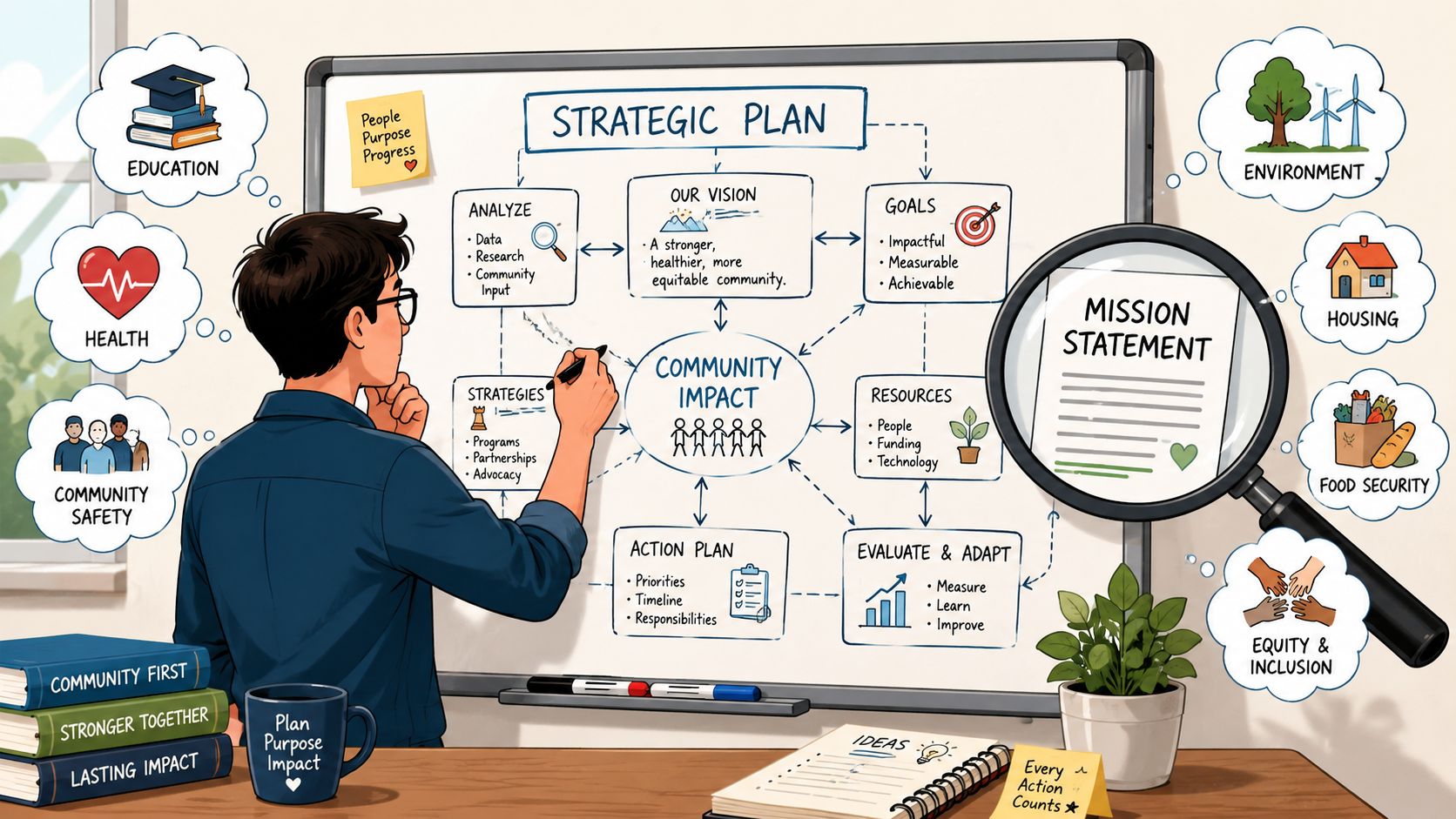
Before you file anything, test the premise. A rigorous needs analysis isn't optional. It's the equivalent of market validation in a startup.
A critical step is confirming the issue you want to address isn't already being served effectively. According to Heluna Health's guidance on starting a nonprofit, nonprofits that fail this feasibility check have a 60% higher risk of closure within three years because of donor saturation and weak community traction. That's a harsh outcome, but it makes sense. Communities don't benefit when founders duplicate infrastructure instead of solving unmet problems.
Build the philanthropic business case
A solid needs analysis usually includes three kinds of work:
Stakeholder interviews: Talk to school leaders, hospital administrators, neighborhood groups, case workers, or arts organizations, depending on your field.
Community input: Use surveys or listening sessions to hear directly from intended beneficiaries.
Existing field review: Read reports, funding records, and public filings to see who already operates in the space.
This is boring work. It's also the work that keeps you from building the wrong thing.
If you want a practical worksheet to organize that thinking, download our strategic plan template. It helps force the right questions before legal costs and operational commitments start piling up.
Your mission statement comes after the validation, not before. Founders often write broad mission language because they want flexibility. That usually creates confusion. A strong mission is narrow enough to guide capital allocation and broad enough to remain useful over time.
Good mission questions include:
Who benefits
What change you're trying to produce
Where you'll focus
What you won't do
The clearest mission statements create boundaries. Boundaries improve decisions.
Choose a model before choosing language
A lot of mission drift starts because the founder never decided what kind of work the foundation will do. Some organizations exist to fund others. Some run their own programs. Some try to do both too early and become mediocre at each.
That strategic choice belongs in the planning stage, not after launch. It affects staffing, board composition, compliance, budgeting, and how you explain the foundation to donors and partners. That's one reason I view philanthropy as part of modern business strategy rather than a side project. The thinking behind that is explored further in the role of philanthropy in modern business strategy.
This walkthrough is worth reviewing while you shape your operating assumptions:
Write down the measures that matter
Before launch, decide what evidence will tell you the foundation is working. Not vanity metrics. Not activity for activity's sake. Use a small set of operating measures tied to mission.
A simple framework works well:
Decision Area | Practical Question |
|---|---|
Mission fit | Does this request clearly match the foundation's purpose? |
Reach | Who benefits, and how directly? |
Execution | Is the grantee or program capable of delivering? |
Learning | What will this teach us for future funding decisions? |
If you can't explain your mission in a few plain sentences and tie it to a real gap, you're not ready to form the entity.
Establishing Your Legal and Governance Structure
The legal work isn't glamorous, but it determines whether your foundation can function. This is the architecture. If you get it wrong, every later decision becomes harder.
At a minimum, you need state incorporation and federal tax exemption. As Kindful's nonprofit startup guide notes, incorporating and securing 501(c)(3) status is a mandatory legal requirement. That process involves filing Articles of Incorporation at the state level and then submitting Form 1023 for federal exemption, which is essential if you want to receive tax-deductible donations.
Don't confuse formation with strategy
Forming the entity is straightforward on paper. What tends to go wrong is the governance underneath it. Weak bylaws, passive boards, and unclear voting rules create friction fast. The legal filing may get you started, but governance determines whether the foundation can survive scrutiny and make clean decisions.
If you want an additional operating overview from another angle, this guide on how to start a nonprofit is a useful companion resource.
Your bylaws should answer practical questions, not just satisfy a filing checklist:
Board authority: Who approves grants, budgets, and policy changes?
Meeting cadence: How often will the board meet, and what constitutes a quorum?
Conflict handling: How will recusals and related-party issues be documented?
Succession: What happens if a founding director steps away?
Operating or non-operating is a business model decision
A private foundation can take two very different paths. One funds outside organizations. The other runs its own charitable programs. That's not a minor legal distinction. It's an operating model choice.
Feature | Private Non-Operating Foundation | Private Operating Foundation |
|---|---|---|
Primary activity | Mainly makes grants to other 501(c)(3) organizations | Runs its own charitable programs |
Annual distribution expectation | Must distribute at least 5% of prior-year noncharitable-use assets annually | Doesn't need to pay out 5% in grants annually if it carries out its own charitable programs |
Staffing implications | Can stay lean with grantmaking oversight and compliance support | Usually requires more direct program management |
Best fit | Founders who want to fund strong operators | Founders who want to build and manage direct charitable work |
That distinction is supported by the Council on Foundations' overview of foundation basics.
Board test: Don't fill seats with agreeable names. Fill them with people who will read, question, and decide.
Match governance to the funding scope
The mission should shape how capital moves. If your focus is broad and grant-based, your board needs people who can evaluate organizations across sectors. If your focus is direct programming, you need operational judgment and tighter management controls.
That's one reason a clearly defined scope matters. The Rochelle and Richard Maize Foundation reflects a defined charitable range rather than an anything-goes posture. That kind of focus helps boards say yes with confidence and no without drama.
Think of your initial capital as seed funding. Think of future gifts, investment income, or outside support as revenue streams that need policy around them. Once you see the foundation that way, governance stops looking like paperwork and starts looking like risk management.
Architecting Your Financial and Funding Strategy
Money can destroy a foundation just as easily as it can strengthen one. The mistake isn't usually lack of generosity. It's loose financial design.
Entrepreneurs already understand the principle. A good mission with a bad capital plan doesn't scale. In a foundation, the financial model needs to answer three questions early: how much to commit, how to preserve the asset base, and how aggressively to deploy funds.
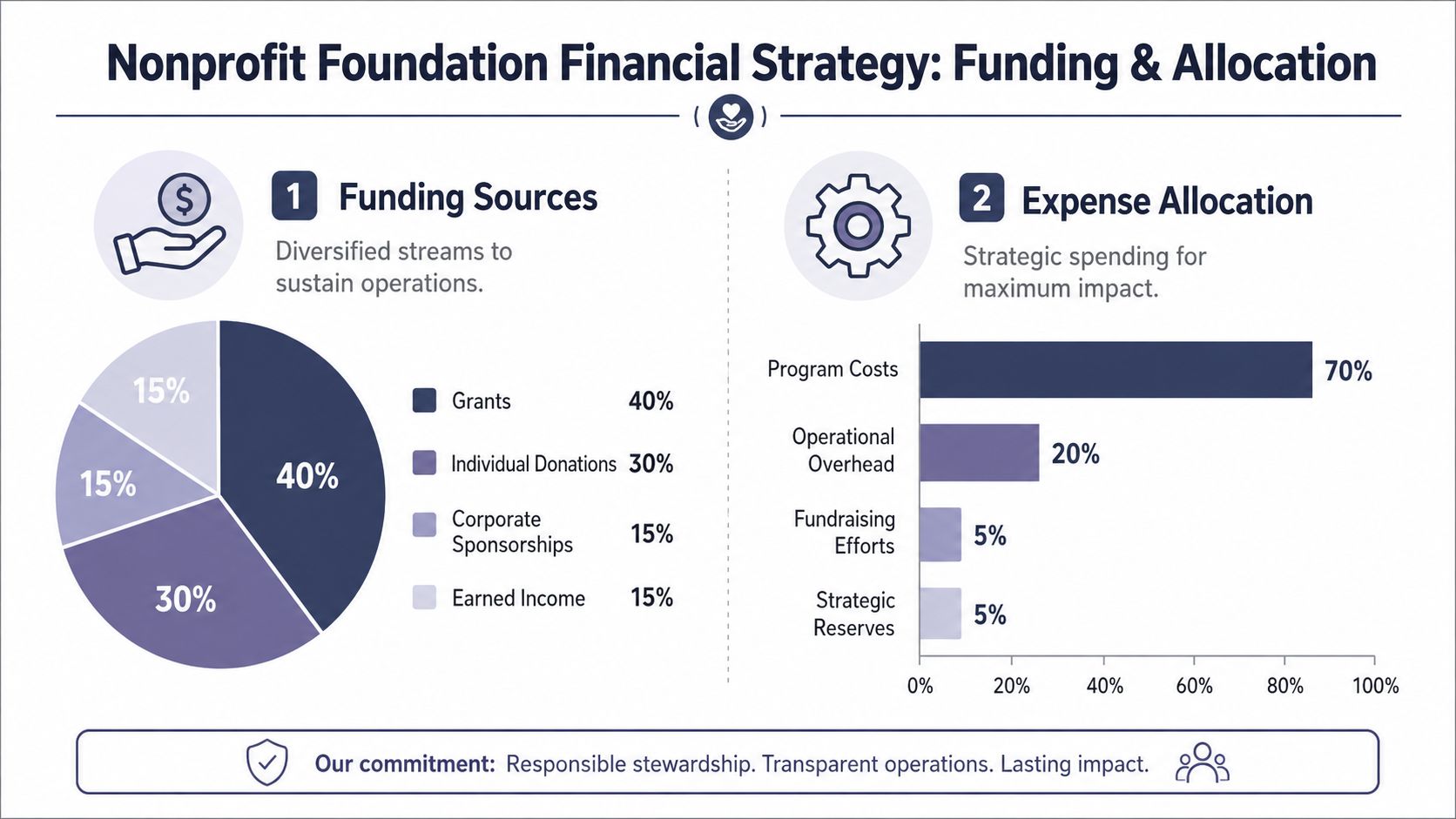
Start with policy, not enthusiasm
A foundation needs an investment policy before it needs a splashy launch. If assets will sit in the entity for years, someone has to define risk tolerance, liquidity needs, spending assumptions, and decision authority. The goal isn't to chase returns. The goal is to support the mission without putting the institution in a fragile position.
For private non-operating foundations, there's also a hard compliance issue. They must distribute at least 5% of prior-year noncharitable-use assets annually to meet IRS rules, according to PKF O'Connor Davies on the 5% payout rule. If they fail to meet that standard, steep excise taxes can apply.
That payout rule changes how you budget. It means your grant calendar, reserve planning, and investment policy can't live in separate silos.
Decide whether you're building for perpetuity or spend-down
Some founders want the foundation to exist indefinitely. Others want to solve a problem within a finite horizon and spend assets down. Neither choice is automatically better. But pretending you can defer that decision usually leads to inconsistent grantmaking.
A perpetual model tends to favor disciplined pacing, formal investment oversight, and careful board succession. A spend-down model can move faster, take bigger swings, and fund with urgency. The wrong move is combining perpetual overhead with spend-down impatience.
A lean structure usually wins in either case. That means:
Outsource specialist work: Use outside accounting, tax, and legal professionals instead of hiring too early.
Keep internal approvals tight: Fewer layers mean cleaner decisions and less drift.
Use partnerships: Fund capable operators rather than rebuilding their infrastructure inside your own foundation.
If a dollar can either fund bureaucracy or fund the mission, the burden is on the bureaucracy.
Let the mission drive allocation
A clear mission narrows the opportunity set. That's a strength. Richard Maize's foundation has supported causes that include the American Cancer Society, Children's Hospital Los Angeles, and the Los Angeles Police Foundation, while directing charitable focus toward cultural and arts programs, health initiatives, environmental stewardship, youth development, and education, according to ProPublica's nonprofit profile.
That kind of focus helps answer practical funding questions:
Funding Question | Better Approach |
|---|---|
Should we fund everything that sounds worthy? | No. Stay inside the mission. |
Should we build a large staff immediately? | Usually no. Buy expertise as needed. |
Should we chase visibility? | Only if visibility supports partnerships or fundraising. |
The strongest financial strategy is usually conservative, boring, and easy to explain. That's a compliment.
Designing Lean Operations for Sustainable Impact
Most foundations don't fail because the mission is wrong. They fail because the operating model gets bloated, fuzzy, or dependent on a handful of people doing everything in their heads.
Lean operations fix that. The idea is simple. Build enough infrastructure to operate professionally, but not so much that administration starts feeding itself.
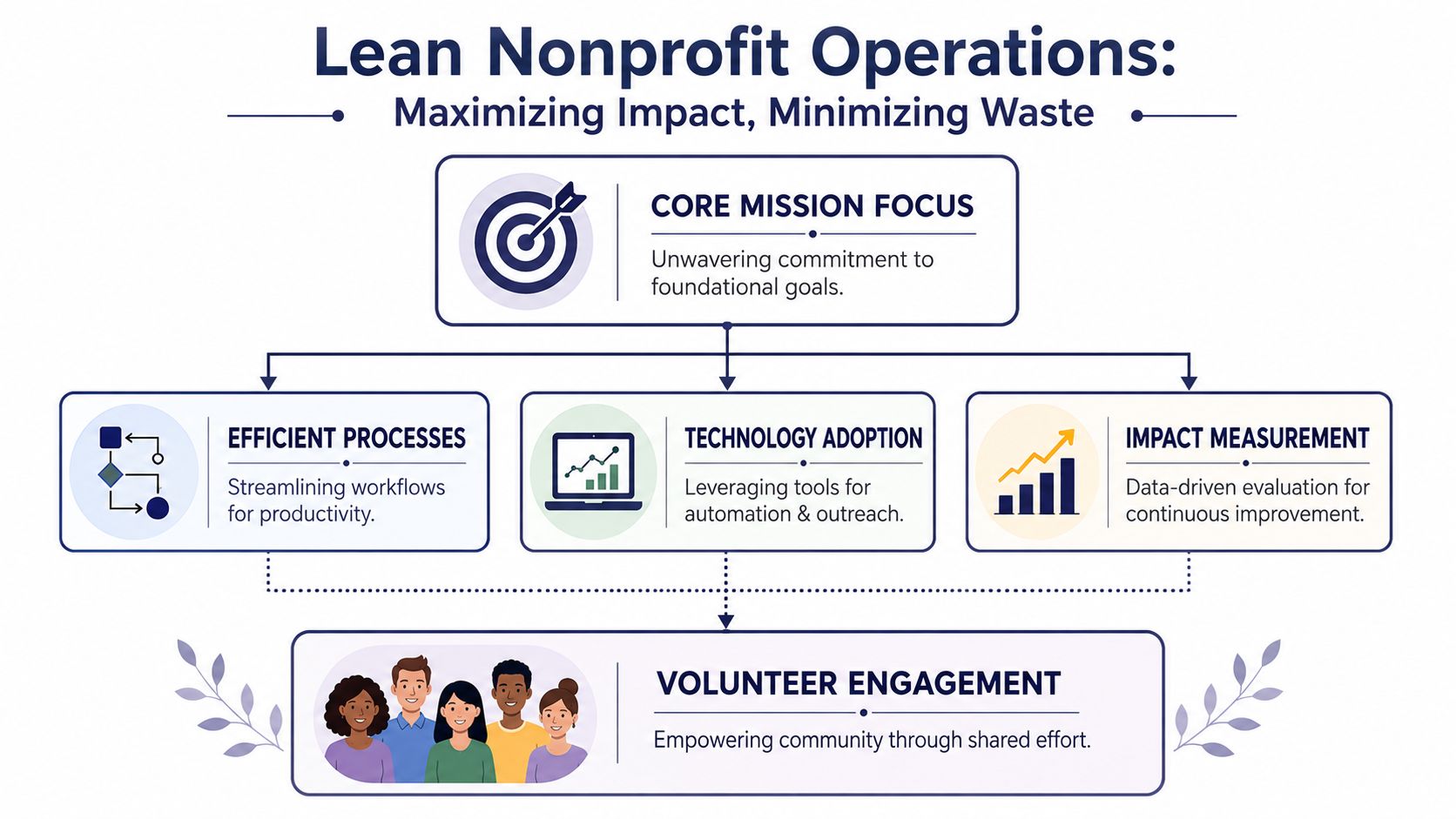
Choose the smallest team that can perform well
Many new foundations overhire because staffing feels like progress. It often isn't. In the beginning, the better question is which functions must be owned internally and which can be handled by specialists.
A practical setup often includes:
Board-led direction: The board sets policy, priorities, and final approval standards.
External professionals: Accountants, legal counsel, and grant administrators handle technical work.
Limited internal coordination: One responsible operator keeps documents, calendars, and partner communication moving.
That model keeps fixed costs under control while preserving professionalism.
Put systems in place early
You don't need a giant back office. You do need reliable systems. Foundations should establish a repeatable process for incoming requests, due diligence, approvals, payments, and reporting. If those steps live in emails and informal conversations, errors multiply.
Focus on a few basics:
Grant tracking so decisions, restrictions, and follow-up obligations are documented.
Accounting controls so every disbursement ties to board authority and financial records.
Communication workflow so applicants and grantees receive consistent, timely responses.
These systems also protect reputation. In philanthropy, sloppiness travels fast.
A foundation's reputation is an asset. Protect it the way you'd protect a brand you spent years building.
Keep compliance operational, not ceremonial
Lean doesn't mean casual. A serious foundation documents meetings, stores governing records, and keeps approval trails clean. That discipline protects tax status, board credibility, and donor trust.
The operating focus should stay tied to mission. Richard Maize's charitable work has centered on cultural and arts programs, health initiatives, environmental stewardship, youth development, and education, and that kind of defined scope makes operations easier because staff and advisors know what belongs in the pipeline and what doesn't.
Use a simple operating lens:
Operational Area | What good looks like |
|---|---|
Intake | Clear submission rules and mission filters |
Review | Consistent diligence and written recommendations |
Approval | Documented board action and conflict handling |
Follow-up | Outcome reporting and lessons captured |
Volunteer engagement can also help if it's structured. Unmanaged volunteer labor creates more work than it saves. Managed well, it expands reach, strengthens community connection, and keeps the organization close to the people it claims to serve.
Your Launch Plan and Ongoing Compliance
A launch should be deliberate. You're not unveiling a consumer product. You're introducing a long-term institution that needs trust from partners, grantees, regulators, and the community.
That means your first public steps should be simple. Publish the mission. Explain the funding scope. State whether you make grants, run programs, or both. Clarify how organizations can engage. The cleaner your message, the better your inbound opportunities will be.
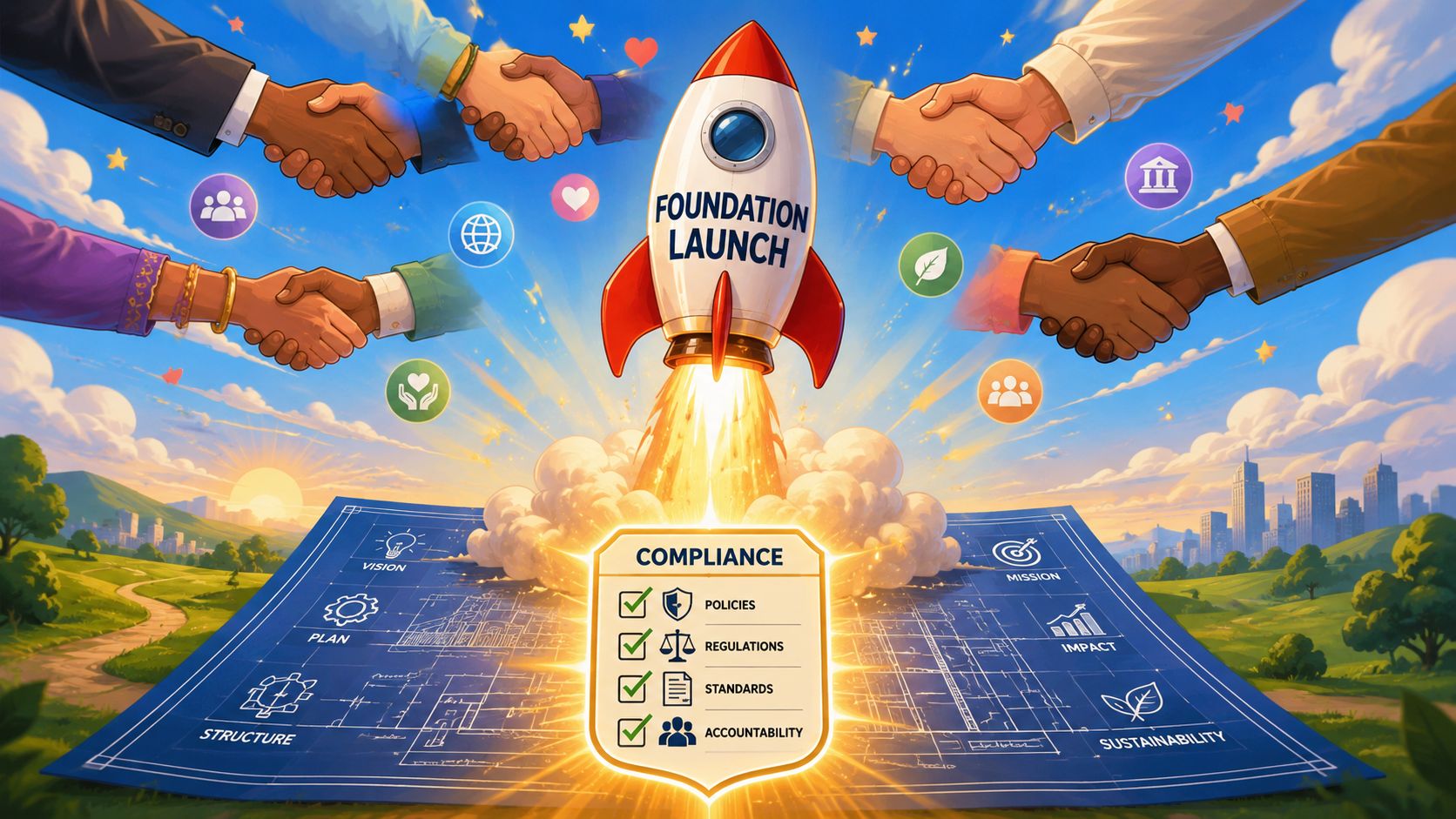
Launch quietly, then prove consistency
A modest launch often works better than a noisy one. Announce the foundation when the basic mechanics are already in place. That includes governance, banking, accounting, internal approval procedures, and a realistic first-year plan for grants or programs.
Good launch materials usually answer these questions:
What issue are you addressing
Why this foundation exists
What kinds of requests fit
Who makes decisions
When funding cycles or program activity begin
If you can't answer those cleanly, more publicity won't help.
Treat compliance like asset protection
Founders sometimes act as if compliance is separate from mission. It isn't. Compliance protects the institution that carries the mission. Lose legal standing or public credibility, and the charitable work suffers immediately.
For private foundations, ongoing discipline usually includes regular board meetings, accurate records, annual tax filings, state reporting where required, and documentation of grants or direct program activity. Bylaws shouldn't gather dust in a folder. The board should operate by them.
A practical compliance checklist looks like this:
Board governance: Hold meetings on schedule and maintain minutes.
Financial records: Keep books current and tie disbursements to approvals.
Tax reporting: File required federal forms accurately and on time.
State obligations: Maintain registrations and reporting obligations where applicable.
Grant files: Preserve agreements, restrictions, and follow-up records.
Foundations don't stay credible because founders mean well. They stay credible because the records hold up.
Measure what changed, not just what was spent
The final discipline is impact measurement. Too many foundations stop at the disbursement stage. Money out the door isn't the finish line. It's the start of the accountability cycle.
Ask harder questions after each funding period:
Did the money reach the intended population or purpose?
Did the grantee or program execute competently?
What changed that wouldn't have changed otherwise?
Should we renew, revise, expand, or stop?
That's how to start a nonprofit foundation that deserves to exist. Not by accumulating activity, but by building a structure that can learn.
If you're serious about this path, keep the standards high. Validate before you form. Form before you fund. Fund with discipline. Operate lean. Review outcomes with integrity. Philanthropy works best when it's treated with the same seriousness that built the capital behind it.
Richard Maize shares practical perspectives on business, investing, and community impact at Richard Maize. If you're thinking seriously about building a foundation with long-term discipline, his platform is a useful place to explore that philosophy in action.
Comments