8 Famous Houses in Beverly Hills: An Investor's Guide

Beverly Hills does not reward spectacle alone. The properties that keep value for decades are the ones that turn prestige into something durable: scarcity, recognizability, and a story the next buyer does not need explained.
Greystone Mansion makes the point clearly. At 905 Loma Vista Drive, it spans 46,054 square feet on 18.3 acres and stands as one of the largest residential properties in greater Los Angeles. More important than scale, though, is what happened to the asset over time. A private estate became a public landmark and still retained status. That is rare. It shows how strong identity can preserve value across very different ownership models.
I have spent decades evaluating Los Angeles real estate from an investor’s side of the table, and famous houses in Beverly Hills reveal the same principle again and again. Buyers may lead with glamour, but pricing power usually rests on a narrower set of factors: irreplaceable location, cultural recognition, preservation discipline, privacy, and a narrative that transfers cleanly to the next owner.
Those factors do not create value in the same way. Some estates gain a premium because the world knows them. Others hold value because almost no one ever sees them. Some depend on historic character and careful restoration. Others benefit from the fact that current zoning, neighborhood opposition, and replacement cost make true duplication unrealistic.
This article looks at these homes the way an investor should. Each one works as a case study in asset management, brand value, market positioning, and exit strategy.
A famous address can widen demand, but it can also narrow the buyer pool. Public recognition can support a premium, or bring operating friction, security concerns, and renovation limits that inexperienced buyers underestimate. The advantage goes to investors who know which kind of fame they are buying.
1. The Playboy Mansion
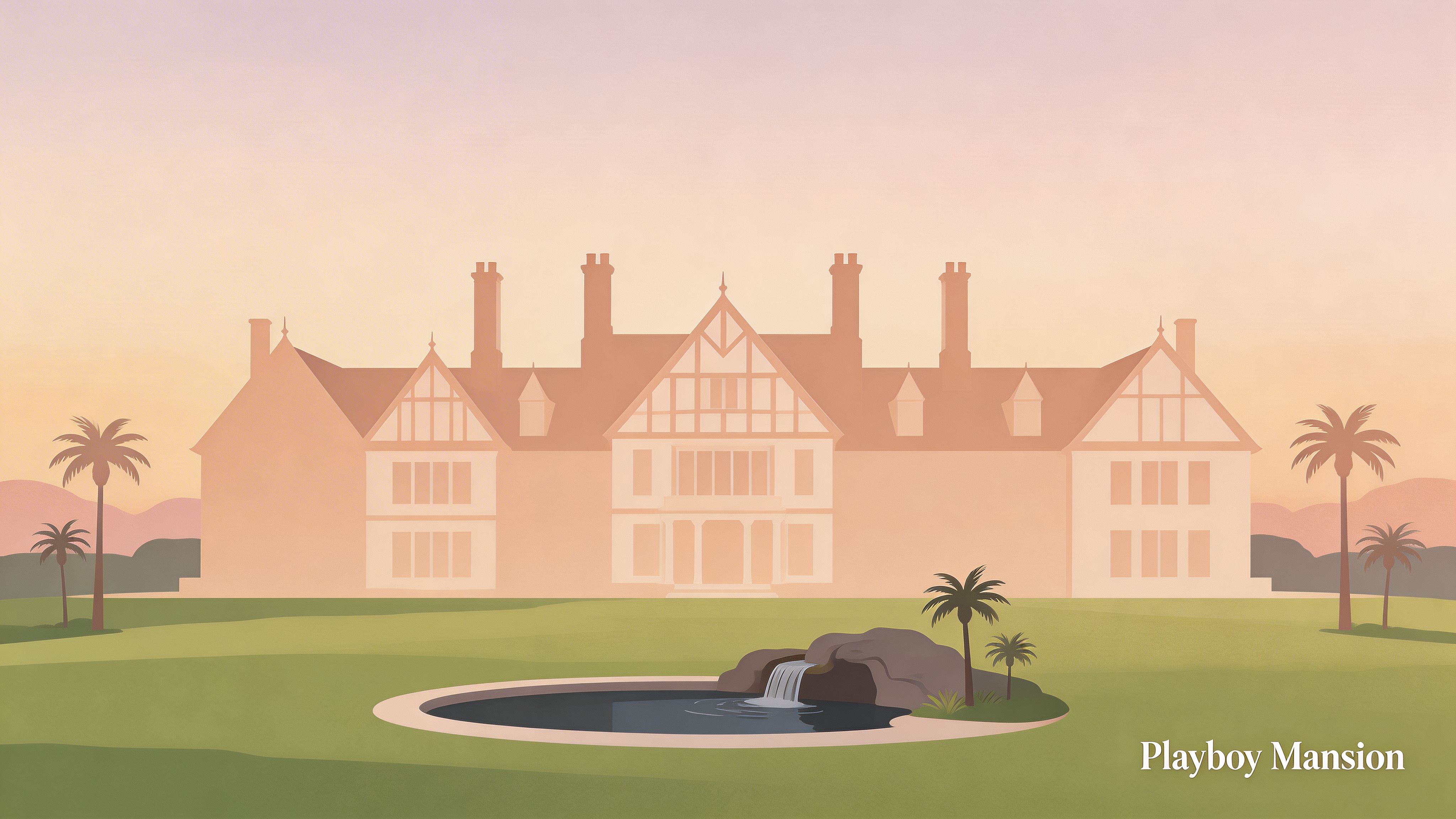
The Playboy Mansion matters because it proves a house can become bigger than its floor plan. In practical terms, that’s both powerful and dangerous.
This property sits just outside Beverly Hills proper in Holmby Hills, but it’s inseparable from any serious discussion of famous houses in beverly hills because buyers, media, and international investors treat the whole belt of trophy estates as one prestige ecosystem. The mansion became globally recognized not because it was large or old, but because Hugh Hefner turned it into a cultural symbol.
That distinction matters. A branded estate can command attention that ordinary luxury inventory never gets. It can also inherit maintenance demands, public scrutiny, and restoration complexity that ordinary inventory avoids.
What investors should learn from it
The core lesson is straightforward. Cultural value can outlast fashion, but only if the next owner respects the property’s identity.
If you buy an estate like this and strip out the very details that made it famous, you don’t “modernize” the asset. You erase the premium. I’ve seen buyers overestimate how much trophy-home value comes from pure renovation. In a house with this level of recognition, the story is part of the asset base.
A property like the Playboy Mansion also shows why event history, media exposure, and symbolic cachet should be treated as part of underwriting, even if they don’t fit neatly into a spreadsheet. That doesn’t mean overpaying for hype. It means understanding that some estates have a marketing engine built into the address.
Practical rule: If a house is famous for a specific identity, preserve the identity first and upgrade around it.
What works and what doesn’t
What works:
Preserving recognizable features: Buyers pay for memory as much as materials.
Using provenance in marketing: Historic ownership and social history can widen global interest.
Planning for specialized restoration: Older iconic estates rarely reward cosmetic thinking.
What doesn’t:
Treating the property like a blank-slate flip: That approach can destroy what made it special.
Ignoring carrying costs: Legacy estates often hide expensive systems, grounds, and compliance issues.
Assuming notoriety equals liquidity: Fame attracts attention, not always the right buyer.
The practical investor takeaway is that branded residential assets need disciplined stewardship. You’re not buying land and improvements. You’re buying a reputation, and then you have to manage it.
2. The Beverly Hills Hotel Crescent Wing Penthouse
The Beverly Hills Hotel is hospitality first, but its highest-end residential-style spaces deserve investor attention because they show how prestige can be monetized through service, not just ownership.
The “Pink Palace” effect is real. Buyers and investors pay more when an address already carries emotional recognition. In this case, that recognition comes from one of the most famous hospitality brands in Los Angeles. Even when you’re not buying the hotel itself, the model is instructive: elite customers will pay for a residence that behaves like a hotel and a hotel that feels like a private residence.
That hybrid logic has influenced luxury real estate across Los Angeles.
Why the hybrid model works
A penthouse in a landmark hotel isn’t valued the same way as a stand-alone mansion. The appeal is different. You’re selling privacy with service, not privacy with acreage.
For some buyers, that’s a stronger proposition than a large estate. They don’t want to manage grounds crews, security layers, and a full domestic staff footprint. They want immediate access, discretion, brand protection, and a setting that’s already validated by decades of elite use.
That’s one reason I tell investors to study hospitality assets even when they focus on residential property. The pricing logic overlaps more than people think. If you want a sharper framework for that kind of market positioning, Richard Maize’s perspective on navigating Los Angeles real estate is the right lens.
A prestige address with operational excellence can outperform a larger asset with no service identity.
The trade-offs most buyers underestimate
This model isn’t for everyone. You gain convenience, but you give up control. You gain institutional polish, but you accept a different ownership experience than a detached estate.
A hotel-linked residence or penthouse also depends heavily on brand consistency. If the service level slips, the value story weakens. In a private house, a bad operator can be replaced. In a branded hospitality environment, the brand is the operator.
Here’s where this becomes useful for investors beyond hotels. The Crescent Wing penthouse concept teaches that premium pricing often follows one of two formulas:
Space and seclusion: Large lots, gates, and physical control.
Service and symbolism: A recognized address with flawless operational delivery.
A lot of expensive properties fail because they offer neither clearly. They’re large, but not iconic. They’re polished, but not differentiated. The Beverly Hills Hotel formula works because it knows exactly what it is.
3. The Spelling Mansion
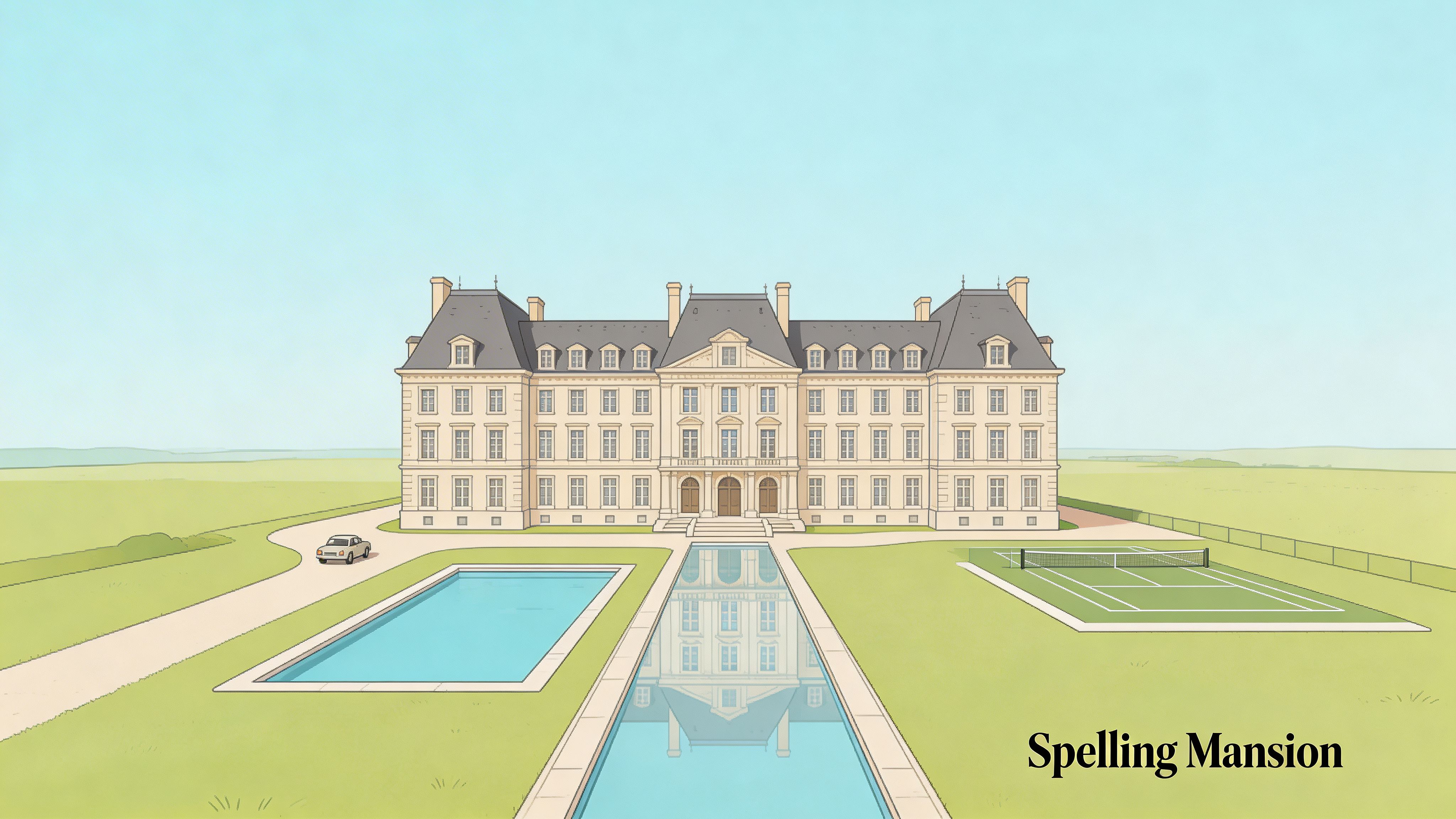
Scale can create value in Beverly Hills, but only at the very top and only when the house functions like a disciplined asset. The Spelling Mansion, widely known as The Manor, is one of the clearest examples of that rule.
Investors often misread estates of this size. They focus on square footage because it is easy to market and easy to compare. In practice, oversized homes hold value for a narrower set of reasons: irreplaceable land, strong identity, coherent design, and a buyer experience that feels deliberate from the gate to the primary suite. A giant house without those qualities is expensive inventory.
The Manor matters because it shows what mega-scale is supposed to do. It is not just large. It signals permanence, privacy, and a level of residential programming that appeals to buyers who want a flagship property, not just another luxury home. That distinction affects pricing, marketing time, and resale risk.
Owning very large homes
This category comes with friction that many buyers underestimate. Operating a mega-mansion means managing staff, security, deferred maintenance, systems replacement, landscaping, utilities, and insurance at a level that starts to resemble hospitality or corporate real estate.
I look at four questions first.
Does the estate run efficiently, or does it consume attention every week?
Is the floor plan legible, with clear hierarchy and useful rooms, or is it just oversized?
Do the grounds create real privacy and authority on the street?
Will the next buyer view it as enduring, or as a costly customization project?
Those answers shape liquidity. At this size, resale is rarely about broad appeal. It is about whether a very small group of qualified buyers can see the property making sense on day one.
What protects value
The best large estates age well because the underlying decisions are sound. Architecture should feel consistent. The approach should be memorable. Public rooms, private quarters, guest areas, and service areas should relate to one another in a way that reduces confusion rather than creating it.
Site quality matters just as much. A large house on an average parcel can still feel compromised. A well-sited estate with setback, frontage, privacy, and visual presence usually holds up better because those traits are hard to copy, even with a bigger construction budget.
Buy the best-executed large estate, not the one that merely adds more rooms.
That is the investor lesson from the Spelling Mansion. In this tier, brand value and asset value start to overlap. The house becomes a statement property, but statements only keep their price when the operations, design discipline, and location support them. The bigger the residence, the stricter the standard should be.
4. The Witches' House
The Witches' House wins on the opposite strategy. It isn’t famous because it’s enormous. It’s famous because nobody confuses it with anything else.
That’s a lesson many investors miss. Distinctiveness can create stronger long-term memory than size. In Beverly Hills, where many luxury homes compete on polished finishes and expensive materials, a property with unmistakable architectural character can build its own moat.
The Witches' House is one of those assets. Its storybook appearance gives it instant recognition, and recognition creates pricing power when scarcity is genuine.
Why novelty can hold value
Not all unusual homes are valuable. Some are eccentric. The difference is whether the design feels authored and historically meaningful, or quirky.
The Witches' House works because its identity is complete. It has aesthetic consistency, local fame, and a narrative that the market can retell easily. Buyers don’t need a long explanation. They understand the appeal immediately.
That ease of recognition matters in luxury marketing. Homes that require too much persuasion usually have a positioning problem. Homes that people remember after one viewing have an advantage.
The investor’s caution
Distinctive architecture narrows the buyer pool before it strengthens it. That’s the trade-off.
If you own a house like this, you can’t market it as “universal.” You have to lean into the exact buyer who wants singularity, provenance, and visual personality. If you try to neutralize the house to appeal to everyone, you usually weaken the asset.
A property like this rewards a careful approach:
Protect original character: Buyers attracted to storybook architecture want authenticity.
Use historical narrative carefully: Provenance supports value when it’s documented and clear.
Hire the right trades: Unusual details often need specialized restoration work.
This kind of house also teaches a broader lesson about famous houses in beverly hills. Visibility isn’t always created by celebrity ownership. Sometimes architecture alone does the job. When that happens, the property itself becomes the brand.
5. The Getty Villa and Hearst-inspired estates around Beverly Hills
The Getty Villa isn’t in Beverly Hills, and Hearst Castle is farther up the California coast, but the influence of both shows up in elite Los Angeles residential strategy all the time. You see it in collector estates, Mediterranean compounds, and homes designed to feel like private institutions rather than ordinary residences.
That investor category is important because some buyers aren’t purchasing shelter, prestige, or even privacy. They’re purchasing a setting for collections, philanthropy, and cultural identity.
Those buyers think differently. So should sellers.
What this buyer profile values
Collector-oriented estates tend to prioritize procession, wall space, controlled light, formal entertaining areas, and architecture that signals permanence. In Beverly Hills and nearby enclaves, that often translates into classic European references, disciplined symmetry, and rooms designed to showcase objects as much as people.
This isn’t a broad-market product. It’s a highly specific one.
What works in these houses is coherence. If the home presents itself as a collector’s environment, every major room has to support that use. A great salon followed by awkward circulation and poor display conditions breaks the illusion quickly.
I’ve found that these properties often benefit from discreet marketing. The right buyer is less impressed by flash than by seriousness. They want a house that can host art, conversation, and private patronage without feeling theatrical.
Where investors go wrong
The biggest mistake is confusing decorative luxury with cultural positioning. Imported finishes alone don’t create a collector’s house. Neither does expensive staging.
A culturally anchored estate has to feel intentional in its bones. The architecture, scale of rooms, landscaping, and entertaining sequence all need to align. If they don’t, the house reads as imitation rather than conviction.
That distinction matters because buyers at this level often have deep experience with museums, foundations, and legacy properties. They know the difference.
For investors, the lesson is practical. Some luxury homes should be marketed as lifestyle products. Others should be marketed as custodial assets. The second category needs restraint, scholarship, and a very clear identity.
6. The Modern minimalist trophy homes
Modern minimalist trophy homes changed Beverly Hills at the top end of the market. They proved that prestige does not depend on old-world ornament, acreage alone, or a long family narrative. A house can command attention through restraint, precision, and authorship.
That sounds straightforward. It is expensive to execute well.
This category covers two very different assets. One is architect-led modernism with real design pedigree. The other is luxury product built to read as current. Buyers may tour both in the same weekend, but they price risk differently. The first can hold cultural and resale value because the architecture has a clear point of view. The second depends more heavily on flawless condition, current finishes, and timing.
That distinction matters in Beverly Hills because discerning buyers do not just buy square footage. They buy signal. A disciplined minimalist house tells the market the owner values privacy, editing, and design intelligence. If the house is done right, that signal has brand value.
Why this category commands a premium
Minimalism is unforgiving. In a Mediterranean estate, decorative elements can cover weak proportions or mediocre construction. In a glass, steel, and stone house, every alignment issue shows. So does every cheap substitution.
I look at four things first. The site. The scale of glazing. The quality of transitions between interior and exterior spaces. The discipline of the materials palette.
If those four fundamentals are right, the house has a chance to become a lasting asset. If they are wrong, the property often trades like fashion. It gets attention fast and loses it just as fast.
Architectural authorship also carries unusual weight here. A recognized architect, or at least a house with a coherent design language and documented intent, gives buyers a reason to treat the property as more than a temporary status object. Investors who want a practical framework for identifying that kind of edge should review how to spot a high-value property before anyone else.
Modern houses hold value best when the design leads and the systems stay in the background.
Where investors misread the opportunity
The mistake is assuming all modern homes age well. Many do not.
A minimalist house can look extraordinary on day one and feel dated a few years later if it was built around trendy fixtures, overscaled technology displays, or surfaces chosen for photos rather than daily wear. I have seen expensive contemporary builds lose their edge because replacement glass did not match, smart-home systems became obsolete, or outdoor detailing weathered poorly.
Maintenance is the trade-off buyers underestimate. Clean lines require clean execution, and clean execution requires constant care. Deferred maintenance is far more visible in this category than in traditional houses.
My bias is straightforward. I would rather own a smaller modern house with real architectural discipline than a larger spec house that imitates the style. The first gives you identity, scarcity, and a clearer resale story. The second usually needs constant reinvestment just to stay competitive.
7. The entertainment industry executive compounds
The smartest Beverly Hills compounds are not designed to impress strangers. They are designed to protect time, control access, and keep business moving behind closed gates.
That distinction matters to investors.
In this niche, the house functions as a private headquarters as much as a residence. Producers, studio executives, financiers, and talent power brokers often need spaces that support screenings, negotiations, overnight guests, and carefully managed entertaining without the friction of hotels, clubs, or rented venues. When a property handles those jobs well, its value goes beyond finishes and square footage.
I look at these estates as operating assets with residential cover. The wrong buyer sees a large house with extra rooms. The right buyer sees protected circulation, staff efficiency, layered security, and event capacity that does not compromise daily living. If you want a practical framework for identifying that kind of hidden value early, review how to spot a high-value property before anyone else.
Why this model keeps working
Los Angeles still runs on private access. Deals get discussed at home. Cuts get screened at home. Relationships get built at home.
That is why the best executive compounds are planned around function, not spectacle alone. A strong layout usually separates family quarters from guest wings, keeps service traffic out of primary entertaining areas, and gives the owner more than one way to move people through the property. Those details sound mundane until a buyer tries to host a dinner, a morning meeting, and a weekend guest at the same house without disrupting any of them.
The premium is real, but so is the trade-off. Specialized compounds can narrow the buyer pool if the house becomes too customized around one owner’s routines. A screening room is useful. A screening room that replaces what should have been a flexible family space can hurt resale. The same goes for oversized offices, excessive staff infrastructure, or security features that make the property feel institutional.
Privacy is part of the asset
Privacy does not just support lifestyle in this category. It protects the business use case.
A strong executive compound controls visibility from the street, shields outdoor entertaining areas, and creates clean arrival sequences for guests, principals, and staff. Buyers at the top of this market pay for that control because convenience loses value fast when every arrival feels exposed. Houses that handle privacy well also tend to age better in market terms. They are easier to position to the next buyer, whether that buyer comes from entertainment, finance, or international wealth.
What usually fails is confusion. If a property is built as a public-facing trophy house, but the target buyer wants discretion and operational ease, the layout starts working against the asset. In Beverly Hills, clarity wins. The best compounds know exactly what job they are built to do.
8. The historic preservation and restoration success stories
Preservation creates some of the best mispriced opportunities in Beverly Hills. I have seen buyers dismiss older estates as renovation headaches, then watch a disciplined restoration turn the same property into a rarer and more defensible asset a few years later.
That outcome depends on selectivity. Plenty of old houses are just old houses. The winners usually have one or more of three things. Proven architectural authorship, a credible place in Hollywood or Beverly Hills history, or a location where teardown supply keeps shrinking the pool of authentic properties.
Taylor Swift’s estate at 1200 Laurel Lane is a useful example because the investment case is clear. The house carried real provenance from the start through its connection to Samuel Goldwyn. Its later landmark designation strengthened that identity and made the property harder to treat as disposable inventory. For investors, that is the point. A restored estate with recognized significance can separate itself from the constant churn of newer luxury product.
The trade-off is control. Once a property enters the preservation conversation, owners usually give up speed and some design freedom. Materials, exterior changes, window replacement, and even landscaping choices can face more scrutiny than they would at a newer trophy home. That slows execution, raises soft costs, and limits the kind of sweeping revisions that some buyers expect at the top of the market.
Those limits can still be worth accepting.
The strongest preservation plays follow a simple framework:
Buy documented significance: History needs proof. Architectural records, prior ownership, original plans, and municipal recognition matter more than a good story.
Underwrite longer timelines: Historic approvals, specialty fabrication, and restoration-grade contractors can stretch a project well beyond a standard luxury renovation.
Protect what carries value: Buyers will pay for original millwork, facade integrity, and known design pedigree. They will not pay extra for expensive changes that erase the house’s identity.
Keep full records: Before-and-after documentation, permits, consultant reports, and material logs help the next buyer trust the work.
A separate lesson comes from architect-driven restoration cases such as the Bailey House, discussed earlier in the article. The broader principle is more important than the individual property. When restoration preserves authorship and aligns with local incentive programs, the upside is not limited to aesthetics. Owners may also improve long-term hold economics.
That is why I treat preservation as an asset-management decision, not a design hobby. The best restored houses in Beverly Hills do not just look distinguished. They become harder to replicate, easier to position, and more resilient against the sameness that weakens so many high-end listings.
8 Iconic Beverly Hills Homes: Comparison
Property | Implementation Complexity 🔄 | Resource Requirements 💡 | Expected Outcomes ⭐ / 📊 | Ideal Use Cases ⚡ | Key Advantages 📊 |
|---|---|---|---|---|---|
The Playboy Mansion | High: legacy management, brand sensitivity | Very high: restoration, security, staffing, PR | High media value and premium event/rental income; value tied to brand | Brand-building, events, high-profile rentals | Iconic brand recognition; diversified revenue streams |
The Beverly Hills Hotel (Crescent Wing Penthouse) | Moderate-high: hospitality operations and zoning | High: full hotel staff, F&B, guest services | Steady occupancy revenue and sustained premium rates | Hybrid residential-commercial investments; boutique hospitality | Established brand + hotel amenities drive premium pricing |
The Spelling Mansion | Very high: megamansion scale and bespoke systems | Extremely high: maintenance, specialized contractors, staffing | Strong prestige and headline sales; highly illiquid market | Ultra-luxury holds, international buyers, special events | Scale and unique features attract media and high-net-worth buyers |
The Witches' House | Moderate: historic quirks and preservation limits | Moderate: specialized restoration and maintenance | Niche premium appreciation and sustained cultural interest | Boutique residences, media/set locations, architectural tourism | Distinctive, recognizable architecture with strong cultural cachet |
Getty Villa / Hearst-style Properties | High: museum-quality integration and compliance | Very high: climate control, curation, insurance, philanthropy | Attracts collectors/philanthropists; tax/philanthropic benefits | Collector estates, cultural programming, philanthropic positioning | Timeless design, cultural prestige, museum-quality spaces |
Modern Minimalist Trophy Homes | Moderate: tech, glass, sustainability systems | High: smart tech, specialty materials, energy systems | Appeals to modern buyers; efficient operations and strong resale to niche buyers | Tech-forward investors, contemporary collectors, sustainable buyers | Energy efficiency, lower ornamental maintenance, architectural prestige |
Entertainment Industry Executive Compounds | Moderate-high: business/residential integration, compliance | High: screening/production facilities, security, staff | Tax and operational efficiencies for business owners; niche appeal | Executives needing integrated office/entertainment facilities | Integrated business functionality and client-entertainment capability |
Historic Preservation & Restoration Success Stories | Very high: regulatory and conservation complexity | Very high: specialized craftsmen, long timelines, contingencies | Potential for substantial appreciation post-restoration; media prestige | Long-term investors focused on preservation and value creation | Significant appreciation potential plus cultural and media value |
Key Takeaways for Today's Real Estate Investor
The famous houses in beverly hills that hold value over time usually succeed for the same handful of reasons. They aren’t all the biggest. They aren’t all the most expensive. They aren’t even all the most visible. What they do have is a clear identity that the market can recognize instantly.
That identity might come from scale, as it does with the city’s largest estates. It might come from landmark protection, as with preserved Hollywood-era homes. It might come from architectural authorship, as with disciplined modernist properties. Or it might come from pure cultural recognition, where the address itself has become shorthand for a lifestyle.
From an investor’s standpoint, that’s the point to keep in focus. The house is the physical asset. The story is the pricing engine.
I’ve seen buyers make the same mistake at every level of the luxury market. They assume more upgrades always create more value. That isn’t how Beverly Hills works. In this market, the wrong renovation can erase distinction. The wrong expansion can hurt proportion. The wrong “modernization” can strip a legacy property of the very details that made it worth buying.
The better approach is more selective. Start by asking what the house already does unusually well. Does it offer privacy that can’t be replicated? Does it carry an architectural signature that serious buyers will respect? Does it have documented provenance? Does the lot, layout, and setting support the way affluent buyers live now?
Once you know the answer, your investment strategy gets clearer.
If the house is a branded icon, protect the brand. If it’s a collector-grade modernist, preserve the authorship. If it’s a mega-estate, make sure the scale feels coherent and operationally manageable. If it’s a restoration candidate, verify that the significance is real and the path to preservation is practical.
The trade-offs are as important as the upside. A famous house can attract global attention, but it can also narrow the buyer pool. A landmark designation can protect long-term character, but it can limit what you’re allowed to change. A modern minimalist home can look timeless, but it can punish maintenance shortcuts faster than a traditional estate. Privacy can raise value, but only if the property’s design delivers discretion rather than promising it in marketing copy.
That’s why disciplined underwriting still matters, even at the top of the market. Glamour doesn’t replace fundamentals. It amplifies them. A weak asset with a famous name is still a weak asset. A strong asset with a powerful story becomes something else entirely. It becomes scarce in a way the market can’t easily copy.
That’s the enduring lesson from these houses. Brand matters. Scarcity matters. Strategic differentiation matters. Whether you’re looking at a trophy estate, a preservation play, or a more modest luxury acquisition, the winning properties are usually the ones with a narrative that’s easy to understand and hard to duplicate.
In the end, bricks and mortar set the baseline. Vision creates the premium.
If you want a sharper strategy for buying, holding, or positioning high-value Los Angeles property, visit Richard Maize. His platform brings together real estate insight, business perspective, and practical lessons from decades of hands-on investing.
Comments