Capital Gains Deferral: Expert Strategies for 2026

You sell a property, a business interest, or a concentrated investment position. The sale feels like a win until the tax estimate hits your desk. Suddenly the question isn't what you made. It's what you get to keep working for you.
That's where capital gains deferral stops being a technical tax topic and becomes a real investing decision. Richard Maize has long approached this the way seasoned operators do. Not as a game of avoiding reality, but as a decision about timing, liquidity, control, and what happens to your capital after the sale closes. A gain can either keep compounding in your next deal, or a large piece of it can leave the field immediately.
Most investors don't need another abstract definition. They need judgment. They need to know when deferral makes sense, when it creates new problems, and when paying the tax and moving on is the cleaner play.
The Investor's Dilemma Selling a Valued Asset
A familiar scene plays out after a successful sale. You've owned an asset for years, managed the headaches, improved the value, waited for the right buyer, and closed. Then your CPA walks through the tax consequences. The celebration gets quieter.
Richard Maize has worked around this decision for decades because real estate investors live in the gap between paper gain and usable capital. Selling is one decision. Preserving momentum after the sale is another.
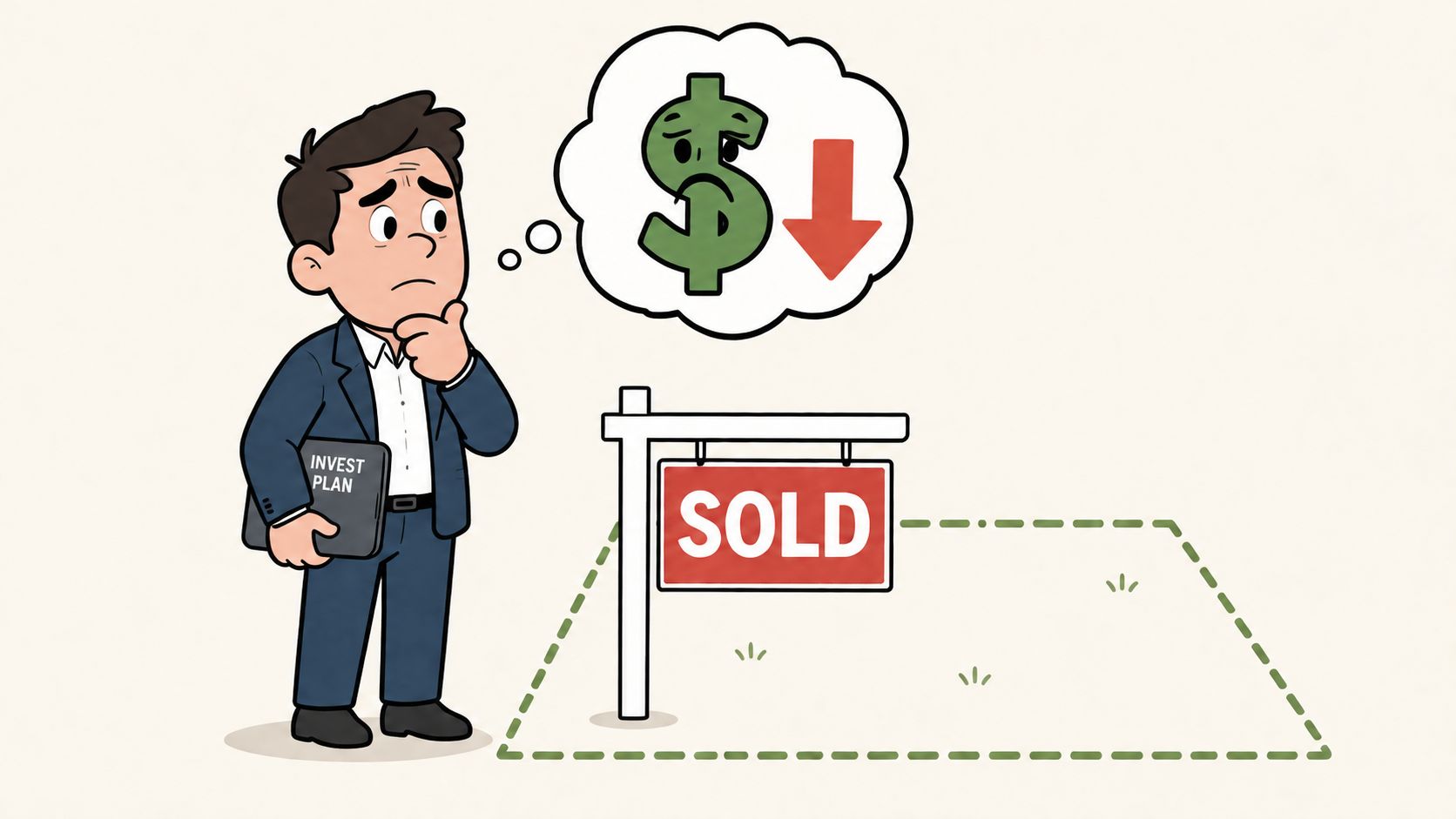
If you sold too early, the gain may be treated very differently than if you held long enough for long-term treatment. The tax incentive is obvious. Short-term gains can be taxed up to 40.8% as ordinary income, while long-term gains on assets held over one year face a top rate of 23.8%, as outlined in Russell Investments' discussion of tax treatment for short-term and long-term gains.
What experienced investors focus on first
The first question isn't “How do I avoid tax?” It's simpler.
What asset did you sell: Real estate opens one set of doors. Securities or business interests may open another.
How fast do you need your cash back: Some structures preserve deferral but restrict access.
What do you want to own next: Tax strategy should follow investment strategy, not replace it.
I've seen the same mistake repeat itself. Investors become so focused on reducing the immediate tax bill that they accept a mediocre next investment, a weak structure, or a timeline they can't realistically meet. That's backwards.
Practical rule: If the tax strategy forces you into an asset you wouldn't buy on its own merits, the strategy is probably driving the deal too much.
The sharper approach is to treat deferral as a capital allocation tool. You're deciding whether keeping more money in play today outweighs the restrictions that come with the structure. That's the same kind of disciplined thinking behind why real estate strategy looks different for high-net-worth buyers in 2026. The transaction isn't the finish line. It's the handoff to the next move.
Understanding the Power of Deferral
A sale can feel profitable and still leave you with less buying power than expected once taxes come due. I've seen investors sell a strong asset, celebrate the headline gain, then realize they no longer have enough net proceeds to buy the replacement property they want.
That is the practical value of deferral. It keeps more capital available at the point when your next decision matters most.
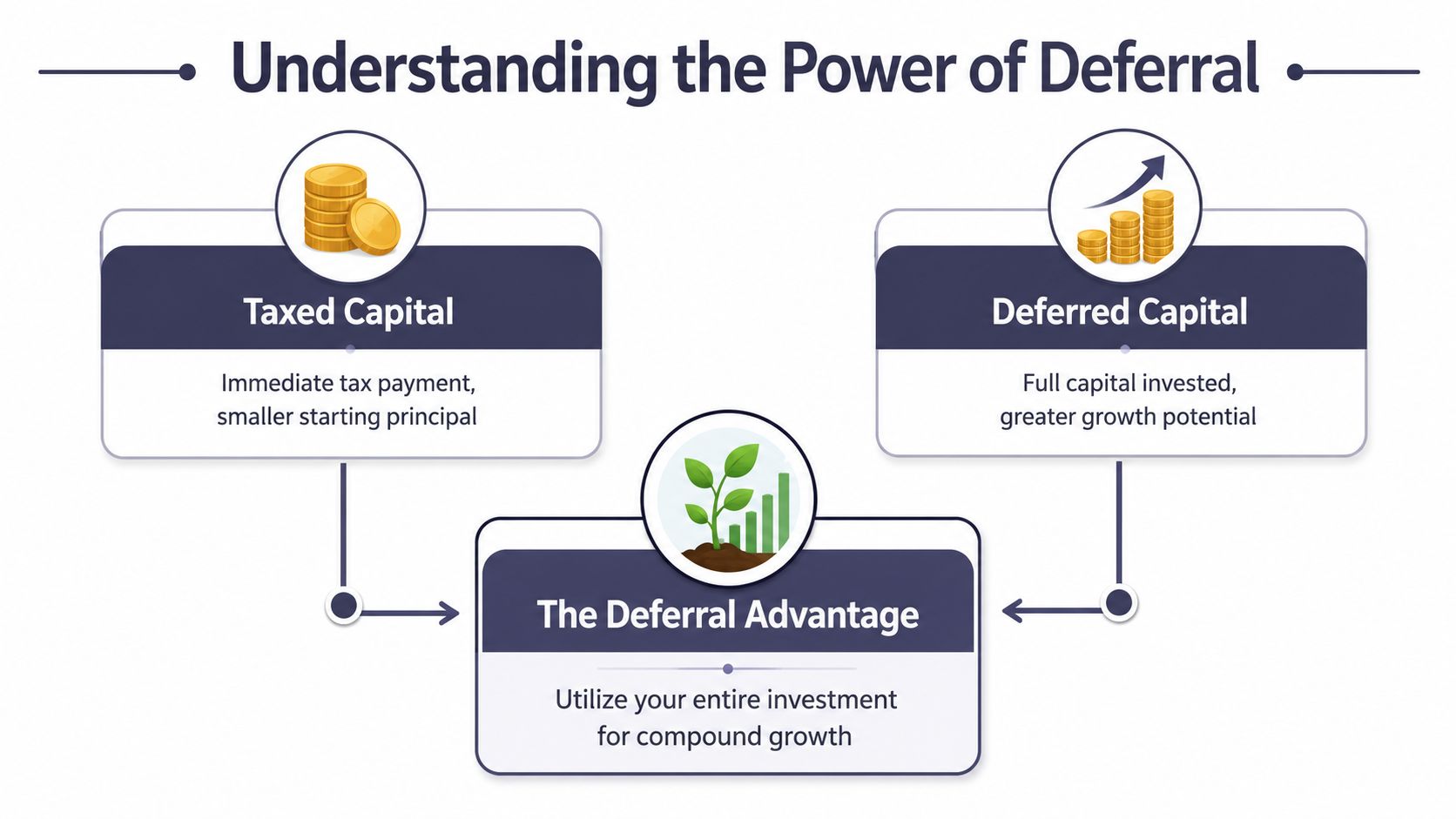
Deferral changes the math, not the obligation
Deferral postpones recognition of gain under a qualifying structure. The tax bill does not disappear. It moves to a later date, subject to the rules of that structure and whatever you do next.
That sounds basic, but the distinction drives better decisions. A deferred gain can help you acquire a better asset, carry more reserves, or finance improvements without stretching. A recognized gain reduces what you have left to deploy. For investors who are trying to trade up in quality or location, that difference can be material.
I've treated deferral as a capital allocation decision, not a tax trick. If keeping more dollars in the deal improves the next investment enough to justify the restrictions, deferral has done its job. If the structure forces a rushed purchase or ties up proceeds in a way that weakens your position, paying tax and staying flexible can be the better answer.
Why time matters
Money retained today can earn, appreciate, or support a more resilient business plan before taxes are paid later. In real estate, that often shows up in very concrete ways. A larger equity base can help you qualify for better financing terms, absorb a vacancy stretch, or fund renovations that raise rents.
Compounding matters, but so does control.
I've seen investors focus on the deferred tax amount and ignore the cost of getting it. Missed deadlines, limited reinvestment choices, extra fees, and reduced liquidity can wipe out much of the practical benefit. Deferral works best when the investor already has a solid reason to stay invested and a clear plan for the proceeds. For a broader look at that decision process, see Richard Maize's approach to minimizing taxes on real estate investments.
When deferral earns its keep
Deferral tends to make sense when a few conditions are already present:
The next investment is attractive on its own merits. Tax treatment should support a good deal, not rescue a weak one.
You can accept the trade-off in liquidity. Some structures keep capital working but make access slower or more limited.
You are prepared for the compliance burden. Deadlines, documentation, and execution errors have real costs.
Your holding period is long enough to matter. The longer retained capital can stay productive, the stronger the case for deferral.
The opposite is also true. If you need flexibility, want to simplify your balance sheet, or have no compelling reinvestment target, immediate taxation may be the cleaner outcome. I would rather see an investor keep discretion than chase deferral into an asset they do not really want.
That is the power of deferral in plain terms. It buys time, preserves capital, and expands your options. Its value depends on what those extra dollars allow you to do, and what you give up to keep them in play.
Comparing Key Deferral Strategies
A seller closes on a highly appreciated property and immediately faces three competing goals. Keep as much capital working as possible. Keep enough liquidity to stay flexible. Avoid getting boxed into a structure that saves tax but weakens the overall investment position.
That is the pertinent comparison. The tax code offers several ways to defer gain, but each one asks for something in return. Time, control, access to cash, or tolerance for administrative friction.
I have seen investors focus so hard on the deferral that they stop asking the better question. What do you want the money to do next? If the answer is unclear, the wrong structure can turn a tax win into an investment mistake.
Capital gains deferral strategies at a glance
Strategy | Best For | Key Timeline | Investor Control |
|---|---|---|---|
1031 Exchange | Real estate investors staying in investment or business property | Strict exchange deadlines apply | High control if you select and manage replacement property |
Opportunity Zone investment | Investors with eligible gains willing to use a Qualified Opportunity Fund | Reinvestment must occur within a limited post-sale window | Lower direct control in fund structures |
Installment sale | Sellers willing to receive payments over time instead of all proceeds at once | Payment schedule drives recognition timing | Moderate control through negotiated terms |
Deferred Sales Trust | Investors focused on deferral and payout structuring rather than immediate ownership of a replacement asset | Terms depend on structure and administration | Control varies and is often narrower than people expect |
Section 1031 exchange
A 1031 exchange usually makes the most sense for investors who already know they want to stay in real estate. That is why it remains the first tool many experienced owners look at. It preserves equity, keeps the money in property, and lets the investor choose the next asset directly.
The trade-off is speed and discipline. A good exchange starts before the sale closes, not after. Replacement options need to be underwritten early, financing needs to be credible, and the investor needs to be realistic about what qualifies as replacement real property. Assumptions cause expensive mistakes, especially when sellers treat every item tied to a property as if it will receive the same treatment.
I like 1031 exchanges when the next deal is already strong on its own economics. I like them much less when an investor is forcing a purchase just to avoid current tax. For a broader look at that decision process, see Richard Maize's approach to minimizing taxes on real estate investments.
A 1031 exchange fits best when you:
Want another real estate asset, not cash in hand
Can live with strict deadlines
Have identified credible replacement options before closing
Value control over the next property enough to accept the work involved
Opportunity Zone investing
Opportunity Zone investing serves a different type of seller. It can work well for someone with eligible gains who is open to a fund structure and willing to trade some control for deferral and potential long-hold tax benefits.
Under current law, an investor generally must reinvest eligible gains into a Qualified Opportunity Fund within the applicable post-sale window, and the deferred gain is scheduled to be recognized on the earlier of a disposition of the QOF interest or December 31, 2026, under the original framework described by the IRS Opportunity Zone analysis.
That deadline matters, but the bigger issue is asset selection. A weak fund does not become a good investment because the tax treatment is attractive. In practice, this strategy works better for investors who are already comfortable evaluating sponsors, lockup periods, and long-duration fund risk.
Installment sales
An installment sale is less about staying invested in real estate and more about controlling when proceeds are received. The seller takes payments over time and recognizes gain as those payments come in, subject to the tax rules that apply to the transaction.
That can be useful when the buyer wants terms and the seller is willing to act more like a lender. It can also solve a practical problem for owners who do not need full liquidity at closing and would rather spread the tax cost with the cash receipts.
The trade-off is obvious. You sold the property, but your balance sheet still depends on the buyer's performance. Security, collateral, default remedies, and the buyer's financial strength matter as much as the tax result. If those pieces are weak, the deferral is not worth much.
Deferred Sales Trusts and similar structures
This category deserves the most skepticism.
Trust-based deferral structures are often pitched as a way to defer gain, create payout flexibility, and avoid the pressure of a replacement property deadline. Those features can sound appealing, especially to sellers who feel boxed in by 1031 timing rules. But the practical questions are tougher. Who controls the money, how much does the structure cost, how liquid is the arrangement, and what happens if assumptions about returns do not hold up?
In my experience, experienced investors often slow the sales process down to request documents, fee schedules, and independent tax review. A complicated structure is not automatically bad. It just has to justify itself economically after fees, restrictions, and loss of direct control are taken into account.
Which one fits which investor
A clean comparison usually comes down to what the seller values most.
Use a 1031 exchange if you want to stay in real estate, want direct control, and can operate on a tight timetable.
Consider an Opportunity Zone investment if you have eligible gains, can accept a fund structure, and are comfortable tying tax benefits to a longer-duration investment thesis.
Use an installment sale if payment timing matters more than immediate liquidity and the buyer's credit quality is strong.
Question trust-based deferral structures carefully if the pitch emphasizes convenience more than economics.
The best choice is usually the one that leaves the investor with the strongest overall position after tax, not the one that produces the longest deferral on paper.
A Practical Example The 1031 Exchange in Action
A seller closes on a profitable property sale on Friday and feels wealthy for about a day. By Monday, the real decision shows up. Keep full control of the cash and trigger tax now, or keep that capital invested by meeting the exchange rules and buying the next property on a tight clock.
That trade-off is why 1031 exchanges still matter.
Start with a simple case. An investor sells Property A for $1,000,000 and wants to stay in real estate. The objective is not just to postpone a tax bill. It is to keep more equity working in the next deal, which can improve buying power, financing options, and reserve strength if the replacement asset is worth owning.
This visual lays out the sequence.
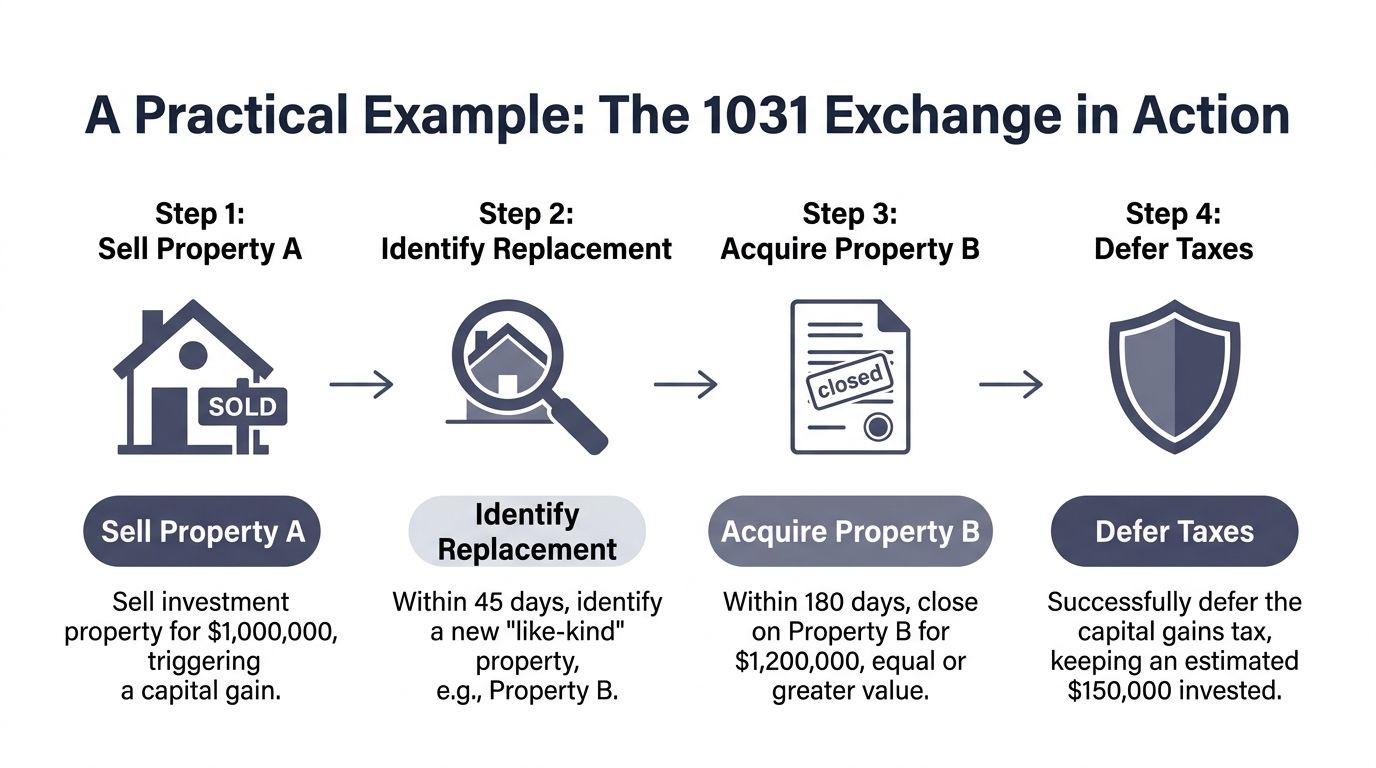
Step one and step two
The sale of Property A closes, but the seller does not take possession of the proceeds. In practice, that point decides whether the exchange survives. If the money hits the seller's account without the exchange being set up correctly, the tax deferral usually disappears.
Then the clock starts. The investor has 45 days to identify replacement property. In this example, the investor identifies Property B.
I have seen investors treat those 45 days as shopping time. That is backwards. Serious sellers start reviewing replacement options before the original property closes, because a rushed identification list often leads to weak choices, not just administrative mistakes.
Step three and step four
The investor closes on Property B within 180 days and buys the replacement for $1,200,000. That keeps the capital in play and shifts it into a larger asset, which is one reason experienced real estate owners use exchanges repeatedly as they scale.
The infographic's final step shows an estimated $150,000 in deferred tax remaining invested. The practical benefit is straightforward. Money that could have gone out the door to taxes stays available for closing costs, improvements, leasing work, debt paydown, or reserves. Used well, that flexibility can matter more than the deferral itself.
A short walkthrough can help if you want to see the process in another format.
Why this example matters
A significant advantage is control over a larger capital base. The investor can buy more property because more equity remains invested. That is powerful, but only if the replacement deal holds up on rent growth, tenant quality, capex needs, and financing terms.
I have always viewed a 1031 exchange as an investment decision first and a tax decision second. Deferring gain into an overpriced or operationally weak asset is a bad trade. Keeping the tax money invested helps only when the new property improves the investor's overall position.
That same discipline carries into the rest of the tax picture. Investors who are building a smarter after-tax return should also pay attention to property investment tax deductions that can improve real estate ROI, because basis, depreciation, and operating write-offs affect the underlying economics of the hold.
The exchange succeeds when timing, documentation, and replacement quality are handled with the same care as price and financing.
What experienced investors do differently
They prepare before closing, not after.
They line up candidate properties early: Good options rarely appear on command once the 45-day window starts.
They coordinate with tax counsel, the intermediary, and the closing team before the sale: Paperwork mistakes can ruin an otherwise sound transaction.
They underwrite the replacement as hard as any new acquisition: A mediocre property bought to save tax can create years of underperformance.
They keep some humility about liquidity: Deferring gain can strengthen long-term compounding, but it also commits capital to the next asset instead of keeping cash fully available.
That is the practical heart of a 1031 exchange. It is a disciplined way to keep capital invested, provided the investor respects the deadlines and refuses to let the tax tail wag the deal.
Common Pitfalls and Strategic Considerations
A sale can look like a win on paper and still create a bad outcome in real life. I have seen investors sell a highly appreciated asset, focus on the tax bill, and rush into a deferral structure that weakens their position on liquidity, control, or investment quality. The tax result matters. The full result matters more.
Richard Maize's approach has long reflected that judgment. A deferral strategy earns its place only if it still makes sense after you account for access to cash, execution risk, fees, and what you are being asked to buy or hold in return.

The timing risk many investors discount
Opportunity Zones are a good example. Investors often remember the promise of deferring gain and forget that the strategy runs on statutory timing rules, not investor preference.
BDO's discussion of key capital gains strategies highlights the point. Under the existing framework, December 31, 2026 is set as the hard deferral deadline for Opportunity Zones, and deferred gain is scheduled to become taxable in that year. If the reinvestment is mishandled, the investor can face a lump-sum tax bill instead of the result they expected.
That kind of deadline changes the decision. A strategy with a calendar cliff is very different from one that gives you more room to adjust.
Liquidity deserves equal weight
Tax savings can distract investors from a basic question. How quickly can you get to your money if plans change?
Some structures work well for investors who already know they can leave capital tied up for years. Others create pressure later, especially if cash is needed for debt paydown, family commitments, operating businesses, or a better acquisition that appears after the sale. I have always treated that as a real cost, even when it does not show up in the marketing materials.
A deferral plan should leave you stronger on an after-tax basis, not less flexible when real life changes.
That is also why broader tax planning belongs in the conversation. In some cases, a cleaner result comes from improving the economics of ownership and operations, including property investment tax deductions that can improve real estate ROI, rather than forcing capital into a narrow deferral play.
How Fees Can Reverse the Benefit
Investors need to stay unsentimental here. “Tax-deferred” is not the same as “economically superior.”
If setup costs are high, annual management charges keep running, and the capital does not earn enough inside the structure, the math can turn against you. I have seen elaborate plans produce a thinner net benefit than a straightforward taxable sale because the investor paid for complexity without getting enough flexibility or return.
A few checks help keep the analysis honest:
Add up the full cost stack: Setup fees, legal costs, annual management fees, and ongoing administrative costs all reduce the value of deferral.
Spell out cash-access terms: Know when distributions are allowed, who controls them, and what restrictions apply.
Test the downside case: If the strategy only works under ideal timing or strong market performance, it is fragile.
Judge the investment on its own merits: Tax treatment does not rescue a weak asset or a poor fund manager.
Paying the tax can be the smart decision
Some investors resist that conclusion because it feels like giving up a tax advantage. It is not. It is choosing the better overall outcome.
If your deferral options require you to accept an inferior property, surrender too much liquidity, or absorb too much cost, paying the tax may preserve more freedom and more long-term value. The experienced investor's job is not to chase the most complex structure. It is to compare after-tax proceeds, risk, control, and opportunity cost, then choose the path that holds up after the closing table excitement is gone.
Your Next Steps and When to Call an Expert
You sell a property with a large gain, the closing hits, and the pressure starts immediately. One advisor says exchange. Another pushes a trust structure. A third says pay the tax and keep full control of the cash. This is the point where disciplined investors separate tax strategy from salesmanship.
I start with a simple filter. What are you trying to protect. Cash flow, flexibility, estate planning options, or maximum reinvestment capital? The answer usually narrows the field fast.
If the asset was investment real estate and you want to stay in real estate, a 1031 exchange usually gets the first review. If you have eligible gains and can live inside a rule-heavy fund structure, an Opportunity Zone investment may deserve a place on the list. If your bigger concern is timing income over years instead of taking all proceeds now, an installment sale can make more sense.
Then ask the harder question. How soon might you need cash?
I have seen investors choose a deferral structure for the tax benefit, then regret it when a better acquisition showed up, a lender tightened terms, or family liquidity needs changed. A strategy can look efficient on paper and still be wrong for the person using it. If access to capital matters in the next year or two, say that upfront and force every option to compete against that reality.
Cost deserves the same honesty. As noted earlier, some deferred sale structures come with meaningful setup, management, legal, and administrative expenses. Those costs are not side issues. They are part of the return calculation, and they can outweigh the benefit of deferral if the capital is boxed into mediocre investments or the structure runs for years without strong performance.
That is when I bring in specialists.
CPA: Reviews gain recognition, basis, depreciation recapture, and timing before documents are signed
Real estate attorney or qualified intermediary: Handles transfer mechanics, exchange rules, and title issues if property is involved
Financial advisor: Compares the tax savings against liquidity needs, portfolio concentration, and alternative uses of capital
The goal is a decision you can live with after the closing excitement fades. If deferral improves your after-tax position without creating a liquidity problem or forcing bad investments, proceed carefully. If it does not, pay the tax, keep control of your capital, and put the money to work where the economics are stronger.
If you want practical perspective from a seasoned operator who understands how tax strategy fits into real-world investing decisions, explore Richard Maize. His platform brings together decades of real estate experience, business insight, and clear thinking about how investors create value without losing sight of risk, timing, and opportunity.
Comments