10 Business Lessons Learned from Richard Maize

The most popular business advice celebrates dramatic wins, rapid growth, and relentless execution. Experience reveals a less glamorous truth. Durable success usually comes from disciplined choices made before the exciting results appear, such as testing demand, protecting cash, choosing the right partners, communicating clearly, and knowing when a venture needs to change direction.
Richard Maize offers a useful lens for these business lessons learned. The Los Angeles-based real estate expert, business investor, and philanthropist has built a public platform around property markets, entrepreneurship, portfolio ventures, communication, and community impact. A Maize-affiliated profile says he has been an entrepreneur and real estate investor for almost three decades, while another describes him as having more than 30 years of experience in real estate and finance and being based in Beverly Hills, California. His foundation biography and the Rochelle and Richard Maize Foundation also present him as someone who connects commercial activity with philanthropy.
His experience doesn't offer a formula for copying one person's career. It offers operating principles that transfer to founders, investors, professionals, and anyone building a reputation around expertise. The following lessons focus on the decisions beneath visible success, from diversification and market knowledge to failure, partnerships, and purpose.
1. Diversification Across Asset Classes Creates Sustainable Wealth
Concentration can accelerate gains, but it can also make one setback disproportionately damaging. Richard Maize's reported portfolio illustrates a broader principle: long-term wealth often becomes more resilient when an operator develops exposure to different types of activity instead of relying on one sector or revenue source. Multiple profiles report that Maize accumulated nearly 1,000 apartment units before age 30, and some add that he later owned property across 20 states.
That real estate foundation sits alongside consumer ventures such as the Richeeze Melts Food Truck, digital initiatives, promotional projects, and community-oriented activities. These ventures don't carry identical risks or operating requirements. Property management, food service, digital communication, and events respond to different customer behaviors, cost structures, and market conditions.
Diversification needs a reason
Owning unrelated assets isn't automatically diversification. If every venture depends on the same customer group, lender, location, or personal capacity, the portfolio may remain more fragile than it appears. A founder should understand how each project could be affected by a shared downturn before adding another one.
A practical approach is to:
Start with competence: Choose sectors where you already have expertise or can build credible expertise.
Set decision rules: Define what each venture must accomplish before receiving additional capital or attention.
Build specialist support: Use trusted advisors in categories where your knowledge is limited.
Review portfolio exposure: Look for hidden correlations, including shared suppliers, audiences, financing, or geography.
Rebalance deliberately: Reduce or exit projects that consume resources without strengthening the broader portfolio.
Practical rule: Diversification should reduce dependence, not multiply distractions.
The trade-off is managerial complexity. More ventures create more opportunities, but they also require stronger reporting, delegation, and capital controls. A portfolio works best when every project has a clear strategic role.
2. Brand Visibility and Community Engagement Drive Long-Term Value
Strong work does not create value if buyers, partners, and community members cannot find or understand it. Richard Maize's public platform shows that visibility is an operating discipline, not an occasional promotional push. Bringing ventures, market views, press features, multimedia, and community work into one public presence gives different audiences several credible entry points.
People often meet a business before they are ready to transact. A property investor may begin with an article about market conditions. A potential partner may encounter a press feature, while a community member may first notice a philanthropic initiative. These touchpoints build context and trust over time, especially when the message remains consistent with the underlying work.
Make the story useful and recognizable
Content should explain decisions, not just announce activity. Posts about property markets and entrepreneurship become more valuable when they show how an operator assessed a constraint, selected a direction, or applied a lesson. Press and multimedia can extend that explanation, but publishing across every channel is less useful than maintaining a clear point of view.
A practical content system can:
Set a balanced calendar: Combine venture updates, practical analysis, and community stories.
Explain selected setbacks: Share pivots and constraints without revealing confidential information.
Use varied formats: Combine articles, video, press coverage, and visual material.
Write for a defined reader: Make each piece accessible and actionable for its intended audience.
Connect impact to operations: Show how community involvement reflects actual business values.
Repeat core messages: Use consistent language across the website and external platforms.
Visibility also depends on accuracy. Buyers may check several platforms before deciding, so businesses should review how their reputation appears in search results, reviews, social proof, and AI-assisted discovery. The website cannot correct an inconsistent public record elsewhere.
Community engagement adds a second test: attention must connect to conduct. Philanthropy, public communication, and partnerships strengthen long-term value when they reflect how the business operates. Otherwise, visibility may increase exposure without increasing trust.
3. Real Estate as Foundation for Entrepreneurial Growth
Real estate can do more than produce investment returns. For an experienced operator, property may provide income, borrowing capacity, and a tangible asset base while newer ventures are tested. It can also create relationships with lenders, brokers, contractors, managers, and other professionals whose expertise supports decisions beyond a single property.
The foundation works only when the assets can absorb ordinary pressure. Vacancies, repairs, regulation, interest costs, and market cycles can strain even a carefully selected holding. A property strategy should therefore protect cash flow and preserve the ability to hold through disruption, rather than depend on premature sales or aggressive borrowing.

Protect the base before expanding
Richard Maize's long focus on real estate illustrates the value of depth in a defined market. His guide to building a strong real estate portfolio emphasizes diversification, risk management, and long-term growth. The same discipline applies when an operator decides whether capital, attention, or relationships can support another venture.
Use a practical screening process:
Study the local market: Review demand, regulations, comparable properties, and operating conditions before committing capital.
Plan financing conservatively: Borrow strategically while preserving room to respond to changing conditions.
Maintain cash reserves: Allow for vacancies, maintenance, delays, and unexpected costs.
Build professional relationships: Select lenders, brokers, contractors, and managers for reliability, not convenience alone.
Reinvest deliberately: Direct early gains toward stronger assets or systems instead of treating them as unrestricted spending power.
Property can amplify returns, but debt also magnifies errors. A stable asset should not conceal a weak new venture. Its real value is the time it gives an operator to test an idea, measure results, and stop before one experiment threatens the core business.
The following video offers a visual example of how a central asset can connect several operating activities.
4. Purpose-Driven Ventures Create Resilience and Meaning
Purpose earns credibility through operating decisions, not statements. The Rochelle and Richard Maize Foundation documents support for Vista Del Mar Child and Family Services, Hurricane Katrina relief, the American Cancer Society, the Los Angeles Police Foundation, and the Cedars-Sinai Board of Governors. Its stated areas include youth mentorship, healthcare initiatives, art, culture, and family services. The foundation's mission and supported causes illustrates how philanthropy can coexist with commercial activity without becoming a decorative slogan.
The business test is consistency. If a company donates occasionally while treating employees, customers, or partners carelessly, stakeholders see the gap. A purpose-driven operator connects values to governance, hiring, partnerships, events, and the way results are reviewed.
POPPOP FEST shows one route from intention to activity by creating a community gathering space. Charitable work can also strengthen relationships and institutions that support healthier communities. Commercial and philanthropic work may use different structures, but their choices should remain coherent.
Use a clear operating test:
Choose aligned causes: Support issues connected to genuine values, relationships, or expertise.
Create oversight: Give advisors or governance structures responsibility for reviewing impact and accountability.
Track meaningful outcomes: Record what the work changes, not only what it costs.
Involve the team: Offer practical ways to participate without making charity compulsory.
Communicate: Share progress, limits, and lessons without overstating results.
Protect trust: Maintain philanthropic commitments when commercial conditions become difficult.
Purpose can strengthen resilience by attracting people who want meaningful work. That benefit requires restraint. Stakeholders distinguish integrated purpose from campaign language, especially when business conditions test stated commitments.
For a real estate investor, community projects can improve the quality of local relationships and clarify who benefits from an investment. Maize's discussion of sustainable impact through community projects connects investment activity with longer-term community responsibility. The operating principle is practical: define the intended benefit, assign oversight, measure results, and keep the commitment credible when conditions change.
5. Platform Building Amplifies Individual Expertise Into Scalable Influence
Expertise loses value when it remains tied to one person's availability. A platform turns knowledge from real estate, investing, public communication, and cross-sector ventures into materials that can reach prospective partners, clients, investors, and community members without repeating the same explanation in every conversation.
Maize's blog content, press features, multimedia, portfolio highlights, FAQs, and resource categories show the operating choice involved. Visibility alone does not create influence. Each element must help a visitor judge what he knows, which projects demonstrate that experience, and whether a conversation makes sense.
Build for decisions, not attention
Different visitors need different evidence. A prospective investor may seek portfolio context. A reader may want market commentary. A journalist may need accurate press material, while a community organization may want to understand philanthropic priorities. Organizing information around those decisions makes the platform more useful than arranging it around internal company departments.
A practical platform has a clear path:
Define the core expertise: Publish subjects grounded in direct experience.
Organize by audience need: Use categories that answer visitor questions.
Publish consistently: Maintain a schedule the team can support rather than creating short bursts followed by silence.
Test formats: Compare articles, video, interviews, project summaries, and visual explanations.
Measure engagement: Look for meaningful inquiries and conversations, not attention alone.
Create direct access: Provide an email channel or clear contact route.
Connect opportunities: Make the next step toward a partnership, inquiry, or collaboration easy to identify.
The trade-off is public scrutiny. Claims require support, project descriptions must remain accurate, and outdated pages can reduce confidence. Review the platform like an operating asset: keep evidence current, remove weak material, and connect useful knowledge to a specific business conversation. That discipline lets individual expertise support influence that is broader than the expert's calendar.
6. Cross-Sector Project Portfolios Reveal Market Opportunities and Diversify Risk
Cross-sector projects create value only when experience moves between them. Richard Maize's work across real estate, food service, digital initiatives, promotional projects, and philanthropy can be read as a connected operating system. Each venture supplies evidence about demand, pricing, customer behavior, execution, and partnerships. The business decision is whether that evidence changes the next allocation of time or capital.
A practical transfer might begin with a food-truck pricing test. Customer response can reveal which features people notice, what they consider worth paying for, and where service slows down. Those observations could inform a real estate amenity decision, such as whether a proposed feature improves tenant experience enough to justify its operating cost. The transfer is not automatic. Different sectors have different margins, regulations, and time horizons, so the lesson must be tested in its new setting.
The portfolio also needs a shared review process. Record the question each project is testing, the resources committed, the evidence collected, and the decision that follows. A project that produces neither learning nor value deserves reconsideration, even when its public profile is strong.
Use four operating rules:
State the transfer question: Identify which customer, process, pricing, or partnership insight may apply elsewhere.
Separate evidence from analogy: Treat a useful observation as a hypothesis until the new market confirms it.
Limit attention and capital: Set boundaries before enthusiasm turns several experiments into competing priorities.
Review decisions, not activity: Keep a project because it improves knowledge or economics, not because it stays busy.
This method turns a collection of ventures into a learning portfolio. Its advantage is earlier recognition of market opportunities. Its cost is coordination, conflicting demands, and the risk of applying a successful tactic where the conditions differ. Clear records, defined owners, and disciplined review keep cross-sector learning useful rather than anecdotal.
7. Market Expertise Becomes a Competitive Moat
Market expertise becomes defensible when it improves decisions repeatedly. Richard Maize's long involvement in Los Angeles real estate shows how sustained attention can build stronger relationships, faster pattern recognition, and better judgment.
That knowledge extends beyond property values. It includes local demand, regulations, financing conditions, contractors, brokers, neighborhood differences, and participant behavior. These details help an operator decide which opportunities merit time and which look attractive only from a distance.
Make expertise visible, then test it
Maize's platform uses property commentary, entrepreneurship content, and public-facing features to share market observations. Public communication can strengthen authority, but it cannot substitute for underwriting, due diligence, or professional advice. The operating advantage comes from connecting what is published to decisions that produce measurable learning.
Build that advantage through deliberate practice:
Choose a market you can study: Sustained interest supports attention through difficult cycles.
Maintain relationships: Trusted networks can surface information and opportunities early.
Track regulatory changes: Local rules can change feasibility as sharply as demand.
Record observations: Keep assumptions, decisions, and outcomes in writing.
Publish useful analysis: Explain practical implications instead of repeating headlines.
Update your expertise: Market conditions change, and yesterday's insight can become today's blind spot.
Market authority does not require certainty. It requires a clear account of what is known, what remains uncertain, and how decisions are made with incomplete information. That discipline turns experience across real estate, investing, public communication, and partnerships into a transferable operating asset. Its value depends on continued study and execution, not visibility alone.
8. Transparent Communication About Failures Builds Credibility
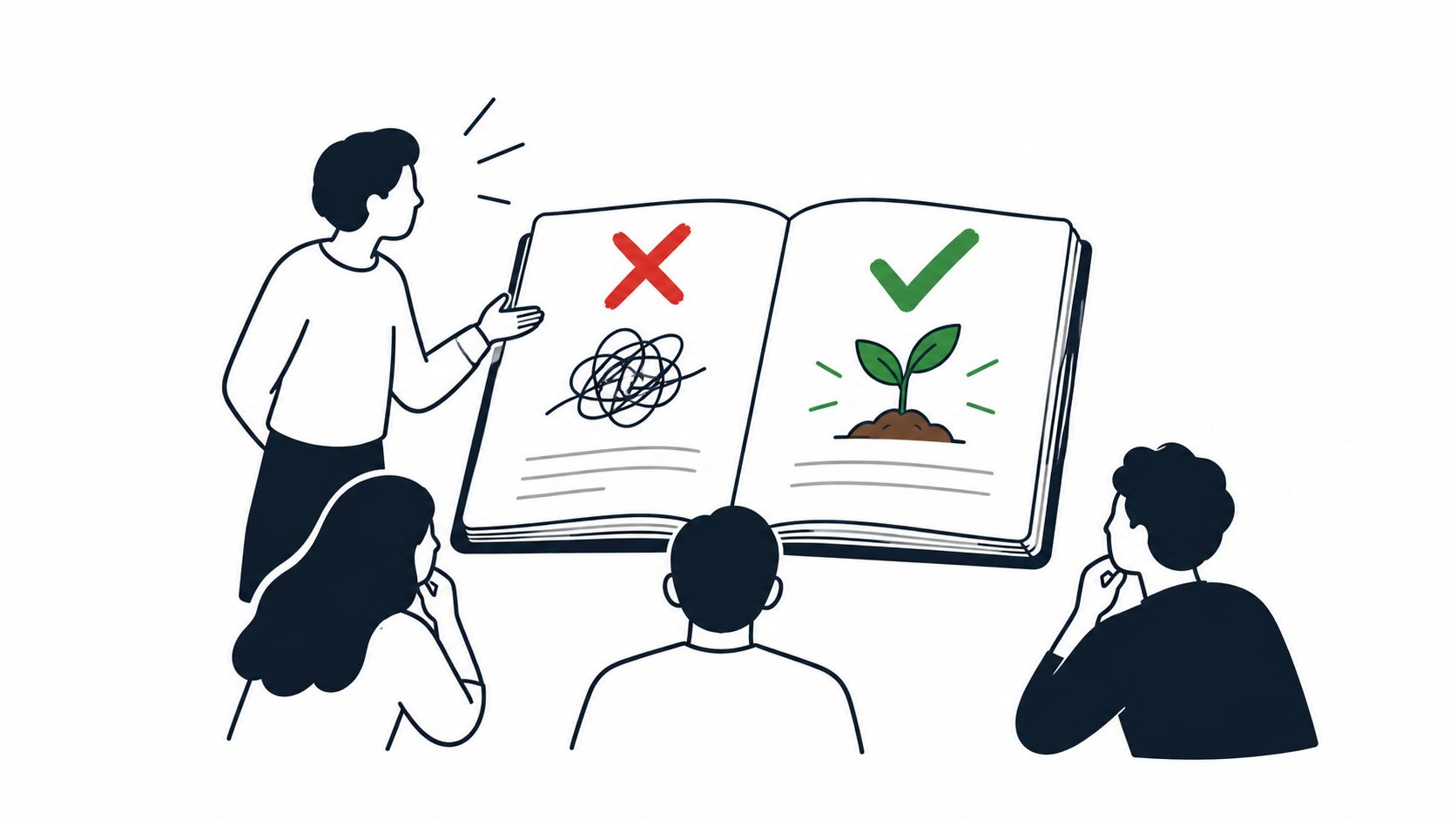
Credibility is tested more by setbacks than by polished wins. Richard Maize's focus on lessons learned, portfolio projects, and varied initiatives points to a practical operating principle: public expertise becomes more trustworthy when it accounts for failed assumptions, constraints, and necessary pivots. That principle applies across real estate, investing, cross-sector ventures, and philanthropy.
A useful account names the decision before it names the outcome. “The venture was challenging” offers little guidance. A clearer explanation might show that the team misread customer demand, underestimated operational complexity, or selected the wrong channel. The lesson remains useful without exposing confidential information.
Make transparency useful
Transparency has boundaries. Protect private information, customer interests, employee concerns, and partner relationships while explaining what the organization learned.
A useful failure story answers four questions: What did we expect? What happened? What did we misunderstand? What will we do differently?
Use those questions to turn a setback into an operating review:
Separate outcomes from identity: A failed initiative does not define the competence of every person involved.
Protect confidentiality: Remove details that could harm customers, employees, or partners.
Show the pivot: Describe changes to the process, offer, channel, or underlying assumptions.
Balance confidence with humility: Present successful execution without suggesting perfect judgment.
Invite internal discussion: Ask which signals the team missed and how it can detect them earlier.
Publish resolved lessons: Share the setback after the organization can explain its response clearly.
The business return is stronger trust. Employees and partners can work more effectively with leaders who acknowledge reality, learn quickly, and put safeguards in place against preventable mistakes. That standard turns communication about failure into part of execution, not a substitute for it.
9. Strategic Partnerships Amplify Individual Capability
Partnerships convert specialized knowledge into operating capacity. Real estate, food service, events, digital communication, media, and philanthropy each demand different judgment. Maize's cross-sector work shows why a business should build relationships around defined capabilities, not collect contacts for appearance's sake.
A property specialist can sharpen acquisition and development decisions. Food-service operators can test assumptions in a consumer venture. Event professionals can strengthen POPPOP FEST, while philanthropic advisors can help a foundation assess impact. Digital and media partners can improve how projects reach and inform their audiences.
The test is practical: does the relationship improve a decision, execution, or outcome?
Assign partners work that matters
Start by recording the gaps your current team cannot address well. Then match each gap with someone whose experience, judgment, or network adds something specific. Share enough context for that person to challenge the underlying assumptions, not just react to a polished update.
Strong partnerships usually include:
A defined role: Agree on the decisions, deliverables, or introductions the partner will support.
Complementary capability: Choose experience that expands the team's range rather than repeating it.
Meaningful context: Share relevant constraints, risks, and evidence so advice reflects reality.
Reciprocity: Provide introductions, insight, credit, or opportunity where appropriate.
Room for disagreement: Independent views reduce groupthink and expose weak assumptions.
Periodic review: Reassess the relationship as ventures mature and priorities change.
The article on scaling a business from startup to empire reinforces the broader operating idea that growth depends on systems and people, not ambition alone. A partner can improve the information available before a decision, but accountability remains with the founder. That balance turns collaboration into disciplined execution rather than delegated responsibility.
10. Accessibility and Clear Communication Enable Opportunity Flow
A promising partner cannot act on an opportunity that takes too long to understand. Clear navigation, concise project descriptions, visible contact details, an organized blog, FAQs, and a press section reduce the work required to assess a business. Less friction can determine whether someone makes an inquiry or leaves.
Richard Maize's platform organizes information across Home, Blog, Press, Multimedia, and FAQs, supporting quick discovery. The structure serves visitors with different purposes. A reader may seek a market insight, while a collaborator may need a brief view of current ventures, priorities, and ways to connect. That principle applies to any business operating across real estate, investing, public communication, partnerships, and philanthropy: make the operating context easy to find before asking people to engage.
Design around the next decision
Clear communication does not mean removing useful detail. Put the information that supports the visitor's next decision first, then provide deeper context for those who need it.
A practical review should ask:
What questions need answers? Identify the information investors, customers, partners, employees, and media require.
Can visitors choose their own route? Organize pages around use cases rather than internal departments.
Can readers scan quickly? Use descriptive headings, short sections, and related links.
Is the next action clear? Tell visitors whether to contact the business, subscribe, explore a project, or continue reading.
Does the site work for outsiders? Ask unfamiliar users to complete common tasks and record where they hesitate.
Does mobile access preserve the experience? Check key information and contact paths on a phone.
Is the information current? Replace outdated descriptions and repair broken paths before they weaken credibility.
Accessibility also improves how digital systems interpret a business. Clear, accurate, well-structured information gives people and AI tools a better basis for understanding what the company does, which markets it serves, and how its ventures connect. That supports opportunity flow without turning communication into promotion alone. It makes the facts needed for evaluation available at the moment a visitor must decide whether to continue.
Top 10 Business Lessons Comparison
Item | Implementation Complexity (🔄) | Resource Requirements (⚡) | Expected Outcomes (📊) | Ideal Use Cases (💡) | Effectiveness & Key Advantages (⭐) |
|---|---|---|---|---|---|
Diversification Across Asset Classes Creates Sustainable Wealth | 🔄 High, coordinating multiple sectors and monitoring correlations | ⚡ Moderate–High, capital, diverse advisors, management systems | 📊 Stable returns, lower portfolio volatility, multiple income streams | 💡 Long‑term investors seeking risk mitigation and growth across markets | ⭐ High, reduces sector risk and captures cross‑market opportunities |
Brand Visibility and Community Engagement Drive Long-Term Value | 🔄 Medium, ongoing content strategy and reputation management | ⚡ Medium, time, content production, PR/media resources | 📊 Increased trust, inbound partnerships, cumulative brand equity | 💡 Founders prioritizing thought leadership and audience growth | ⭐ High, builds credibility, partnership and customer pipelines |
Real Estate as Foundation for Entrepreneurial Leverage | 🔄 Medium–High, property management, financing, compliance | ⚡ High, upfront capital, financing access, reserves for operations | 📊 Tangible assets, cash flow, collateral for scaling other ventures | 💡 Entrepreneurs needing a stable asset base to fund growth | ⭐ Very High, leverage, tax benefits, inflation hedge, stability |
Purpose-Driven Ventures Create Resilience and Meaning | 🔄 Medium, aligning mission with operations and governance | ⚡ Medium, program funding, impact measurement, governance | 📊 Stronger loyalty, resilience, positive community impact and PR | 💡 Businesses aiming for long‑term social impact and retention | ⭐ High, deeper engagement, improved retention, legacy value |
Platform Building Amplifies Individual Expertise Into Scalable Influence | 🔄 Medium–High, content, tech, audience growth and maintenance | ⚡ Medium, content production, platform infrastructure, analytics | 📊 Scalable reach, passive revenue channels, established authority | 💡 Experts who want to scale knowledge beyond one‑to‑one services | ⭐ High, multiplies reach and creates diversified revenue streams |
Cross-Sector Project Portfolio Reveals Market Opportunities and Diversifies Risk | 🔄 High, active operations across varied ventures demand coordination | ⚡ High, time, operational teams, capital spread across projects | 📊 Early trend discovery, internal deal flow, operational learning | 💡 Serial entrepreneurs testing markets and cross‑pollinating ideas | ⭐ High, direct market insights and agility to pivot quickly |
Market Expertise as Competitive Moat and Authority Builder | 🔄 Medium, sustained research, relationship and reputation work | ⚡ Medium, time investment, networking, continuous learning | 📊 Better deal flow, pricing power, faster confident decisions | 💡 Regional or niche specialists seeking defensible advantage | ⭐ Very High, deep, hard‑to‑replicate competitive moat |
Transparent Communication About Failures Builds Credibility and Learning Culture | 🔄 Low–Medium, requires careful framing and governance | ⚡ Low, time to document and share lessons thoughtfully | 📊 Increased trust, psychological safety, faster organizational learning | 💡 Leaders building authentic culture and long‑term credibility | ⭐ High, fosters authenticity and attracts quality partners/teams |
Strategic Partnership and Advisor Networks Amplify Individual Capability | 🔄 Medium, sourcing, vetting and managing advisors/partners | ⚡ Medium, relationship maintenance, potential compensation | 📊 Accelerated execution, access to expertise and deal flow | 💡 Founders entering unfamiliar domains or scaling quickly | ⭐ High, extends capability without full in‑house expertise |
Accessibility and Clear Communication Enable Collaboration and Opportunity Flow | 🔄 Low, design and information architecture work up front | ⚡ Low–Medium, UX/content effort and periodic updates | 📊 More inbound opportunities, faster partner assessments, better conversions | 💡 Organizations wanting to reduce friction for collaborators and talent | ⭐ High, removes barriers, improves discovery and collaboration |
Turn Experience Into Your Next Operating Principle
The strongest business lessons learned from Richard Maize's example aren't instructions to imitate a particular investment or venture. They're principles for making better decisions under uncertainty. Build expertise before expanding. Protect the downside before chasing upside. Use diversification to reduce dependence, not to create an unmanageable collection of projects. Extend your capability through people who know what you don't.
The failure data reinforces why these fundamentals matter. In one large 2026 analysis of founder post-mortems, 54% identified better understanding of product-market fit as the most important lesson from failure, while the same source notes that roughly 70% to 90% of startups fail, depending on the dataset and time frame. That analysis of startup failure and market mismatch supports a direct operating rule: validate demand before investing heavily in delivery, hiring, or expansion.
Cash discipline deserves equal attention. A 2026 summary of startup failure statistics reports that 42% of startup failures are tied to lack of funding, while another estimate says 38% of closed startups ran out of cash or failed to secure adequate financing. U.S. business-survival data in that source show that 20.4% of new businesses fail in the first year, 49.8% within five years, and 65.3% within ten years, based on a March 2015 opening cohort tracked through March 2025. The precise lesson is not to fear growth. It's to make growth earn its capital.
AI introduces another execution challenge. IBM reports that 74% of executives believe economic and geopolitical volatility will create new business opportunities, while also emphasizing customer accountability for AI and local AI resilience in its 2026 business trends report. The same verified data notes that only one in five AI investments delivers measurable ROI. Adoption without governance, a clear use case, or regional risk planning can become an expensive distraction.
Use the lessons as a sequence:
Study the market: Speak with customers, partners, and practitioners before committing significant resources.
Test the offer: Run a small experiment that can disprove your assumptions.
Protect cash: Model downside scenarios, preserve runway, and separate core reserves from experimental capital.
Build capability: Add advisors, systems, and partners where your expertise stops.
Communicate clearly: Make your work, evidence, values, and next steps easy to understand.
Learn publicly and internally: Turn setbacks into better decisions without oversharing confidential information.
Connect purpose to practice: Let community impact influence actual operations, not just marketing language.
End with one concrete exercise this week. Choose a current venture or investment, identify its biggest concentration or execution risk, and write down one lesson from this article that addresses it. You might interview a customer, review cash assumptions, add a specialist advisor, simplify a confusing page, or define a measurable purpose objective. Then complete that action before adding another initiative. Experience becomes useful only when it changes what you do next.
Richard Maize offers a public platform focused on real estate, investing, entrepreneurship, brand visibility, portfolio projects, and philanthropy, making it a relevant resource for applying these operating principles. Visit Richard Maize to explore his blog, press, multimedia, FAQs, and community-focused work, then use one idea to sharpen your next business decision.
Comments