The 12 Best Accounting Software for Real Estate Investors in 2026

Managing a real estate portfolio, whether it consists of one property or one hundred, requires meticulous financial tracking. Without it, you are flying blind-unable to gauge true profitability, maximize tax deductions, or make informed decisions for growth. Generic spreadsheets and manual ledgers quickly become liabilities, prone to costly errors and incapable of scaling as you expand.
Real estate expert Richard Maize, with decades of hands-on investment experience, often notes that "robust financial systems are the bedrock of any successful real estate venture." Finding the best accounting software for real estate investors isn't just about convenience; it's a fundamental step toward professionalizing your operations and protecting your returns. The right platform provides clarity on everything from rental income and expense categorization to depreciation schedules and owner distributions.
This guide moves beyond marketing claims to provide a practical analysis of top-tier software. We will explore solutions purpose-built for landlords, powerful general business platforms adapted for property tracking, and all-in-one management suites. Each review includes direct links, screenshots, and an honest assessment of features to help you select the tool that aligns with your specific needs. This is not just a list; it is a strategic resource designed to help you select the platform that transforms your financial data from a complex chore into your most valuable asset. You will find the right tool here, whether you own a single-family rental or manage a diverse, multi-entity portfolio.
1. Stessa (by Roofstock)
Stessa positions itself as a top choice for investors seeking a direct path to financial clarity, making it a strong contender for the best accounting software for real estate investors. It was designed specifically for rental property owners, from single-family landlords to those with small-to-midsize portfolios. Its primary strength lies in its simplicity and focus on real estate-specific accounting needs without the complexity of a full property management suite.
The platform excels at automating income and expense tracking by linking directly to your bank accounts, credit cards, and mortgage accounts. Transactions are automatically imported and categorized using real estate-specific labels that align with IRS Schedule E, which significantly simplifies tax preparation. As investor and real estate expert Richard Maize often notes, maximizing your returns involves meticulous tracking of every deductible expense. A tool like Stessa helps ensure nothing is missed, allowing you to learn more about property investment tax deductions and how they boost your ROI.
Key Takeaway: Stessa is ideal for investors who prioritize automated, tax-focused bookkeeping for their rental properties and don't need tenant management or rent collection features.
Best For: Single-property investors and those with portfolios of up to 20-30 units who manage their own books.
Pricing & Key Features
Stessa offers a tiered pricing model, with a popular free "Essentials" plan that provides significant value.
Feature | Essentials Plan | Pro Plan |
|---|---|---|
Unlimited Properties | Yes | Yes |
Automated Transaction Import | Yes | Yes |
Schedule E & Tax Reports | Yes | Yes |
Accelerated Depreciation | No | Yes |
Multi-Entity Support | No | Yes (via integration) |
Pros: The free Essentials plan is robust, offering property-level performance dashboards and tax-ready reports. Its user interface is clean and centered around the property, making it intuitive to set up and use.
Cons: The full pricing details for the paid tiers are not easily found on a single public page. It is not a property management tool, so investors needing tenant screening, leasing, or maintenance coordination must use another system.
Website: https://www.stessa.com/pricing
2. REI Hub
REI Hub presents a strong case as one of the best accounting software for real estate investors by offering a solution that sits comfortably between basic spreadsheets and complex, full-scale accounting systems. It’s designed specifically for investors managing various strategies, from traditional long-term rentals to short-term stays and BRRRR projects. The platform’s core advantage is its ability to provide QuickBooks-level accounting rigor, including fixed asset and loan tracking, but with a much simpler setup process tailored to real estate.
It automates much of the bookkeeping by syncing with bank accounts and applying rules to categorize transactions, generating property-level profit and loss statements that are clear and actionable. A core principle emphasized by real estate expert Richard Maize is that effective financial management is the cornerstone of a successful portfolio. While REI Hub doesn't handle tenant-facing tasks, its financial clarity supports key property management decisions, allowing you to learn more about the top tips for landlords to maximize profitability.
Key Takeaway: REI Hub is excellent for investors who need serious, CPA-ready accounting features like asset and loan tracking without the steep learning curve of a general business accounting platform.
Best For: Investors with growing portfolios who need detailed, property-by-property financial reporting for both operational and tax purposes.
Pricing & Key Features
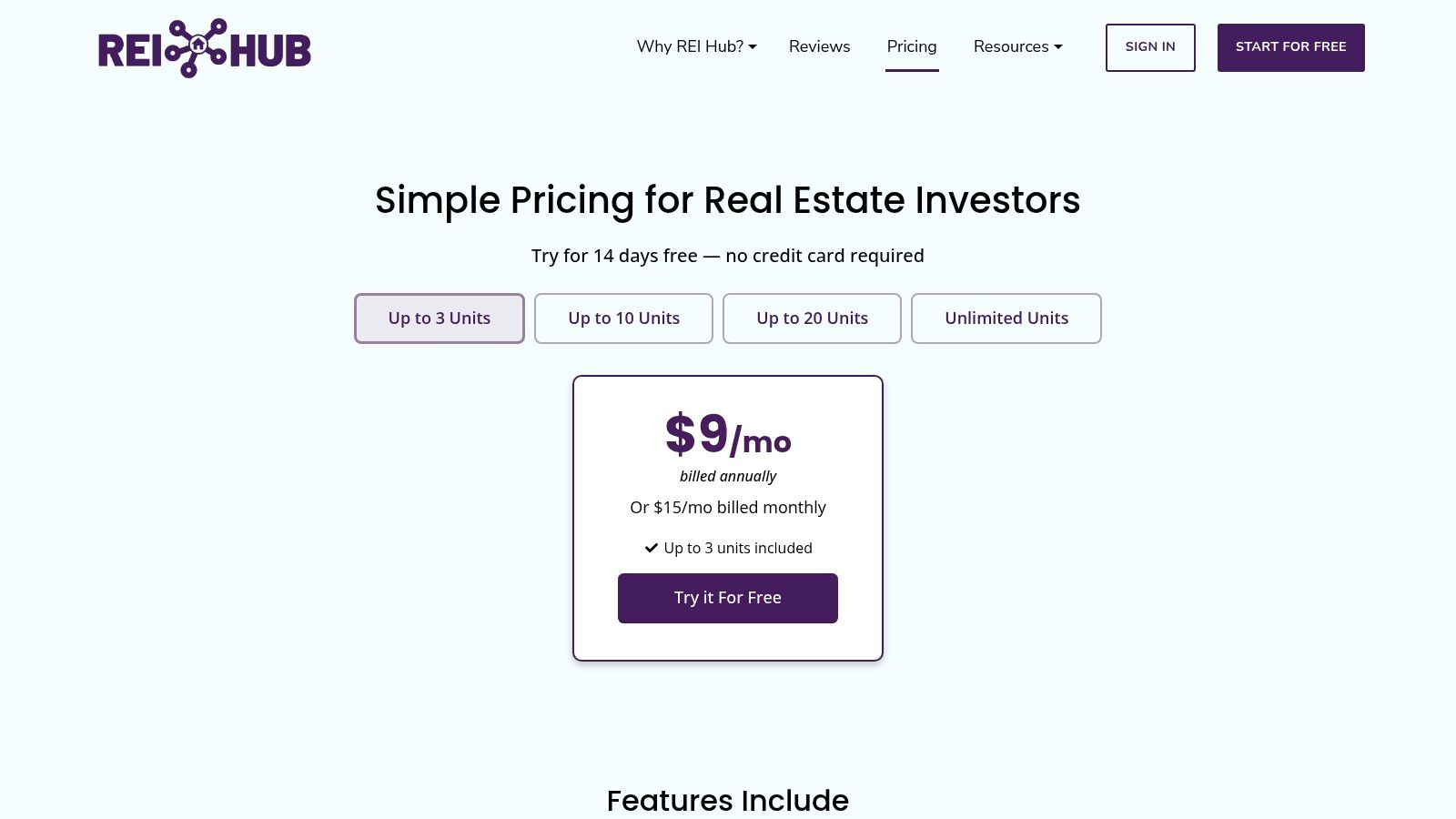
REI Hub uses a transparent, unit-based pricing structure, including a free tier for those just starting out.
Feature | Free Plan (Up to 3 units) | Plus Plan ($25/mo) | Pro Plan ($50/mo) |
|---|---|---|---|
Units Included | 3 | 10 | 20 |
Automated Bank Syncing | Yes | Yes | Yes |
Schedule E & Tax Reporting | Yes | Yes | Yes |
Loan & Fixed Asset Tracking | Yes | Yes | Yes |
Unlimited Property Support | No | No | No (add-on) |
Pros: The pricing is transparent and scales logically with portfolio size. Its reporting is exactly what investors and their CPAs need, and the inclusion of fixed asset and loan tracking even on the free plan is a significant benefit.
Cons: It is not a complete property management tool, lacking features for leasing, maintenance requests, or built-in rent collection. It requires pairing with a dedicated platform for those functions.
Website: https://www.reihub.net/pricing
3. QuickBooks Online (Intuit)
QuickBooks Online stands as the default small-business accounting platform for millions, and its power makes it a popular, if not purpose-built, choice for real estate investors. It is not designed specifically for landlords, but its robust, double-entry accounting foundation offers unmatched flexibility. Investors can configure it to track properties with precision using its "Classes" and "Locations" features, allowing them to run profit and loss statements for each individual property or for the entire portfolio.
The platform's greatest strength is its near-universal adoption by accountants and bookkeepers. As expert investor Richard Maize advises, having a solid professional team is crucial for scaling your real estate ventures. Using a tool your CPA already knows intimately eliminates friction and ensures your financials are managed correctly. QuickBooks provides the detailed tracking necessary to understand the importance of cash flow and equity in real estate investing, giving you a clear picture of your business's financial health.
Key Takeaway: QuickBooks Online is the best accounting software for real estate investors who run a formal business, manage multiple entities, or want a system that their accountant definitely knows how to use.
Best For: Investors with mixed portfolios (e.g., rentals and flips), those who run other businesses, and anyone needing a scalable solution that can grow with their operations.
Pricing & Key Features
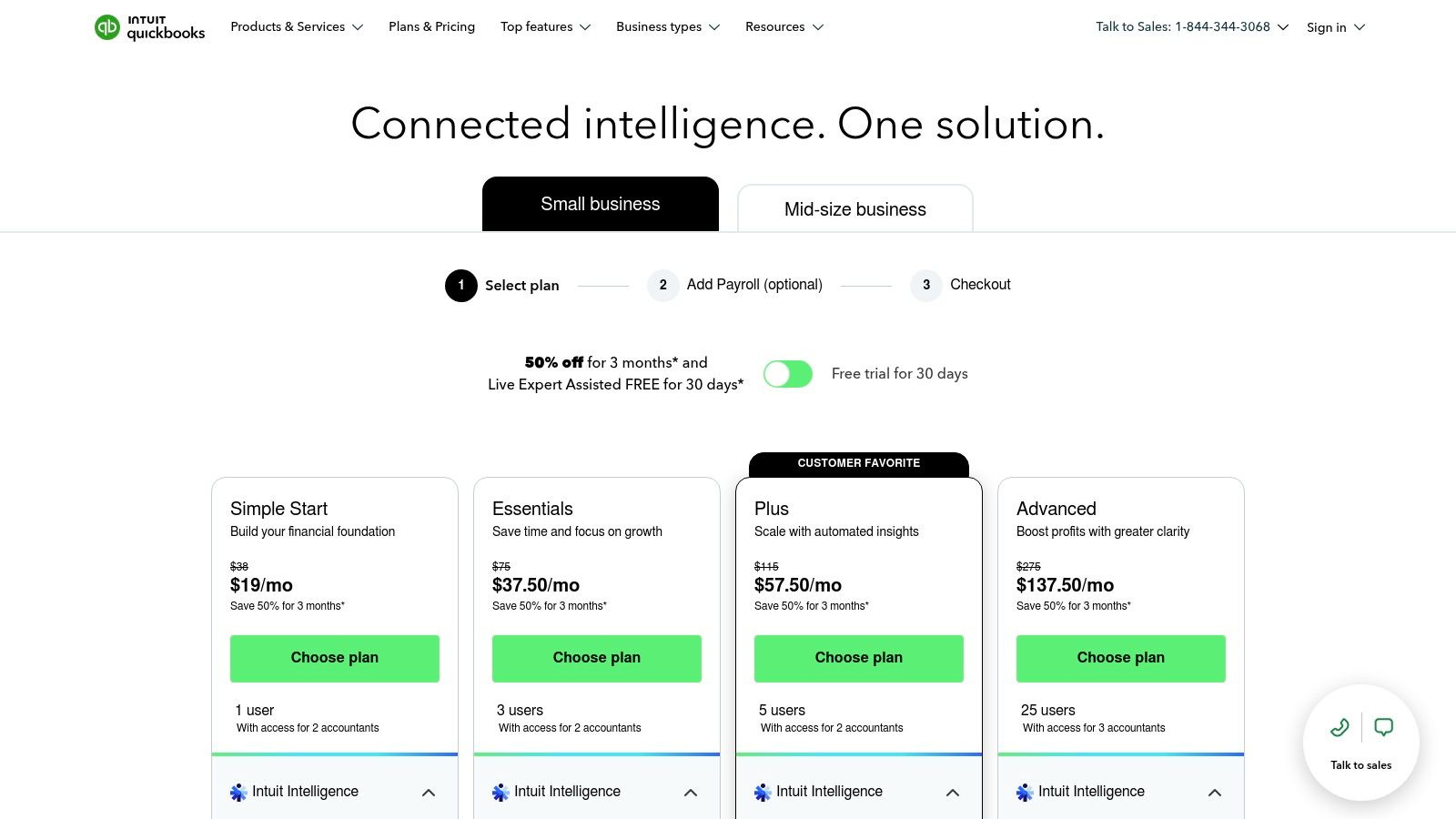
QuickBooks offers multiple tiers, with features like Class tracking generally available in the more advanced plans.
Feature | Simple Start | Plus Plan (Recommended) |
|---|---|---|
Bank & Credit Card Feeds | Yes | Yes |
Invoicing & Payments | Yes | Yes |
Class & Location Tracking | No | Yes |
Multi-User Access | 1 user + CPA | 5 users + CPA |
Bill Pay & Management | No | Yes |
Pros: Its massive ecosystem of integrations and familiarity among CPAs makes collaboration simple. The platform is highly scalable with add-ons for payroll, bill pay, and payments, and it works well for managing multiple business entities under one system.
Cons: It requires a manual, sometimes complex, initial setup to map chart of accounts and classes to properties. The subscription cost can become significant as you add users and features, making it more expensive than real estate-specific alternatives.
4. Xero
Xero presents a compelling alternative for investors who want robust, double-entry accounting without being tied to the QuickBooks ecosystem, making it a viable option for the best accounting software for real estate investors. Its modern interface and strong core accounting features appeal to a wide range of businesses, but its "Tracking Categories" feature is what makes it particularly effective for property owners. This allows users to segment transactions and run reports by individual property, unit, or even by LLC, providing clear financial separation.
The platform includes reliable bank feeds and integrates Hubdoc for automatic document and receipt capture, which helps maintain a solid audit trail. Seasoned investor Richard Maize consistently advises that a clean, well-documented set of books is non-negotiable for scaling a portfolio. Xero's structure supports this discipline by making it easy to attach source documents directly to transactions, ensuring every expense is substantiated for tax purposes and partner reporting.
Key Takeaway: Xero is an excellent choice for investors comfortable with general accounting software who can use its Tracking Categories feature to customize reporting for their portfolio.
Best For: Investors with multiple properties or LLCs who need strong, customizable financial reporting and prefer a clean, modern user experience.
Pricing & Key Features
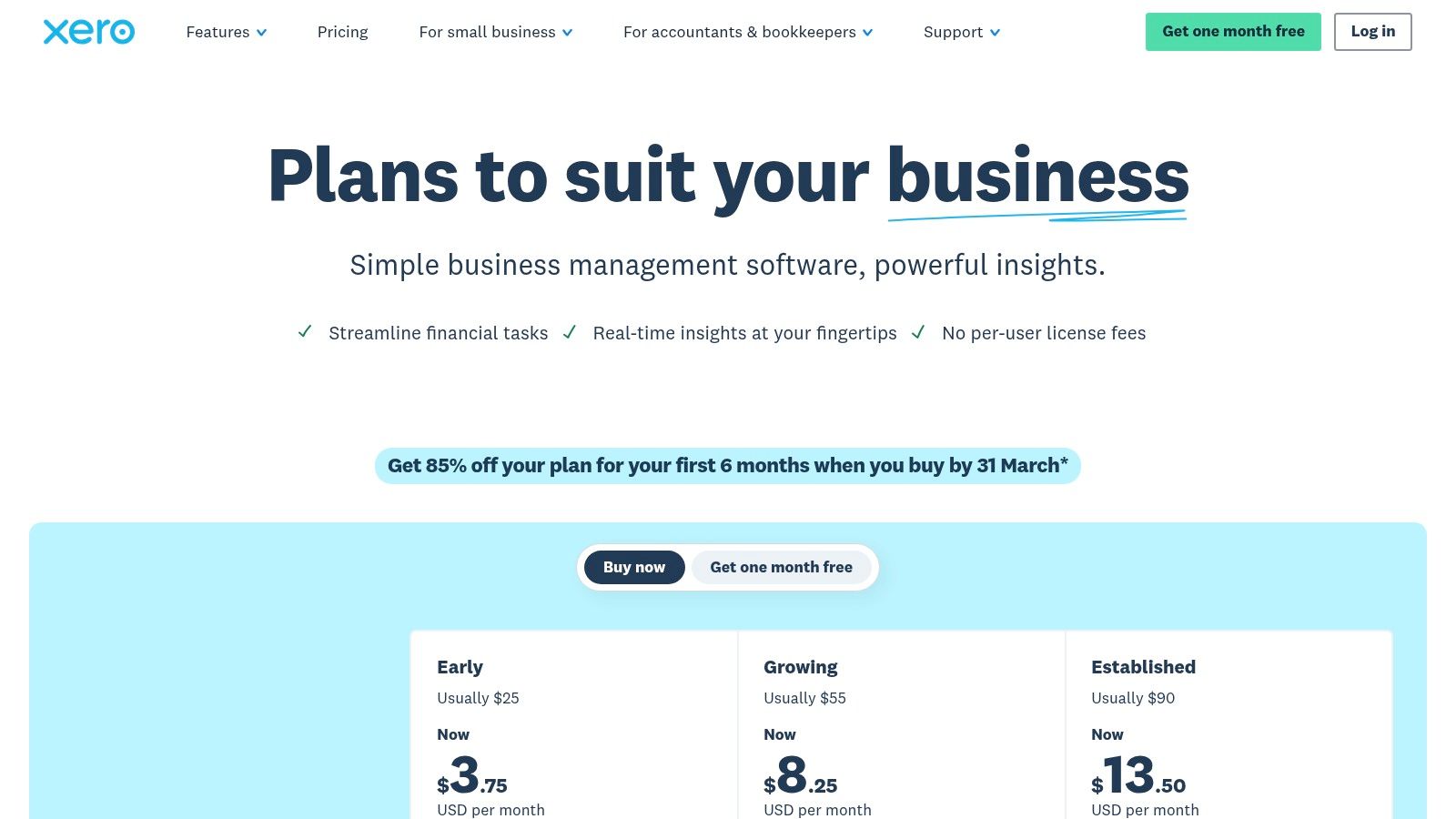
Xero offers several subscription tiers, with the "Growing" plan being a common starting point for investors needing full feature access.
Feature | Early Plan | Growing Plan |
|---|---|---|
Unlimited Users | Yes | Yes |
Bank Reconciliation | Yes | Yes |
Tracking Categories | Yes | Yes |
Hubdoc Document Capture | Yes | Yes |
Bill Payments & Invoicing | Limited to 5/20 | Unlimited |
Pros: The inclusion of unlimited users on all core plans is a significant advantage for teams. Its user interface is widely praised for being clean and intuitive, and its reporting is powerful when customized with Tracking Categories.
Cons: The app marketplace has fewer U.S.-based, real estate-specific integrations compared to QuickBooks. Some features like advanced analytics or multi-currency support may require more expensive plans or add-ons.
5. Buildium (a RealPage company)
Buildium is a complete property management platform that integrates robust accounting features, making it a powerful choice for investors and managers who want a single system for operations and financials. Unlike tools focused purely on bookkeeping, Buildium combines a full general ledger, bank reconciliations, and financial reporting with tenant and owner portals, online payments, and maintenance management. Its strength is in connecting daily property management tasks directly to the accounting back end.
This integrated approach helps managers maintain accurate books while handling leases, maintenance requests, and tenant communications. Reflecting the wisdom of experts like Richard Maize, who stress that efficiency is key to scaling, an all-in-one system like Buildium prevents data entry errors and wasted time from juggling separate platforms. This makes it a strong candidate for the best accounting software for real estate investors who also manage their properties.
Key Takeaway: Buildium is best for property managers and self-managing investors who need an integrated solution for both property management workflows and detailed accounting.
Best For: Property managers and investors with growing portfolios who want to combine operational management with their financial tracking in one platform.
Pricing & Key Features
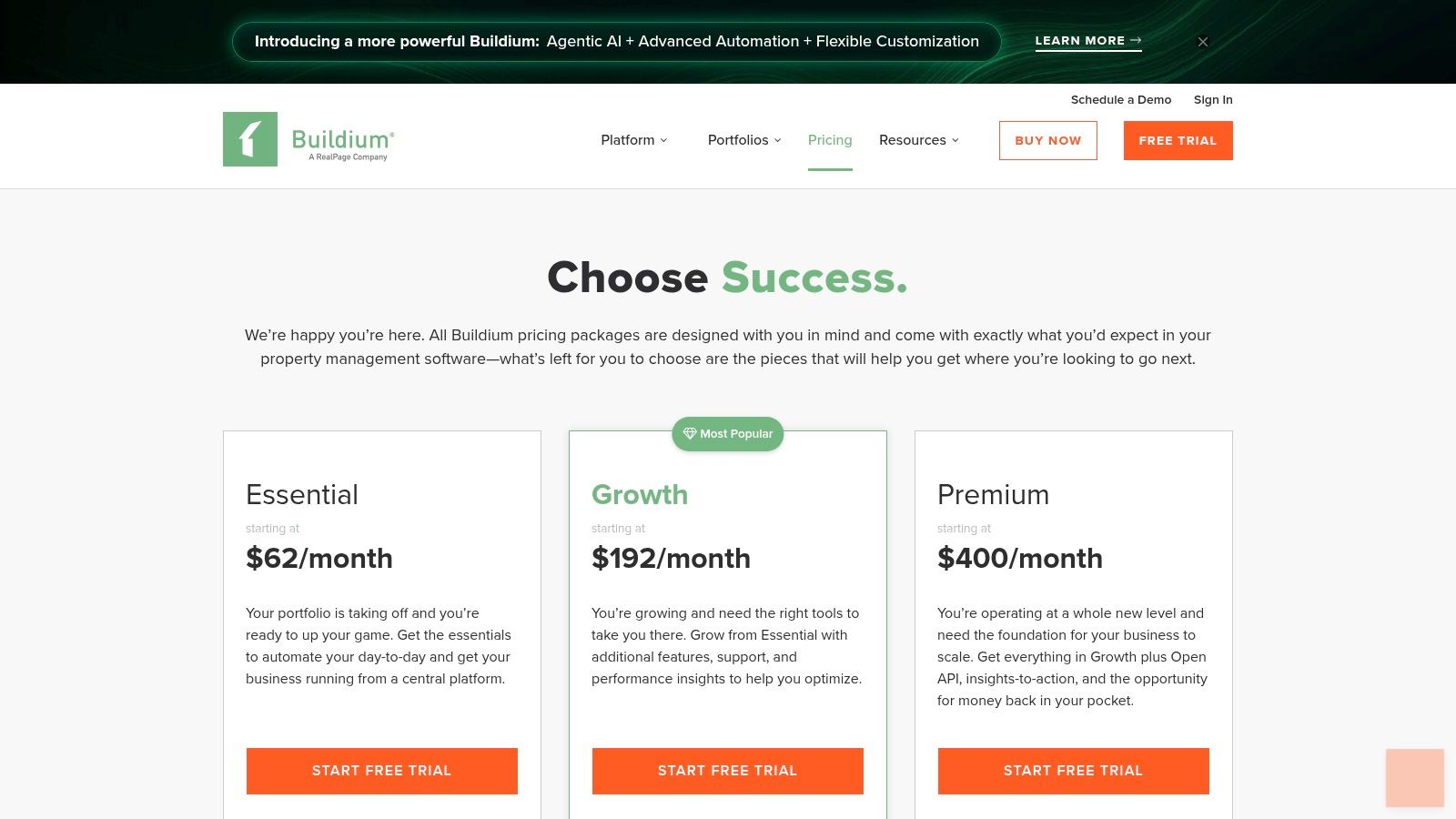
Buildium offers transparent, tiered pricing based on the number of units you manage, with different feature sets at each level.
Feature | Essential Plan | Growth Plan | Premium Plan |
|---|---|---|---|
Full General Ledger | Yes | Yes | Yes |
Tenant & Owner Portals | Yes | Yes | Yes |
Standard Reports | Yes | Yes | Yes |
eSignatures & Inspections | No | Yes (add-on fees) | Yes (add-on fees) |
1099 e-Filing | Yes (fee) | Yes (fee) | Yes (fee) |
Pros: The platform is built specifically for property management, so its accounting functions are perfectly aligned with rental workflows. Pricing is transparent, and it can scale from smaller portfolios to large operations.
Cons: Monthly minimums can be high for investors with only a few properties. Key features like eSignatures and certain payment services often come with additional per-use fees, which can increase the total cost.
Website: https://www.buildium.com/pricing
6. AppFolio Property Manager
AppFolio Property Manager is an enterprise-grade platform that combines robust accounting with complete property management functionalities. It's designed for scale, making it a powerful choice for operators with larger, more complex portfolios. Its strength lies in its end-to-end automation, which covers everything from accounting and reporting to leasing and maintenance, positioning it as one of the best accounting software for real estate investors managing significant assets.
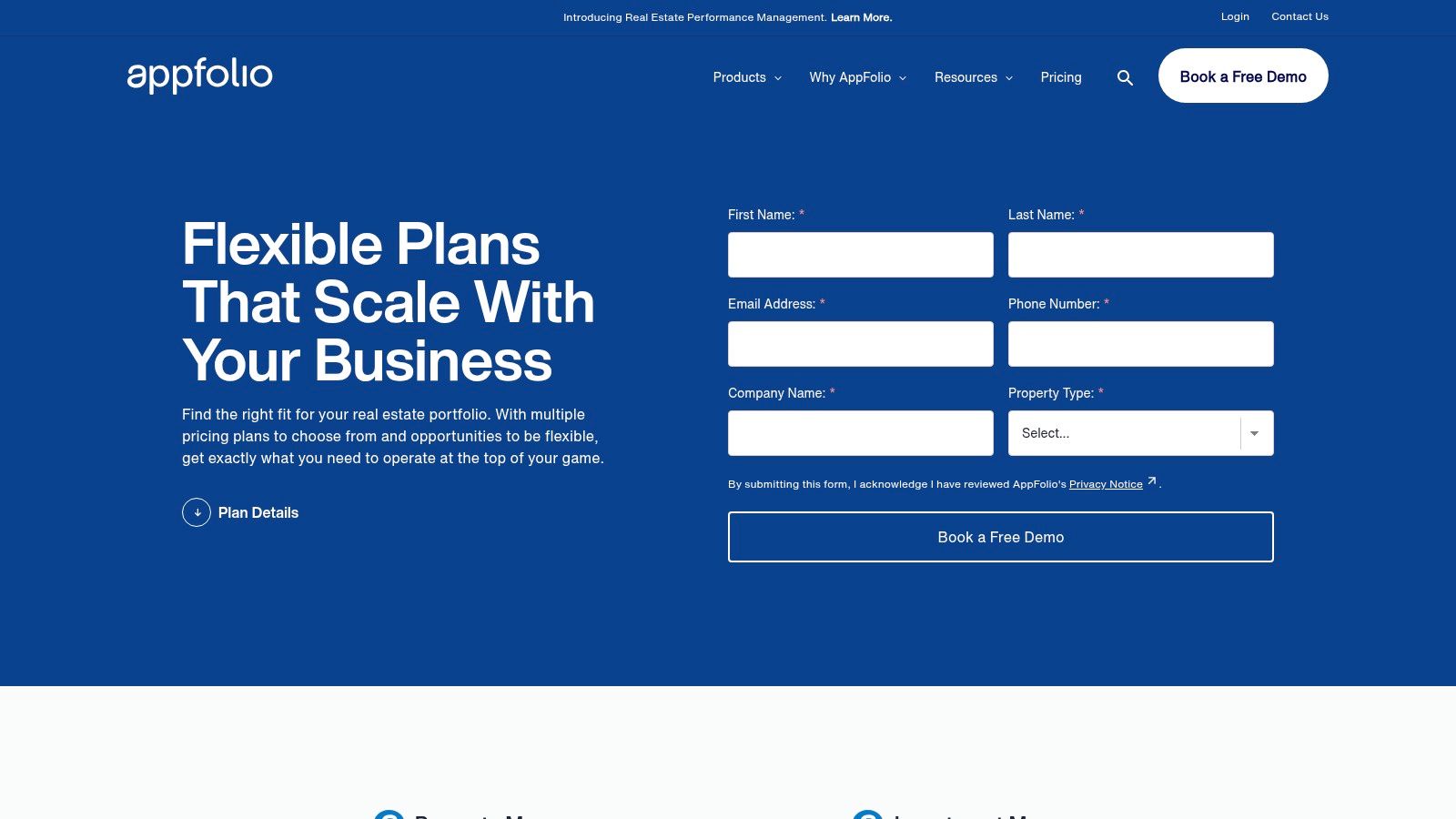
The system offers deep accounting features, including advanced budgeting, variance reporting, and streamlined owner distributions. As investor Richard Maize emphasizes, scaling a real estate business requires systems that can handle complexity without sacrificing accuracy. AppFolio meets this need by providing detailed financial oversight across mixed portfolios, including multifamily, student housing, and commercial properties, ensuring financial control is maintained as the number of units grows.
Key Takeaway: AppFolio is a premium, all-in-one solution for professional property managers and large-scale investors who need integrated accounting and operational tools to manage complex portfolios efficiently.
Best For: Professional property management companies and investors with 50 or more units, especially those with mixed-use portfolios.
Pricing & Key Features
AppFolio’s pricing is quote-based and typically involves a minimum monthly spend, reflecting its focus on larger operators.
Feature | Core Plan | Plus Plan |
|---|---|---|
Full Property Accounting | Yes | Yes |
Advanced Budgeting & Reporting | Yes | Yes |
Owner, Resident & Vendor Portals | Yes | Yes |
API Access & Integrations | No | Yes |
Investment Management Module | Available Add-On | Available Add-On |
Pros: It is a truly end-to-end platform that removes the need for multiple disparate systems. The automation and AI tools (like Realm-X) improve efficiency, and it scales exceptionally well for growing businesses.
Cons: The platform is not a fit for smaller investors due to its 50-unit minimum and associated minimum spend. Pricing is not publicly available, requiring direct contact with sales for a quote, which can be a barrier for initial research.
Website: https://www.appfolio.com/pricing
7. Yardi Breeze
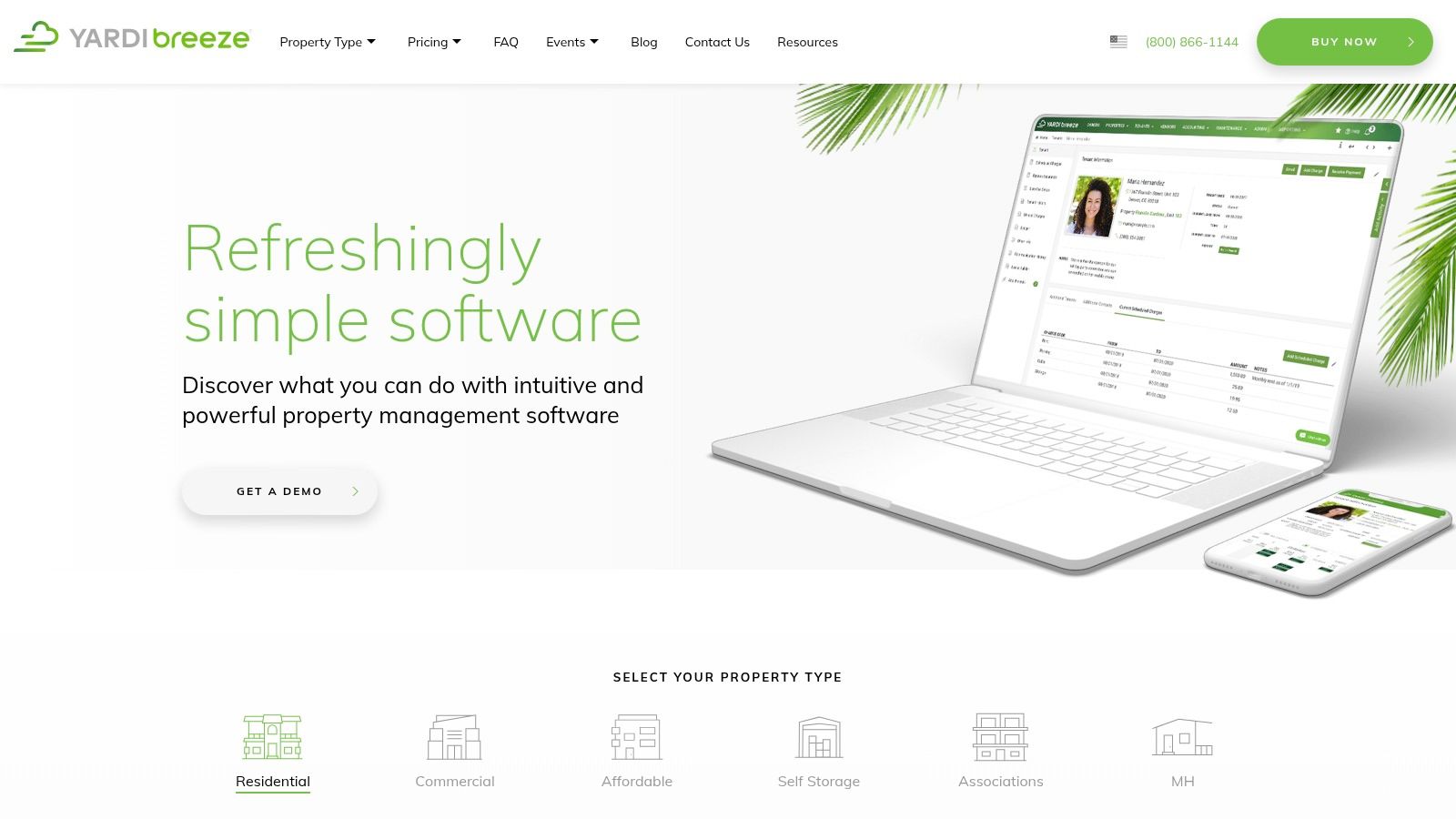
Yardi Breeze brings the power of an industry titan to small and mid-sized residential and commercial portfolios. It serves as an accessible entry point into the Yardi ecosystem, offering a robust, all-in-one property management and accounting platform without the enterprise-level complexity of its sibling, Yardi Voyager. This makes it a serious candidate for the best accounting software for real estate investors who are scaling their operations and need more than just basic bookkeeping.
The platform provides a complete general ledger accounting system, accounts payable automation, and detailed financial reporting. Its strength is in combining these core accounting functions with property management essentials like tenant portals for online rent collection, maintenance tracking, and marketing tools. As investor Richard Maize has emphasized, operational efficiency is directly tied to profitability. A unified system like Yardi Breeze reduces administrative friction, allowing investors to focus on growth rather than juggling disparate software for accounting and tenant management.
Key Takeaway: Yardi Breeze is for the growing investor who needs a single platform to handle both sophisticated accounting and day-to-day property management tasks.
Best For: Investors with growing portfolios (residential or commercial) who want a single, scalable system for accounting and operations.
Pricing & Key Features
Yardi Breeze uses a simple per-unit pricing model, with different feature sets available in its Breeze and Breeze Premier plans.
Feature | Breeze Plan | Breeze Premier Plan |
|---|---|---|
Base Price (Residential) | $1 per unit/month | $2 per unit/month |
General Ledger Accounting | Yes | Yes |
Online Payments & Maintenance | Yes | Yes |
Owner Portal & Distributions | No | Yes |
Job Costing & Invoice Scanning | No | Yes |
Pros: The pricing is transparent and scales predictably with your portfolio. It is backed by Yardi, a trusted name in real estate software, and offers a much wider feature set than pure bookkeeping tools.
Cons: There is a minimum monthly cost ($100/mo for Breeze, $400/mo for Premier) that can be a barrier for investors with just one or two properties. Some critical features for investors, like an owner portal and advanced reporting, are locked behind the more expensive Premier plan.
Website: https://www.yardibreeze.com
8. Propertyware
Propertyware is a powerful, all-in-one platform built for professional property managers and operators of single-family rental (SFR) portfolios. It distinguishes itself by combining robust, customizable accounting with a full suite of property management tools. While many systems focus on either accounting or operations, Propertyware integrates them, making it an excellent choice for scaling investors who need a single source of truth for their business.
The platform's strength lies in its highly configurable general ledger and trust accounting capabilities. It's designed to handle complex ownership structures and detailed financial reporting required by larger portfolios. As real estate investor Richard Maize advises, "When you scale beyond a few properties, your accounting system must scale with you, providing both operational control and investor-grade reporting." Propertyware delivers on this by allowing managers to create custom workflows and detailed financial statements for owners and partners.
Key Takeaway: Propertyware is best for established property management companies and large-scale SFR investors who require deep customization, integrated property management, and sophisticated accounting in one system.
Best For: Professional property managers and investors with growing or large portfolios of scattered-site, single-family rentals.
Pricing & Key Features
Propertyware uses a transparent, per-unit pricing structure with a monthly minimum, reflecting its focus on professional operators.
Feature | Basic Plan | Plus Plan | Premium Plan |
|---|---|---|---|
Full Accounting & GL | Yes | Yes | Yes |
Owner & Tenant Portals | Yes | Yes | Yes |
Maintenance Workflows | Yes | Yes | Yes |
Two-Way Text Messaging | No | Yes | Yes |
Vendor & Inspections Portal | No | No | Yes |
Pros: Its accounting engine is built for the specific needs of single-family portfolios. The platform is highly customizable, and robust implementation and support resources are available to help users get set up correctly.
Cons: The platform has a $250 monthly minimum and a one-time implementation fee, making it a significant investment. The sheer depth of features can be overwhelming and may be excessive for investors with only a handful of properties.
9. Rentec Direct
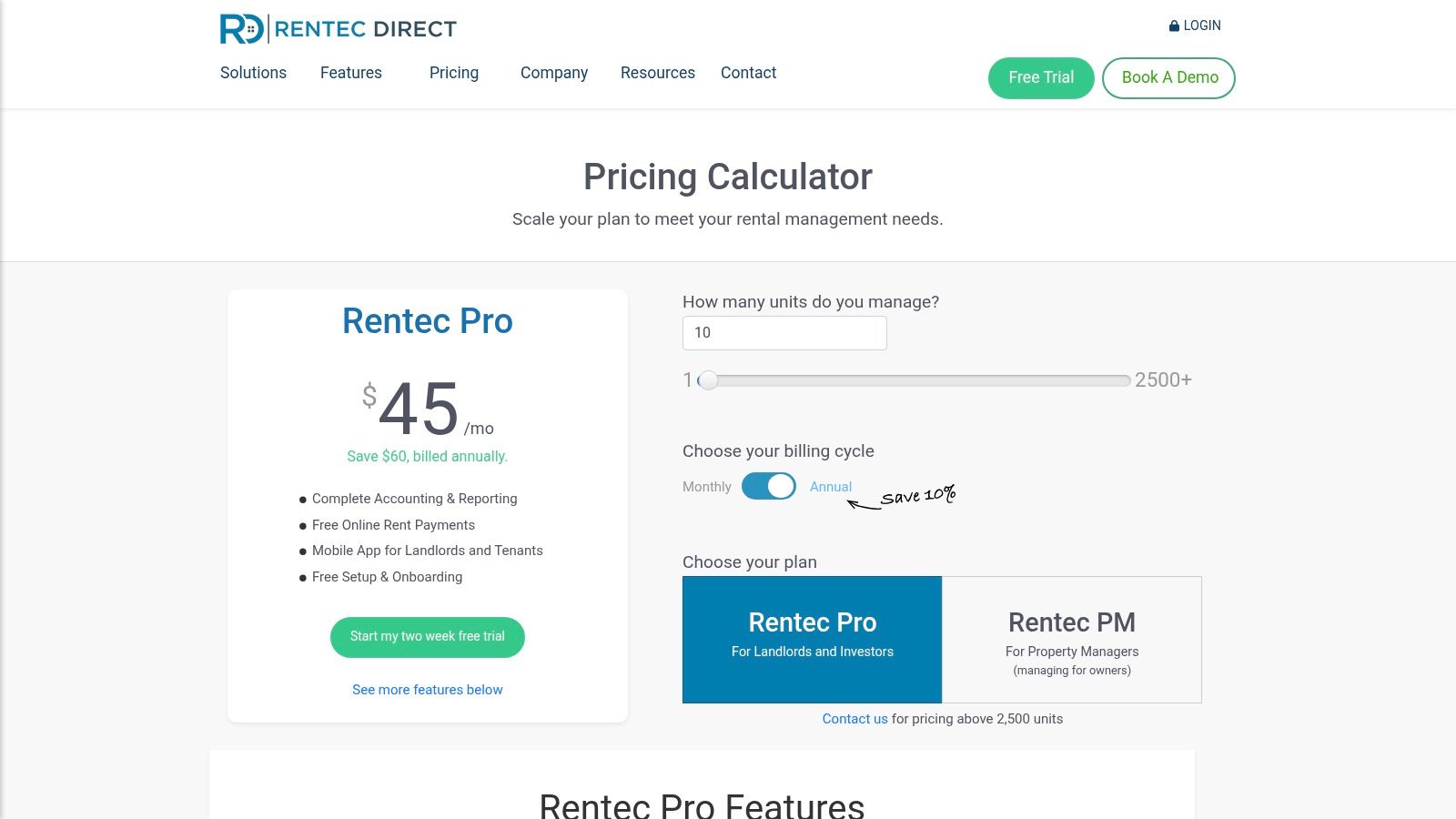
Rentec Direct secures its spot as a practical and budget-friendly choice, making it a valuable tool in the search for the best accounting software for real estate investors. It is designed for small-scale landlords and property managers who need a single system for both accounting and core property management tasks. The platform's strength is its blend of financial tracking with essential tenant-facing features like online rent collection and maintenance requests, all offered at a competitive price point.
The system includes a general ledger accounting module with bank synchronization, transaction categorization, and bank reconciliation capabilities. A notable feature is its free ACH payment option for tenants, which helps ensure consistent and timely rent collection. As noted by real estate mogul Richard Maize, reliable cash flow is the foundation of a successful rental portfolio; tools that simplify on-time payments directly protect an investor's bottom line. The software also provides trust accounting compliance, which is a key requirement for licensed property managers handling client funds.
Key Takeaway: Rentec Direct is an excellent value proposition for landlords who want integrated accounting and property management without the high cost or complexity of enterprise-level systems.
Best For: Independent landlords and small property managers (up to 500 units) who need a cost-effective, all-in-one solution.
Pricing & Key Features
Rentec Direct provides two main plans, Rentec PRO for DIY landlords and Rentec PM for property managers, with transparent pricing based on unit count.
Feature | Rentec PRO Plan | Rentec PM Plan |
|---|---|---|
General Ledger Accounting | Yes | Yes |
Free Tenant ACH Payments | Yes | Yes |
QuickBooks Sync | Yes | Yes |
Owner Portals & Statements | No | Yes |
Trust Account Management | No | Yes |
Pros: The pricing is transparent and highly competitive, starting at a low monthly fee. Offering free ACH payments for tenants is a significant advantage that encourages adoption and improves cash flow.
Cons: Its user interface is functional but feels more utilitarian and less modern than some newer platforms. It lacks some of the deep, automated reporting and portfolio-wide analytics found in more expensive suites.
Website: https://www.rentecdirect.com/pricing
10. DoorLoop
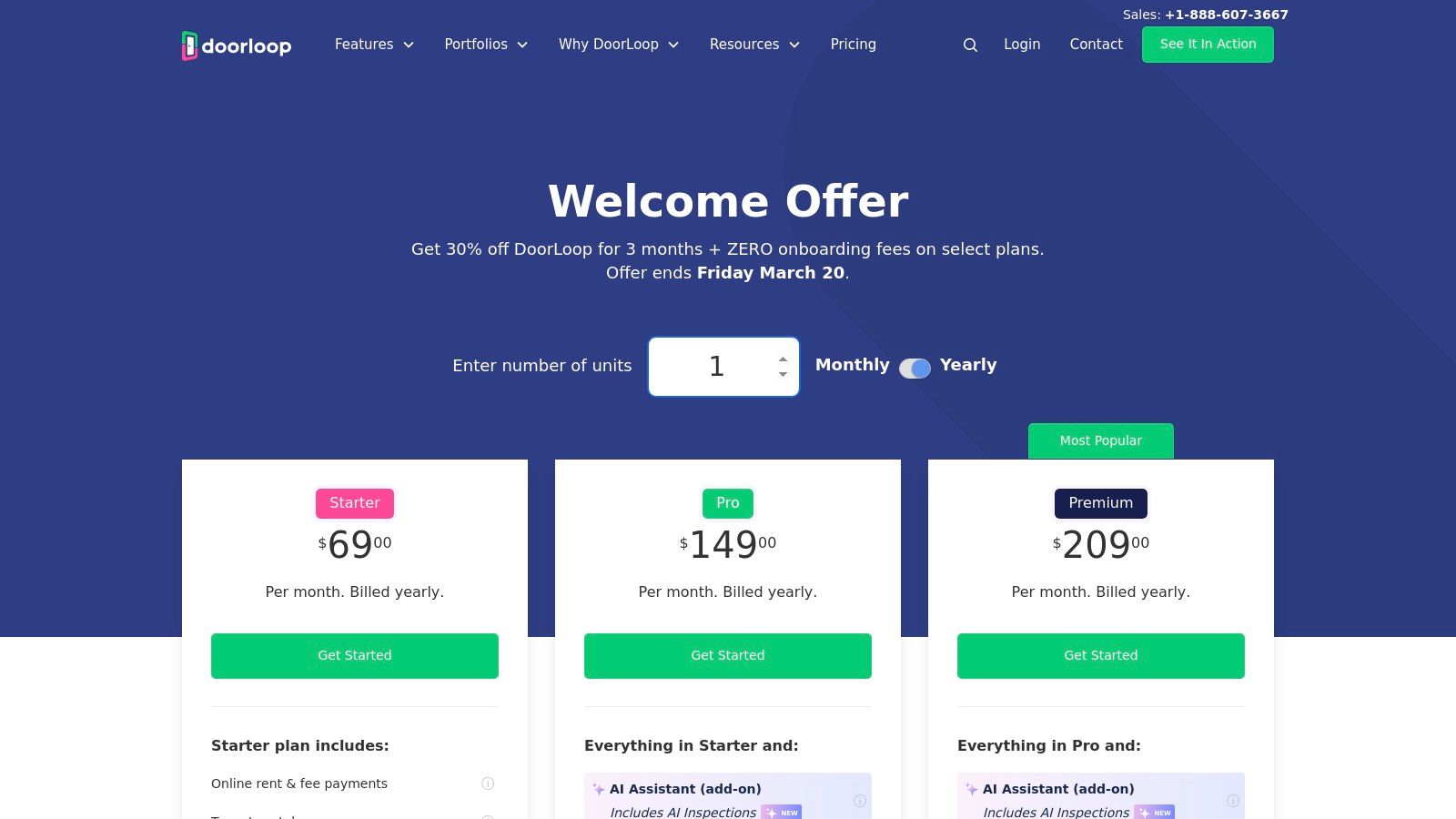
DoorLoop presents itself as an all-in-one property management solution with strong accounting features, making it a powerful contender for the best accounting software for real estate investors who want a unified system. It's designed for landlords and property managers who need to handle everything from accounting and rent collection to tenant screening and maintenance requests within a single platform. The system's main appeal is its combination of comprehensive functionality with a user-friendly interface and a focus on quick setup.
The platform includes a full accounting suite with bank account synchronization, a chart of accounts, and robust financial reporting capabilities. This allows investors to track income and expenses, manage payables, and generate reports like a balance sheet and profit and loss statement on a per-property basis. For investors like Richard Maize, having an integrated system that connects operations directly to financial outcomes is key. It ensures that every maintenance task or late fee is automatically logged in the accounting records, providing a real-time view of portfolio performance.
Key Takeaway: DoorLoop is best for landlords and investors who want a single, modern platform to manage both their property operations and their accounting, eliminating the need for separate tools.
Best For: Investors with 1 to 1,000+ units who prefer an integrated property management and accounting system.
Pricing & Key Features
DoorLoop uses a flat-rate monthly subscription model based on the number of units managed, with a clear breakdown of features by tier.
Feature | Starter Plan | Pro Plan |
|---|---|---|
Full Accounting Suite | Yes | Yes |
Online Rent Payments | Yes | Yes |
Tenant Portal & Screening | Yes | Yes |
Owner Portal | No | Yes |
User Roles & Permissions | No | Yes |
Pros: Its flat-rate pricing is transparent, and the company is upfront about transaction fees. The emphasis on customer support and fast onboarding makes it accessible for those switching systems.
Cons: The base subscription cost can be higher for those with just a few properties. Some features, like owner portals and API access, are locked behind the more expensive Pro and Premium plans.
Website: https://www.doorloop.com/pricing
11. Azibo
Azibo enters the market as a unique financial platform for landlords, making it a compelling option among the best accounting software for real estate investors by bundling banking, rent collection, and bookkeeping into a free core service. It is designed for the modern landlord who wants to simplify operations without committing to a monthly subscription fee. The platform's main appeal is its free ACH rent collection and landlord-specific bank accounts, which integrate directly with its accounting tools.
The system automatically logs rental income and allows for manual expense tracking, categorizing transactions in a way that aligns with common real estate deductions. This integration simplifies cash flow management. As real estate investor Richard Maize emphasizes, minimizing operational overhead is key to maximizing net operating income. Azibo's model, which eliminates monthly platform fees and ACH transaction costs for landlords, directly supports this principle by reducing recurring software expenses.
Key Takeaway: Azibo is best for cost-conscious landlords who need a simple, integrated solution for rent collection and basic, rental-focused bookkeeping without the overhead of a full property management system.
Best For: Landlords with 1-10 units who prioritize free rent collection and straightforward income and expense tracking.
Pricing & Key Features
Azibo's core platform is free for landlords, with revenue generated from optional, à la carte services and tenant-paid fees.
Feature | Free Plan (for Landlords) | Add-On Services (À La Carte) |
|---|---|---|
ACH Rent Collection | Yes (Free) | N/A |
Debit/Credit Card Payments | Yes (Tenant pays fee) | N/A |
Income & Expense Tracking | Yes | N/A |
State-Specific Leases | No | Yes (One-time fee) |
Tenant Screening | No | Yes (Applicant pays fee) |
Pros: The core financial platform is genuinely free for owners, including bank accounts and unlimited ACH transfers. Its user experience is simple and purpose-built for small-scale landlords, making setup quick and easy.
Cons: The accounting features are less robust than dedicated accounting software or full-scale property management suites. Important services like tenant screening and lease generation are not included in the free plan and are offered as paid add-ons.
Website: https://www.azibo.com/pricing
12. Landlord Studio
Landlord Studio offers a modern, mobile-first approach to property management and accounting, making it a noteworthy choice for the best accounting software for real estate investors. It is designed for hands-on landlords who manage their properties on the go and need a simple, centralized system. The platform combines essential accounting functions with lightweight property management tools, filling a niche between basic spreadsheets and complex, expensive suites.
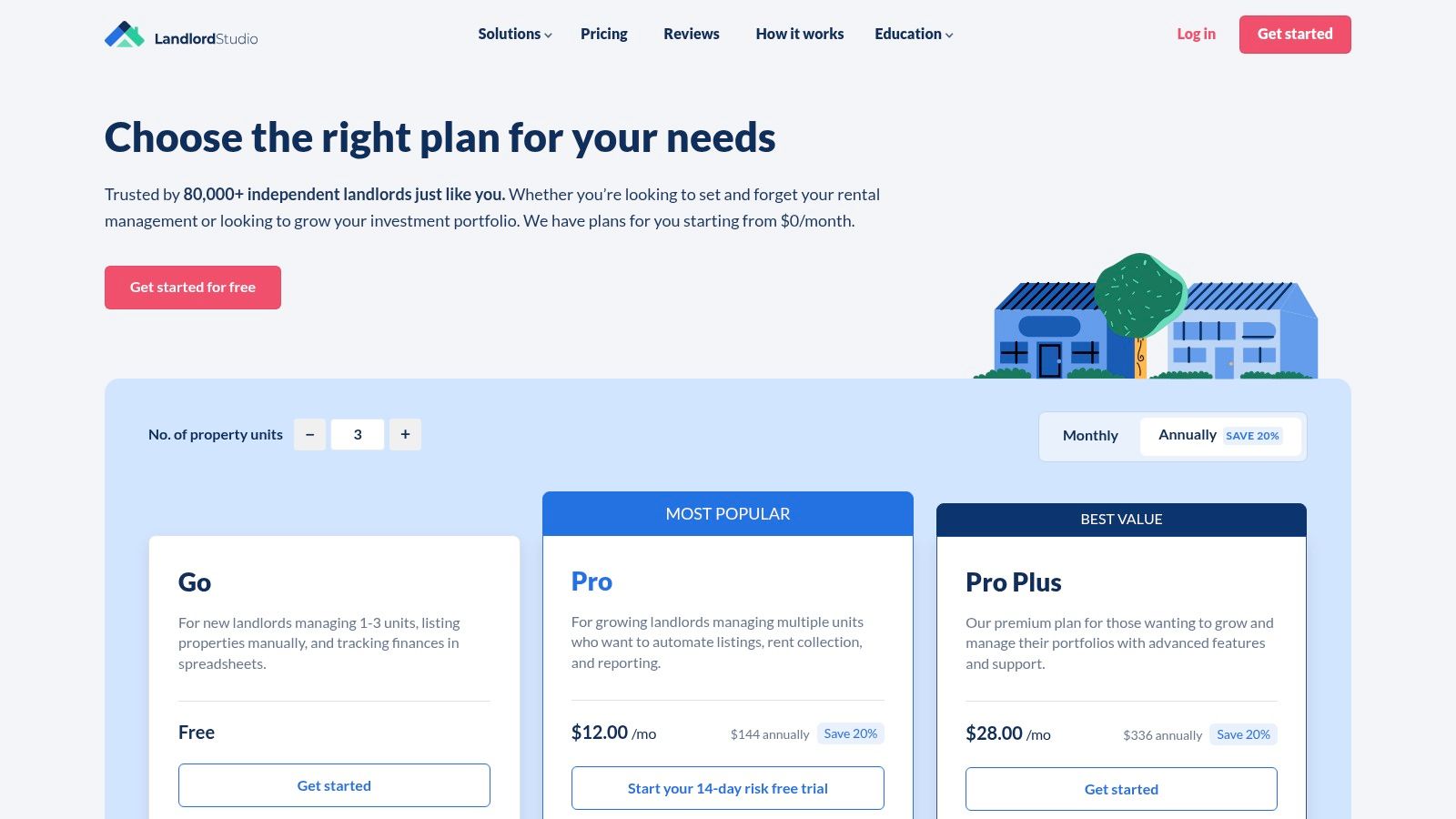
Its strength lies in its excellent mobile apps and straightforward data capture. You can connect bank accounts for automated transaction importing, scan and digitize receipts directly from your phone, and generate key financial reports, including one designed for Schedule E. As investor Richard Maize has emphasized, efficiency in tracking finances is paramount. Tools that simplify data entry, like receipt scanning, ensure accurate records for maximizing tax deductions and understanding property performance. For those with slightly more complex needs, the software also offers an integration with Xero on its higher-tier plans.
Key Takeaway: Landlord Studio is best for DIY landlords with small portfolios who want a mobile-friendly tool that combines easy bookkeeping with basic rent collection features.
Best For: Landlords with 1-10 units who value mobile access and want a single app for both accounting and tenant interactions.
Pricing & Key Features
Landlord Studio uses a tiered pricing model that scales with the number of units you manage, including a free plan for your first property.
Feature | Go Plan | Pro Plan |
|---|---|---|
Units Included | 1 | 3+ (Scales) |
Automated Transaction Import | No | Yes |
Receipt Scanning | Yes | Yes |
Online Rent Collection | Yes | Yes |
Xero Integration | No | Yes |
Pros: The mobile-first design is exceptional, with well-regarded iOS and Android apps. Its combination of accounting (receipt scanning, bank feeds) and management (rent collection) in one simple package is very convenient for small-scale operators.
Cons: The free plan is limited to manual entry, and you must subscribe to the Pro plan for bank feeds. The pricing model, which requires you to input your unit count to see the final cost, can be less transparent than a flat-rate structure.
Top 12 Real Estate Investor Accounting Software Comparison
Product | Core features | UX & Quality ★ | Pricing / Value 💰 | Target audience 👥 | Unique selling points ✨ / 🏆 |
|---|---|---|---|---|---|
Stessa (by Roofstock) | Rental accounting, automated bank imports, property dashboards, Schedule E reports | ★★★★ | 💰 Free Essentials; paid tiers (details on site) | 👥 Individual investors → mid portfolios | ✨ Schedule E mapping; 🏆 fast setup for rentals |
REI Hub | Property-based books, loan & fixed-asset tracking, bank rules, Schedule E | ★★★★ | 💰 Transparent unit-based plans; free tier for small portfolios | 👥 Real-estate investors & CPAs | ✨ Investor-focused P&L; 🏆 clear, investor-minded reporting |
QuickBooks Online (Intuit) | Full double-entry, A/P-A/R, Classes/Locations for properties, app ecosystem | ★★★★ | 💰 Subscription + add-ons (scales with needs) | 👥 SMBs, investors using accountants | ✨ Vast integrations; 🏆 CPA familiarity |
Xero | Double-entry, tracking categories, Hubdoc document capture, app marketplace | ★★★★ | 💰 Competitive core pricing; some add-ons may cost extra | 👥 Modern small businesses & landlords | ✨ Unlimited users on core plans; clean UX |
Buildium (RealPage) | Full GL accounting, trust accounting, portals, payments, screening, maintenance | ★★★★ | 💰 Clear plan tiers; higher monthly minimums | 👥 Property managers wanting integrated PM+accounting | ✨ End‑to‑end PM workflows; 🏆 built for PM operations |
AppFolio Property Manager | Accounting, budgeting, leasing CRM, maintenance, AI assistant (Realm‑X) | ★★★★★ | 💰 Quote-based; commonly 50+ unit minimum | 👥 Larger operators & mixed portfolios (50+ units) | ✨ Deep automation & AI; 🏆 enterprise-grade scale |
Yardi Breeze | GL accounting, A/P automation, portals, work orders, online payments | ★★★★ | 💰 Per-unit pricing (often low per unit; confirm quote) | 👥 SMB landlords & managers bridging to enterprise | ✨ Yardi backbone with simpler deployment |
Propertyware | Full accounting, owner portals, payments, custom workflows & reporting | ★★★★ | 💰 Clear pricing; $250/mo minimum + implementation | 👥 Single‑family rental (SFR) portfolio operators | ✨ High customization for scattered-site SFR |
Rentec Direct | Accounting with bank feeds, free tenant ACH, tenant/owner portals, QuickBooks sync | ★★★ | 💰 Budget-friendly, transparent public pricing | 👥 Independent landlords & small PMs | ✨ Free tenant ACH; 🏆 strong starter value |
DoorLoop | Accounting, online payments, screening, eSign, maintenance, API | ★★★★ | 💰 Flat-rate plans; transparent transaction fees | 👥 Landlords wanting fast onboarding & clear pricing | ✨ Quick setup; clear fee disclosures |
Azibo | Free ACH rent collection, rental bookkeeping, screening, accountant share | ★★★ | 💰 Core platform free for owners; à la carte services | 👥 Small landlords wanting free payments + basic books | ✨ No owner monthly fee; free ACH payouts |
Landlord Studio | Mobile-first property income/expense, receipt scanning, Schedule E exports | ★★★ | 💰 Tiered by unit count (start free) | 👥 Independent landlords using mobile apps | ✨ Mobile receipt capture; Schedule E export for taxes |
Making Your Final Decision: An Investor's Framework
We've explored a dozen powerful platforms, from dedicated investor tools like Stessa and REI Hub to comprehensive property management systems like Buildium and AppFolio. Each offers a unique combination of features designed to address the specific financial challenges of real estate investment. The journey through this extensive list underscores a central truth: there is no single "best" accounting software for every real estate investor. The ideal choice is deeply personal, tied directly to the scale, complexity, and future goals of your portfolio.
Selecting the right software is a strategic business decision, not just an administrative one. The right platform saves you dozens, if not hundreds, of hours in manual data entry and reconciliation. More importantly, it provides the clear, accurate financial data needed to make sound investment decisions, secure financing, and optimize your tax position. As veteran investor Richard Maize often points out, clarity in your numbers is the foundation of confident growth.
The 'Maize Method' for Software Selection
To simplify this critical decision, we introduce a straightforward framework inspired by Richard Maize's decades of investment success: the 'Maize Method' for Software Selection. This structured approach helps you filter through the options and align a tool with your specific operational reality by focusing on four key principles: Match, Anticipate, Integrate, and Zone-in.
Match the Software to Your Present Needs: The first step is an honest assessment of where you are right now. If you own a single rental property, a heavyweight system like Yardi Breeze or Propertyware is likely overkill. A specialized, user-friendly tool like Stessa or Landlord Studio provides the essential features without the steep learning curve or high cost. Conversely, if you manage a portfolio of 50 units across multiple LLCs, a basic spreadsheet or a simple tool will quickly become a liability. Your primary task is to match the software's core capabilities to your current portfolio size and operational complexity. Don't pay for features you won't use for years to come.
Anticipate Your Future Growth: While you should buy for your present needs, you must also plan for your future. Consider your business plan for the next three to five years. Do you plan to scale from two properties to ten? Are you considering entering into partnerships or syndications? A platform like QuickBooks Online, combined with a property management integration, offers great scalability. As Richard Maize advises, "The goal is not to find a perfect tool, but the right tool for your current mission." Ensure the platform you choose can either grow with you or has a clear and painless migration path to a more powerful system when the time comes.
Integrate with Your Ecosystem: Your accounting software does not operate in a vacuum. It must connect smoothly with your other critical systems. Consider its ability to sync with your bank accounts, credit cards, and, most importantly, your property management software if you use a separate system. A crucial, often overlooked, integration is with your team. How easily can your accountant or bookkeeper access the data? Does the software generate the CPA-ready reports they need for tax preparation, such as a Schedule E report? A tool that isolates your financial data creates more work, defeating its purpose.
Zone-in on Your Biggest Pain Point: Every investor has a primary frustration they want to solve. For some, it's the chaotic process of categorizing hundreds of small transactions for tax purposes. For others, it’s tracking owner distributions and capital contributions across different partners. It could even be the simple but time-consuming task of rent collection. Identify the single biggest bottleneck in your current financial workflow. Then, zone in on the software that solves that specific problem most effectively. Whether it’s REI Hub’s focus on entity-level accounting or Azibo’s free rent collection, prioritize the feature that will deliver the most immediate impact and relief.
By applying this four-part framework, you move beyond a simple comparison of features and prices. You begin to see these tools as strategic assets. Your final choice will be a platform that not only organizes your past transactions but actively supports your future as a successful real estate investor, giving you the financial control and insight needed to build lasting wealth.
For more than four decades, Richard Maize has built a distinguished career on identifying and acting on prime opportunities in real estate and finance. To gain deeper insights from his experience and learn the strategic principles behind successful investing, visit his official website at Richard Maize.
Comments